Anúncios
Most cat owners have experienced the morning gift: a bird or vole deposited proudly on the doorstep, and the complicated feeling that follows. You love your cat. You also care about the wildlife in your yard. These two things can feel like they sit in direct opposition, and in some ways they do. But understanding the dynamic clearly, rather than hoping the problem resolves itself, opens up real options that work for both cats and wildlife.
Why the Issue of Cats and Wildlife Matters
Cats are obligate carnivores and instinctive hunters. The drive to stalk, pounce, and catch is wired into them regardless of whether they are hungry. A domestic cat given outdoor access typically hunts several times a week, year-round, and the toll on local wildlife populations is real and documented.
Anúncios
The impact is sharpest in spring and early summer, when fledgling birds are on the ground learning to fly and are almost impossible for inexperienced young birds to defend themselves. Many of these birds are killed before they have had any chance to reproduce. Ground-nesting birds, small mammals like wood mice and voles, and frogs are all regularly taken by domestic cats. Reptiles including slow worms and common lizards, which are in decline across much of their range, are also vulnerable.
None of this means cats are villains. They are doing exactly what their biology tells them to do. The responsibility sits with us for managing the situation thoughtfully.
Anúncios
Practical Steps to Reduce Hunting Impact
The most effective single measure is keeping cats indoors during the hours when wildlife is most vulnerable. Dawn and dusk are peak activity times for many small mammals and ground-feeding birds. Keeping your cat inside from around dusk until mid-morning reduces hunting exposure substantially without confining them for the whole day.
A collar-mounted deterrent adds another layer. Plain bells offer partial protection, reducing kills by around 30 to 50 percent in most studies. A sonic device attached to the collar, which emits a high-frequency sound as the cat moves, disrupts the element of surprise more consistently. Brightly coloured collar covers, sometimes called Birdsbesafe collars, have shown strong results in studies measuring bird kills specifically, because birds can detect colour contrast clearly from a distance.
Make sure any collar your cat wears has a quick-release safety buckle. A standard fixed collar can catch on branches and cause injury or worse. If your cat loses collars regularly, a microchip reader tied to a cat flap that only opens for your cat can prevent other neighbourhood cats from entering while allowing yours to come and go on your schedule.
Adjust Your Garden to Protect Vulnerable Species
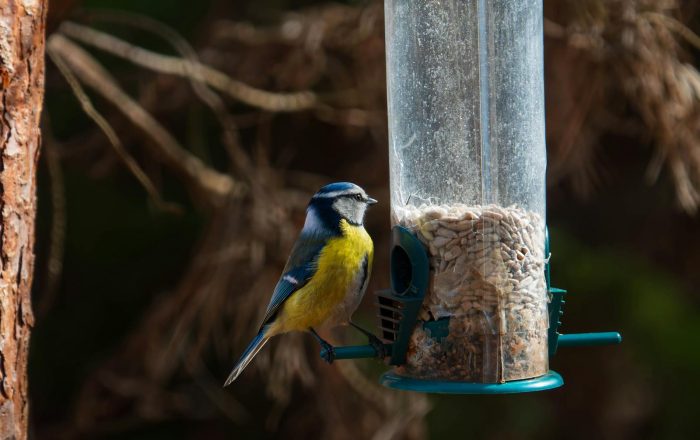
Where you place bird feeders and nesting boxes matters. Feeders should be positioned at least two metres off the ground and away from any structure a cat could use as a launch point, including fences, sheds, and overhanging branches. Attach a smooth plastic baffle or cone below pole-mounted feeders to prevent climbing.
Nest boxes should face away from dense vegetation at ground level that could provide cover for a stalking cat. A wire mesh or smooth metal collar around the post or tree trunk below a nest box prevents climbing. These adjustments do not require a large budget; a short length of sheet metal bent around a tree, or a proprietary squirrel baffle bought from a garden centre, does the job adequately.
Bird baths on a pedestal are generally safer than ground-level dishes, but still benefit from being positioned in the open where an approaching cat would be visible to bathing birds. Responsible bird feeding always takes predator risk into account alongside food choice and feeder hygiene.
The Option of Keeping Cats Indoors
Some cat owners feel that indoor life would be unfair to their cat. This is an understandable concern, but indoor cats live longer on average, face fewer risks from traffic, disease, and fights, and can have a genuinely rich life given the right environment. A cat that has always been kept indoors typically shows no sign of dissatisfaction; it is the transition from outdoor to indoor life that requires the most management.
If you decide to move an adult outdoor cat to primarily indoor living, do it gradually. Start by keeping them in after dark, then extend the indoor period in steps over several weeks. Provide window perches where they can watch bird and squirrel activity outside. Invest in climbing structures, interactive wand toys, and puzzle feeders that engage the hunting instinct constructively. Rotate toys so the cat does not habituate and lose interest. A companion cat sometimes helps, though some cats strongly prefer solitary living.
An enclosed garden run or ‘catio’, a secure outdoor enclosure attached to the house, is an excellent middle ground for cats that have been outdoor-accustomed and find the transition difficult. These can range from a simple framed wire mesh pen off a window to an elaborate permanent structure with tunnels and climbing areas. They give the cat fresh air and sensory stimulation without unsupervised access to wildlife.
What to Do When Wildlife Is Found Injured
If your cat brings in an animal that is still alive, act quickly. Any bird that has been in a cat’s mouth needs immediate veterinary attention because cat bites introduce a bacterium called Pasteurella multocida that is rapidly fatal to birds even from wounds that appear trivial. Place the animal in a ventilated cardboard box in a warm, dark, quiet room, and contact a local wildlife rehabilitator within the hour.
Do not attempt to clean the wound, offer food, or handle the animal more than necessary. The stress of handling alone can kill a bird in shock. Knowing what to do with an injured wild animal before the situation arises means you are ready to act correctly under pressure, which matters when minutes count.
Talking With Neighbours About Cats and Wildlife
If neighbourhood cats are regularly visiting your garden and affecting the wildlife you have worked to attract, the most productive approach is a direct, non-accusatory conversation with the owners. Most cat owners are not aware of the scale of hunting their cat does, and most are willing to make adjustments when presented with information rather than criticism.
Some local authorities and wildlife trusts produce leaflets on responsible cat ownership that can be shared without the interaction feeling personal. Focusing on the cat’s welfare, road safety, disease risk, and cat-on-cat conflict often resonates more than a conversation framed primarily around wildlife protection. Both framings lead to the same practical outcomes.
Deterrents you can apply to your own garden, such as motion-activated sprinklers, citrus peel near flower beds, or prickle strips on fence tops, can discourage visiting cats without causing them harm. These are useful tools for protecting specific areas like ground-level nesting habitat or bird bath areas.
Getting the Balance Right
Cats and wildlife can share a neighborhood with less conflict than the current situation represents in most suburbs. It requires cat owners to take an active role rather than assuming nature will manage itself. It requires garden design that reduces vulnerability rather than creating easy hunting opportunities. And it requires an honest acknowledgement that cats are predators in an environment where many of their prey species are already under pressure from habitat loss and other human-caused stressors.
Taking these steps is not a criticism of cats or their owners. It is recognition that managing the overlap between a pet’s natural behaviour and the needs of local wildlife is part of responsible ownership, and that the tools to do it well are readily available to anyone willing to use them.