Anúncios
On a warm April morning, if you sit quietly near a south-facing wall in a garden with any wildflowers nearby, you may spot a small, stubby bee flying in tight circles, landing briefly in one spot, then vanishing inside a hollow stem. That is a red mason bee, Osmia bicornis, one of the most valuable early-season pollinators in Europe and North America, and it is looking for exactly the kind of nesting cavity a well-built bug hotel provides.
Why a Bug Hotel Helps More Than You Might Think
Most people know about honeybees and bumblebees, but around ninety percent of bee species worldwide are solitary. They do not live in hives, they do not produce honey in any harvestable quantity, and they do not have a colony to defend. A single female builds a nest alone, lays a few eggs, provisions each one with pollen and nectar, seals the cell, and leaves. These solitary species are often more efficient pollinators per individual than honeybees, and many of them are facing serious declines because the hollow stems, dead wood, and soft mortar that they historically used as nest sites have been cleared from tidy modern gardens.
Anúncios
A bug hotel replaces some of that lost nesting habitat. It also provides shelter for overwintering insects like lacewings and ladybirds, which emerge in spring as voracious predators of aphids. Getting these insects through the winter in your garden means they are already present and active before pest populations build up in spring, a genuine natural pest control benefit.
Materials That Actually Work
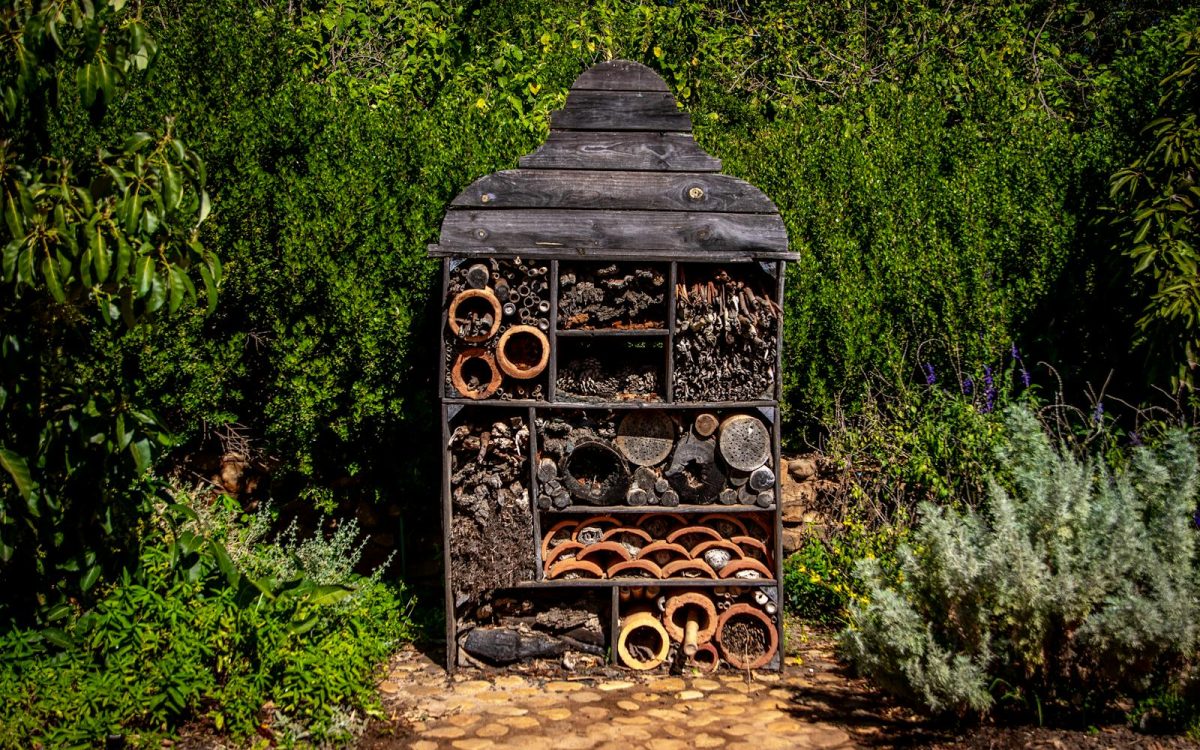
The most effective bug hotels use a mix of natural materials chosen for specific insects. For cavity-nesting bees, the most important component is a bundle of hollow stems or pre-drilled wooden blocks with holes of varying diameters.
Anúncios
Bamboo canes cut into roughly fifteen centimetre lengths with one sealed node end work well and are inexpensive. Stems from native plants like elder, fennel, and Joe-pye weed are excellent free alternatives. Dried hollow stems collected in autumn and bundled tightly give a more varied range of internal diameters than commercially cut bamboo, which in turn attracts more species. Drill holes into untreated hardwood blocks, such as oak or ash, at diameters ranging from two millimetres to ten millimetres, aiming for a depth of eight to ten centimetres. Avoid softwoods like pine or treated timber; they rot quickly and may contain chemicals that harm insects.
For lacewings, pack one section loosely with corrugated cardboard rolled into a tube, dried straw, or dry pine cones. These materials create the insulating, dark spaces lacewings seek for overwintering. Ladybirds prefer rolled tubes of dried leaves or bundles of thin twigs. Earwigs, which are genuinely useful predators of soft-bodied garden pests, will use small sections of hollow stem or loosely packed straw at lower levels of the structure.
Bark sections, pine cones, and pieces of rotting wood attract ground beetles and wood-boring beetles. These can occupy the lower sections of a hotel or be placed near the base in a loose pile. Avoid using treated or painted wood anywhere in the structure.
Building the Frame
The simplest bug hotel is a wooden box with an open front. An old wooden wine crate or a basic box made from untreated timber planks, roughly thirty centimetres wide by thirty centimetres tall by twenty centimetres deep, works well. If you have the tools, divide the interior with horizontal shelves at roughly ten centimetre intervals so different materials can be packed into each layer without mixing. A sloping roof or a protecting overhang prevents rain from soaking the interior and rotting the materials prematurely.
A more ambitious multi-chamber design can be built from a simple pallet stood upright, with its gaps filled with different materials in each section. This creates a larger surface area and more varied habitat at very low cost. Pallets are often available free from garden centers, builder merchants, and supermarkets.
Whatever frame you use, make sure the materials inside are packed tightly enough that they do not shift, fall out, or allow in large gaps where rain can pool. Hollow stems in particular need to be as horizontal as possible, or angled very slightly downward from front to back, so water does not collect inside and drown eggs or larvae.
Siting the Bug Hotel for Maximum Use
Placement is where many homemade bug hotels fail. A hotel mounted on a cold north-facing wall in deep shade will sit empty for years. Solitary bees need warmth and choose nesting sites that receive morning and midday sun. A south or south-east facing position at between one and one-and-a-half metres off the ground is ideal for the bee sections. This height also keeps the hotel clear of most ground predators and damp from soil splash.
The proximity to flowers is almost as important as the orientation. Red mason bees, which are among the first to use hollow stem sections in spring, rarely forage more than three hundred metres from their nest. If your hotel is surrounded by mown grass and no flowering plants, visiting bees will investigate and then move on. Place the hotel within two or three metres of native wildflowers or a diverse flower border, and the difference in occupancy is measurable within a season. A pollinator garden planted nearby makes your bug hotel significantly more effective.
A Simple Build You Can Do This Weekend
Here is a practical scenario for a beginner build. Get a wooden wine crate or build a simple open-front box from untreated timber. Cut bamboo canes into fifteen centimetre lengths and bundle them tightly into the top half of the box, securing the bundle with a zip tie or two through the cane ends. In the bottom half, pack rolled corrugated cardboard tubes for lacewings on one side and loose dry straw on the other. Attach a small piece of roofing felt or cut a simple board overhang to shelter the opening from rain. Screw the box to a south-facing fence or post at about one metre up. That is it. The whole process takes an hour and costs very little if you collect the bamboo from a garden center’s offcut bin or harvest dried hollow plant stems from your own garden in autumn.
After building, resist the urge to check inside or pull materials out to see if anything is using them. Some insects, particularly solitary bees, are easily disturbed during nesting and will abandon the site if repeatedly disturbed. Check for sealed tube ends in midsummer as a simple sign of occupancy, and enjoy the activity at the entrance hole on warm spring mornings.
Keeping the Hotel in Good Shape
A well-made bug hotel needs very little maintenance. Once a year in late autumn, after the main nesting season has ended but before the harshest weather sets in, inspect the structure from the outside. Replace any bamboo or stem sections that are visibly mouldy or have collapsed. Do not disturb sealed tube ends; those contain eggs, larvae, or pupae that need to remain undisturbed until the following spring.
Wooden sections that show signs of rot should be replaced individually. If the overall structure becomes unstable over several years, transfer the filled tubes and materials into a new frame rather than starting from scratch, as established nests in tubes should be kept intact through the transition. Over time, a good bug hotel becomes a multi-year habitat asset in your garden, supporting generation after generation of solitary bees and overwintering beneficials.
Once you have a bug hotel in place, spending a little time simply watching it in spring reveals a world of insect behavior that most people never see. A mason bee carrying a ball of mud to seal her egg cell is doing something she has been doing for millions of years. The hotel on your fence is a tiny but real piece of the habitat web that keeps a garden functioning, the same web that connects your plants to the wider story of biodiversity beyond your boundary fence. Build one, site it well, and then step back and let it do its work.