Anúncios
Think about the field at the edge of town where you used to see skylarks, or the boggy corner of a local park that always held frogs in spring. There is a reasonable chance that field is now a housing estate and that boggy corner was drained when the park was tidied up. You may not have noticed either loss particularly. That is the nature of habitat loss: it happens gradually, in ordinary-seeming decisions, and its consequences for wildlife accumulate long after the fact.
Habitat loss is the single largest driver of species decline and extinction on Earth. Not pollution, not climate change, not hunting, though all of these matter. The conversion, degradation, and fragmentation of natural environments is responsible for the majority of species listed as threatened on the global Red List. Getting a clear picture of how it works, what makes different species vulnerable, and what actually reduces it is genuinely useful.
Anúncios
The Three Forms Habitat Loss Takes
Biologists distinguish three related but distinct processes, and the difference matters for understanding impact.
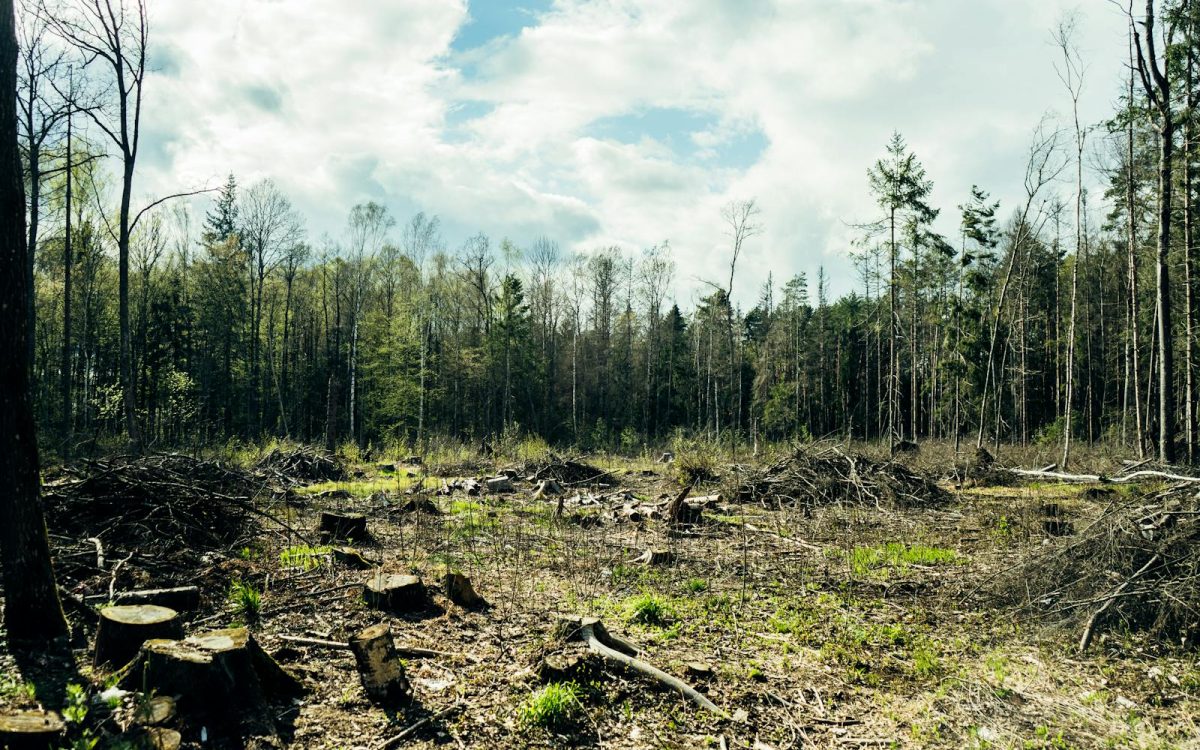
Outright destruction is the most visible form. A forest cleared for soy cultivation, a marsh drained for a retail park, a coastal dune system bulldozed for beach access. The habitat disappears entirely and its occupants either die or must find somewhere else. For many species, there is nowhere else.
Anúncios
Degradation is subtler but affects far more land. The habitat is still there, still looks like habitat, but has been changed in ways that reduce its value for native species. A woodland sprayed with herbicide loses its understorey plants, which take away the cover and food sources for woodland birds and small mammals. A river dredged and straightened still carries water, but it no longer has the pools, riffles, and slow margins that freshwater fish and invertebrates need. A grassland grazed too heavily or too lightly shifts its plant community in ways that gradually exclude the specialist insects that evolved with it.
Fragmentation is the third form, and perhaps the most insidious. Rather than destroying all of a habitat, human development breaks it into pieces. Each fragment may look healthy in isolation, but the dynamics of small, isolated habitat patches work against the species they contain. Edge effects, the influences of the surrounding disturbed land, penetrate far into small fragments. Populations become cut off from each other and lose genetic diversity. Local extinctions cannot be rescued by recolonisation from elsewhere.
What Gets Lost First
Not all species respond to habitat loss equally. The ones that disappear first share predictable traits, and knowing what those traits are helps explain why some landscapes hold on to wildlife better than others.
Large animals with large territories go first. A wolf pack needs hundreds of square kilometres of connected habitat. A golden eagle pair defends a similarly vast range. When habitat is removed or divided, these species lose the area they need before smaller animals notice the change. The same logic applies to wide-ranging predators generally: they need more space, they breed more slowly, and their populations are thinner to begin with.
Habitat specialists are in the next category. A species that can only breed in lowland wet meadows, feeds only on the invertebrates found there, and winters in similar grasslands nearby, has no fallback when those meadows are ploughed. Generalists, species that can exploit a range of environments and food sources, tend to persist through habitat change. The fox, the crow, the raccoon: these are generalists that thrive in human-modified landscapes precisely because they are not dependent on specific conditions. The species we lose are usually the ones that cannot make that shift.
Species with limited dispersal ability are also highly vulnerable. A ground beetle that cannot fly and moves slowly through leaf litter has no way to reach a new habitat patch once its original home is destroyed. A slow-moving snail faces the same problem. Even species that technically can disperse may not do so effectively when the matrix of land between habitat patches is completely inhospitable.
Agriculture, Development, and the Numbers
The global picture of what is causing habitat loss is dominated by agriculture. Estimates consistently put agricultural expansion and intensification as responsible for roughly 70 to 80 percent of terrestrial habitat loss and degradation globally. The crops most closely associated with tropical deforestation include soy, oil palm, cattle ranching, and timber, all primarily driven by export demand from wealthier countries.
Urban and suburban development is a smaller contributor by land area but a highly concentrated one. The habitats that get developed first tend to be the most productive and accessible, lowland river valleys, coastal areas, and gentle hillsides, which are also disproportionately important for wildlife. Roads and infrastructure compound urban development by cutting through habitat, creating barriers to movement, and generating noise, light, and chemical pollution that extends far beyond the physical footprint.
Freshwater habitats have been among the hardest hit proportionally. The world has lost over 35 percent of its wetlands since 1970, according to the Ramsar Convention monitoring reports. Rivers have been dammed, channelised, and diverted. Groundwater extraction has lowered water tables, drying out wetlands that were never directly touched by development. Freshwater species, including fish, amphibians, and aquatic invertebrates, have declined faster on average than terrestrial or marine groups as a result.
The Interaction With Other Threats
Habitat loss does not operate in isolation. It interacts with every other threat species face in ways that multiply their collective impact. A population that has been reduced to a small, fragmented habitat remnant is far more vulnerable to disease, extreme weather events, or over-hunting than a large, connected population would be.
The species most frequently classified as endangered are almost always dealing with habitat loss alongside additional pressures. A sea turtle species threatened by rising beach temperatures from climate change faces those pressures with fewer nesting beaches available because coastal development has already destroyed or disturbed many of them. A grassland bird facing agricultural change has fewer options if the remaining grasslands are also fragmented and separated by roads it cannot safely cross.
Climate change is increasingly amplifying habitat loss effects. As temperature and rainfall patterns shift, the remaining fragments of habitat that species depend on may no longer offer the conditions those species need. A species trapped in a small reserve by surrounding development cannot move to track its shifting climate envelope. Wildlife corridors reduce this trap, but only where they exist and where the destination habitat is still viable.
What Actually Reduces Habitat Loss
The good news is that the tools for reducing habitat loss are reasonably well understood. The challenge is applying them at the scale and speed the situation requires.
Legal protection remains the most reliable tool for halting outright destruction. Habitats that are designated as protected areas, or that are covered by species-protection laws, are demonstrably less likely to be cleared than unprotected ones. The expansion of effective protected area networks is one of the highest-use actions in conservation. The word ‘effective’ matters: a protected area on paper that is not resourced, monitored, or enforced offers much less protection than one that is actively managed.
Economic instruments that change the incentives for landowners are increasingly important. Payments for ecosystem services, financial compensation to landowners for maintaining forests, wetlands, or grasslands that provide clean water, flood control, carbon storage, and wildlife habitat, have shown real results in some countries. The logic is straightforward: if a forest is worth more standing than cleared, more of it will remain standing.
Supply chain accountability is one of the most powerful levers for consumers in wealthy countries. Much of the tropical habitat loss linked to agriculture is driven by export commodities. Certification schemes, import regulations requiring proof of deforestation-free supply chains, and corporate commitments are imperfect but moving the needle in measurable ways.
The Local Scale Is Not Small
It would be easy to read the global statistics and conclude that the only actions that matter are big ones. But habitat loss at the local scale is real, and local recovery is real too.
A school that replaces a mown grass playing field with a native wildflower meadow creates habitat. A railway embankment managed for biodiversity rather than tidiness creates a linear corridor through an urban landscape. A farmer who keeps a rough, ungrazed corner in each field provides a refugium for the insects and small mammals that modern arable fields no longer support. None of these actions makes the global statistics move, but they collectively constitute the patchwork of surviving habitat that makes a landscape liveable for wildlife at all.
Local conservation actions add up faster than we often credit. And they do something else: they give people direct experience of wildlife in recovery, which builds the constituency for the larger policy changes that will in the end be needed. Most conservationists started by noticing something specific and close to home. That noticing still matters.
Habitat loss is not a fixed sentence. It is a process that can be slowed, halted, and in places reversed. The landscape that sustains wildlife tomorrow is being decided by ordinary choices being made today, in boardrooms and planning offices and back gardens, often without anyone thinking of it in those terms. That is the challenge and the opening at the same time.