Anúncios
A fox crossed your garden at 2 a.m. last Tuesday. You did not see it, but it left a thin, deliberate line of oval prints across the frost-softened soil near the compost heap, each one roughly in front of the last, a trail as neat as stitching. You only noticed because you happened to glance down on your way to the shed. That small discovery is what animal tracking is about: reading the evidence of a hidden world of mostly nocturnal animals that shares your yard every night.
The Four Main Track Groups
Before memorizing specific species prints, it helps to understand the four basic groups that most North American and European backyard tracks fall into. Each group has a characteristic shape that gives you an immediate head start.
Anúncios
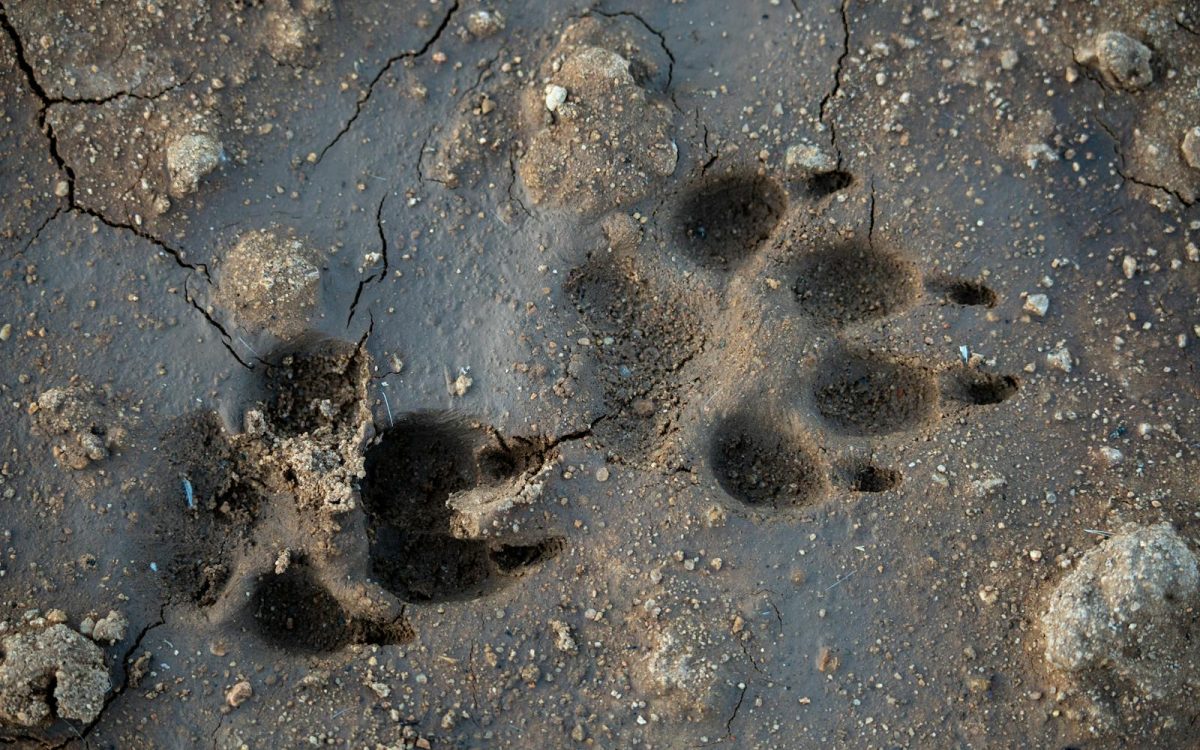
Canines (fox, dog, coyote) leave oval prints with four toes, visible claw marks pointing forward, and a roughly symmetrical arrangement. The space between the toe pads and the heel pad is relatively clear.
Felines (domestic cat, bobcat) leave round prints with four toes and retractable claws that usually leave no mark. The lobed heel pad has a distinctive two-notch shape at the top and three lobes at the bottom, which is one of the most reliable identification features in all of tracking.
Anúncios
Rodents and rabbits often show paired prints from the hind feet landing alongside or ahead of the forefeet, creating a bounding or hopping pattern. Squirrels leave paired hind prints side by side, each with five elongated toes. Rabbits show much larger hind prints set ahead of two smaller front prints.
Birds leave three-toed prints pointing forward (or three forward, one back for perching birds), sometimes with a clear drag mark from the tail or wing tips. Ground-feeding birds like sparrows show alternating hops; others walk in a more regular alternating pattern.
Reading the Print Itself
A single clear print tells you about the size of the animal, whether it has claws, and how many toes it uses for walking. Take a moment with the print before reaching for a field guide. Count the toes. Look for claw marks. Examine the heel pad shape. Notice whether the print is symmetrical or asymmetrical from side to side.
Substrate matters enormously for detail. In firm mud, a fox print might show only the main toe pads and a faint outline. In deep, wet mud, the same print might show every hair follicle and the fine ridge of the interdigital webbing. Both are the same animal. Try not to be discouraged by indistinct prints; instead, look for the most clearly defined print in the trail and focus your attention there.
Size is useful but can mislead. A large dog and a small coyote may leave prints of similar dimensions. A young deer and a large dog can also overlap in print length. Use size as one piece of evidence alongside shape, claw presence, and trail pattern rather than as a definitive answer on its own.
Animal Track Identification Through Gait Patterns
A single print identifies a species. A trail pattern identifies how the animal was moving and often why. Gait patterns are one of the most underused tools for beginners, partly because they require stepping back to see the whole trail rather than crouching over one print.
Most mammals use four basic gaits. Walking produces an alternating pattern, one foot at a time, with a relatively short stride. Trotting lengthens the stride and in diagonal-movers like foxes and deer, produces a nearly straight line of prints. Bounding shows two front feet landing together followed by two hind feet, common in rabbits and squirrels. Galloping creates a grouped, asymmetric cluster of four prints repeated at intervals, seen in deer and predators moving at speed.
A fox walking casually from one hedgerow to another leaves a trail so straight it looks almost ruler-drawn. The same fox chasing a vole breaks into a gallop, and the trail suddenly spreads out with clusters of four prints and a longer gap between them. Reading these transitions is how you start to understand not just what was there, but what it was doing.
Where to Look for Animal Tracks
Soft mud along the edges of garden ponds and water features is one of the most productive spots in any backyard. Every animal that visits to drink leaves a print, and in a single morning you can read the entire overnight guest list. Check after rain when the soil is soft but before it dries out.
Fresh snow after a calm, still night reveals movement across the whole garden simultaneously. Check as early in the morning as possible before the sun softens the details. Look for trails that enter and exit at the fence line, circle the compost heap, and converge at any food source. In winter, tracking is also a way to understand which animals are still active and which have gone into torpor or dormancy.
Dusty paths through a woodland edge, the muddy fringe of a stream, and the soft sand under a garden gate are also excellent. Train yourself to notice potential tracking surfaces as you move around outside. Once you start looking, you will find prints in places you walked past for years without noticing.
A Practical Walk-Through in Your Own Yard
Here is a simple way to begin. After the next rain, walk your yard slowly the following morning and look for soft patches of soil near the fence line, under bird feeders, at any compost heap gap, and along any hard surface edges where mud collects. Photograph anything you find from directly above, placing a coin next to the print for scale. Then photograph the whole trail from a standing position to capture the gait pattern.
Compare your photographs with a regional field guide or a free app like iNaturalist, which lets you upload photos and get identifications from a global community. Keeping a nature journal with sketches of the prints you find, along with dates, weather, and location notes, builds a surprisingly rich record of your local wildlife over a season.
You may also find that tracking leads you to observe the animals directly. Once you know a fox uses your garden, you can set up a chair near the compost heap at dusk and simply wait. The tracks told you it would be there.
Common Backyard Tracks at a Glance
- Red fox: oval, four-toed, claw marks present, typically 5 to 6 cm long, trail nearly straight
- Domestic cat: round, four-toed, no claw marks, 3 to 4 cm, trail a gentle zigzag
- Grey squirrel: four front toes, five hind toes, paired hind prints side by side, hind print 5 to 6 cm
- Rabbit: large asymmetric hind pair ahead of smaller front pair, bounding pattern
- Roe deer: two-pointed cleat shape, paired or staggered, 5 to 6 cm long, dewclaws rarely show
- Blackbird or robin: three-toed print with small hallux claw behind, 3 to 4 cm, alternating hop
- Hedgehog: five toes with prominent claw marks on a small round pad, waddling trail with narrow straddle
Taking Your Tracking Further
Identifying animal tracks is a skill that compounds over time. The more prints you see, the faster you recognise them, and the more readily you start to read the stories they tell. Joining a local wildlife trust or naturalist group often gives access to guided tracking walks where experienced trackers can show you subtleties that are hard to pick up from a book alone.
A good plaster cast of a clear print, made with plaster of Paris mixed to a cream consistency and poured carefully into the print, gives you a permanent reference you can handle and study at home. It is a satisfying way to mark early successes and builds a reference collection over seasons.
The reward for developing this skill is a richer relationship with the landscape you already live in. Your backyard, the path to work, the muddy edge of a park pond: all of them are records waiting to be read, written every night by animals going about their lives just out of sight.