Anúncios
You are walking your dog on a trail when you spot a red-tailed hawk sitting motionless on the ground at the edge of a clearing. It does not flush when you approach within a few meters. Its wing is drooping. Your instinct says: pick it up and take it somewhere safe. That instinct is compassionate, but knowing what to do in the next ten minutes — and what to hold off on — makes a real difference to that bird’s chances.
The First and Most Important Step: Assess Before You Act
Not every animal that appears to need help actually does. Many apparent emergencies are normal wild-animal situations that look alarming to human observers. Before you approach or touch anything, spend a few moments observing from a distance.
Anúncios
Young animals are particularly prone to being misidentified as orphaned or injured. A fledgling songbird — fully feathered, capable of hopping, but unable to fly well — is supposed to be on or near the ground. Its parents are almost certainly nearby and will resume feeding it the moment you leave the area. A deer fawn lying motionless in tall grass is very likely waiting for its mother, who may be feeding 100 meters away. Hares, rabbits, and many bird species leave their young alone for hours at a time as a normal part of parenting.
An animal that genuinely needs intervention typically shows one or more of these signs: obvious physical injury such as a drooping wing, open wound, or inability to move a limb; inability to move away from you when you approach slowly; visible blood; a deceased parent or sibling nearby; or a young animal in a clearly dangerous location such as a roadway or in the path of a predator.
Anúncios
Your Priority: Contact a Licensed Wildlife Rehabilitator
The single most important action you can take for an injured wild animal is to contact a licensed wildlife rehabilitator as quickly as possible. Rehabilitators hold state and sometimes federal permits that allow them to legally possess and treat wild animals. They have the species-specific knowledge, veterinary relationships, and appropriate facilities to give injured animals a real chance at recovery and eventual release.
Do not attempt to treat, feed, or house the animal yourself while waiting for help to arrive. This is not a matter of underestimating your intentions — it is about the specific knowledge and equipment that effective wild animal care requires. Incorrect food can cause aspiration in birds, fatal gut flora disruption in rabbits, or metabolic bone disease in young mammals. Human imprinting in young animals can make them unreleasable. A well-meaning rescue that goes wrong leaves the animal worse off than if it had been found sooner by someone equipped to help.
To find a rehabilitator, search the National Wildlife Rehabilitators Association directory, your state fish and wildlife agency’s website, or call your local animal control office. Veterinary clinics often maintain a list of local rehabilitators for exactly this situation. Call while you are still at the scene if possible, because the rehabilitator may give you specific guidance for the species you have found.
Safe Containment While You Wait
If you need to contain an injured animal before transport or handoff, do so with as little stress to the animal as possible. Stress alone can kill small injured animals — a phenomenon called capture myopathy that is well documented in wild birds and mammals.
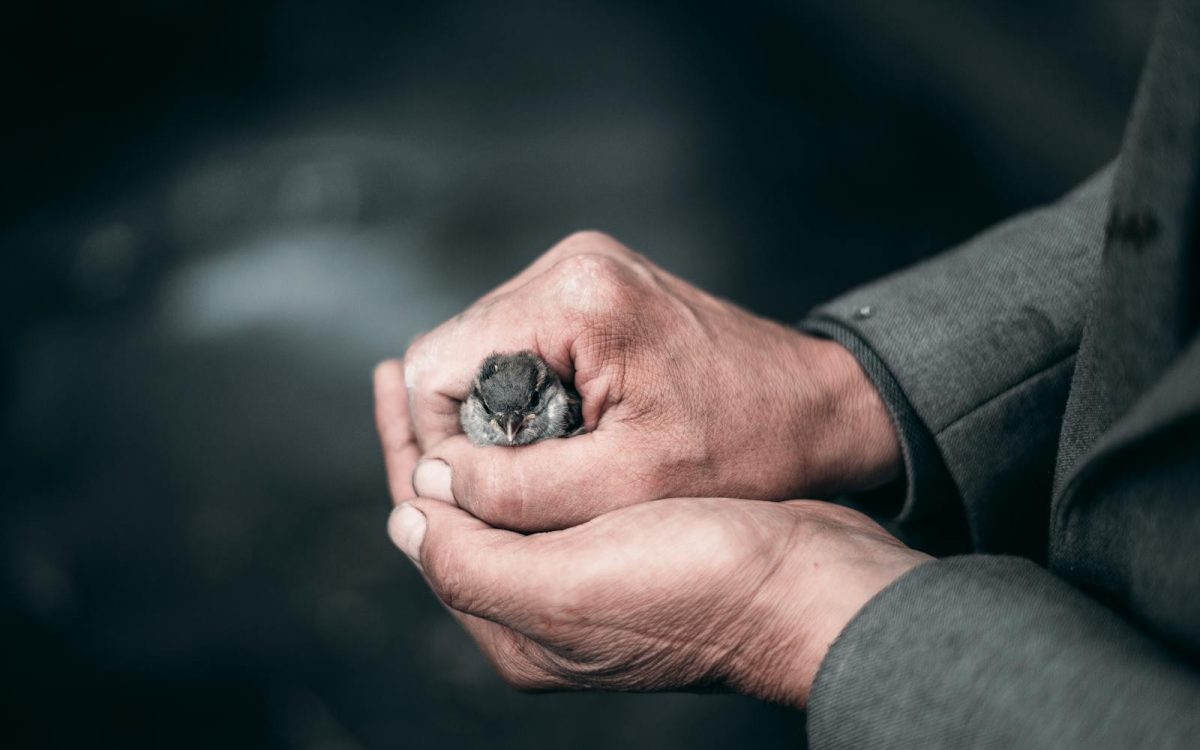
Use a cardboard box or paper bag with air holes. Line the bottom with a plain cloth, paper towels, or dry leaves. Do not use terrycloth towels — small birds and mammals get their claws caught in the loops. Wear thick gloves before handling. Even a small injured bird can cause a serious laceration, and any wild mammal bite requires medical follow-up due to disease transmission risk.
Pick the animal up gently and place it in the container with minimal handling. Close the box securely. Put it in a quiet, dark place — indoors, away from pets, children, and noise. Heat stress is a real risk in warmer weather, so do not put the box in a hot car or in direct sun. Do not attempt to offer food or water. Do not attempt to clean wounds. Do not give any medications, including over-the-counter pain relievers, which are toxic to most wild species.
Specific Scenarios: What Varies by Species
A few categories of animals come with additional guidance worth knowing in advance.
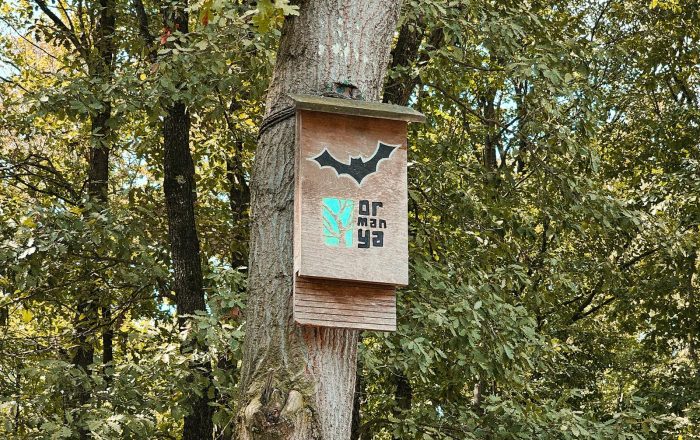
Bats found on the ground during daylight hours are almost always sick or injured — healthy bats do not land in exposed areas during the day. Because bats are the most common rabies-vector species in North America, do not handle a grounded bat with bare hands under any circumstances. Use thick leather gloves, contain it in a box, and call your local health department in addition to a rehabilitator. If there is any possibility that the bat made contact with a sleeping person in a home, public health guidance requires that the bat be tested, not released.
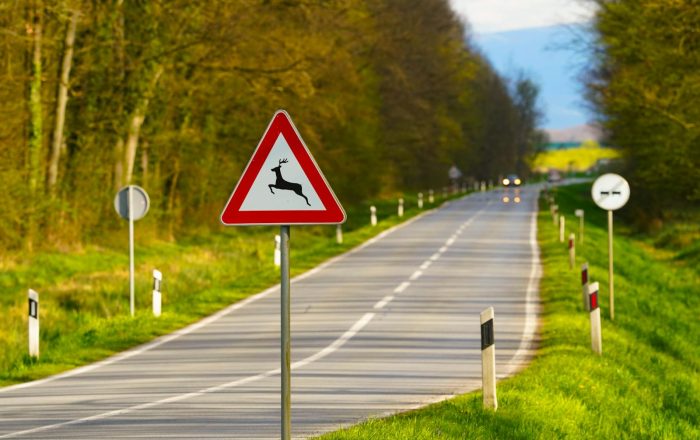
For deer and other large mammals, do not attempt to contain the animal yourself — call wildlife authorities or animal control and let them handle the physical intervention. Large injured animals are dangerous and can cause severe injury even when weakened.
For young waterfowl separated from a parent, look for the brood first. A single duckling calling persistently may be able to reconnect with its family if you observe the situation for a short time before intervening. If the parent is clearly absent and the young bird is in danger, contain it and call a rehabilitator.
What You Are Legally Permitted to Do
In the United States, possession of native migratory birds, raptors, and most mammals without a permit is a federal or state crime, even for the purpose of rescue. The Migratory Bird Treaty Act covers the vast majority of wild bird species. This is not bureaucratic obstruction — it is the mechanism that ensures wild animals receive appropriate care rather than well-intentioned but harmful home treatment.
What you are permitted and encouraged to do is exactly what this article describes: assess the situation, safely contain the animal if necessary, minimize handling and stress, provide nothing by mouth, and get the animal to a permitted rehabilitator as quickly as possible. That chain of actions genuinely saves lives.
After the Animal Is in Professional Care
Most licensed wildlife rehabilitators operate as nonprofits or as individual volunteers using their own resources. If a rehabilitator accepts an animal you found, ask whether they accept donations — even a small contribution helps offset the cost of specialized feed, medical care, and housing. Some organizations also welcome volunteers for non-animal-contact roles such as transport, fundraising, or facility maintenance.
It is natural to want to know what happened to the animal you helped. Rehabilitators are often able to provide a brief update, though their caseloads are heavy and a detailed follow-up may not always be possible. Release rates for injured wildlife vary widely by species and injury type, but many animals that arrive in professional care do recover and return to the wild.
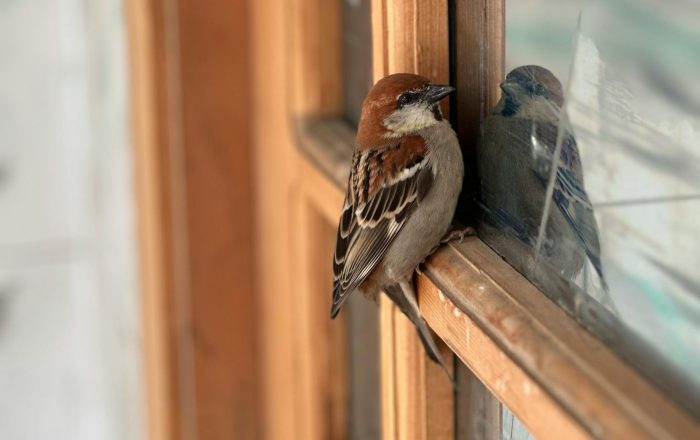
For more context on how wild animals interact with human spaces and what those interactions mean for their wellbeing, the article on why wild animals are moving to cities covers the broader picture of human-wildlife contact zones. And if you are considering how to make your property less of a hazard to local wildlife in the first place, the guide on stopping birds from hitting windows addresses one of the most common sources of injured birds that people encounter near their homes.
The first minutes after you find an injured animal set the trajectory for its chances. Staying calm, keeping the animal contained and quiet, and getting a licensed rehabilitator on the phone — those three steps are the best thing you can do, and they are enough.