Anúncios
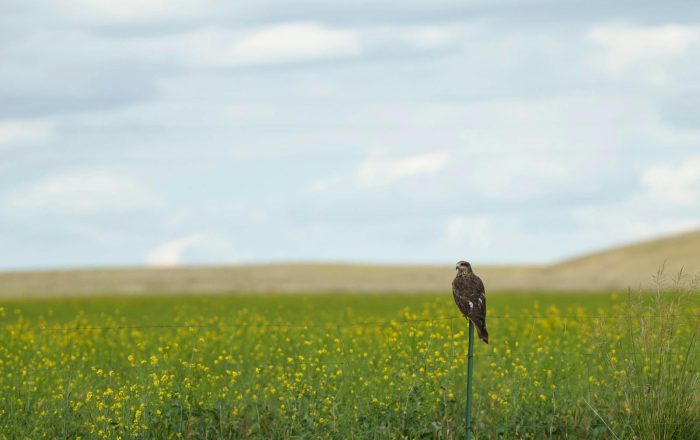
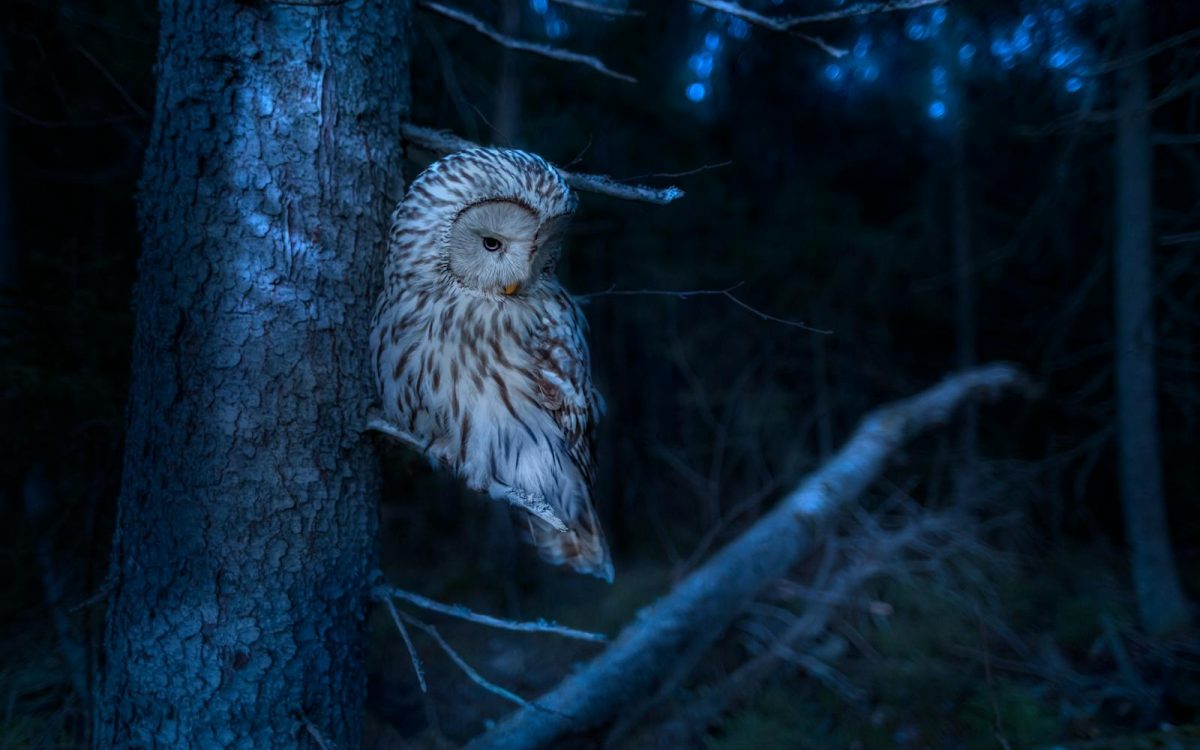
A single oak tree outside my old fieldwork cabin in rural Virginia was a reliable way to understand the day-night divide. By 7 a.m., a red-tailed hawk was using it as a hunting perch, scanning the meadow below. By 9 p.m., a great horned owl had taken the same branch. The tree had not changed. The light had. And two predators, in the same territory, sharing the same resource, had evolved to use it at opposite ends of the clock. That elegant split is what the nocturnal animals versus diurnal comparison is really about.
The Core Difference: Timing as an Evolutionary Strategy
The distinction between nocturnal (night-active) and diurnal (day-active) animals comes down to a simple pressure: competition and predation risk. When a species evolves to be active at a time when fewer competitors and fewer predators are awake, it gains access to resources with less conflict. Over generations, the physical and behavioral tools needed to thrive at that time get reinforced by natural selection.
Anúncios
This is why the nocturnal-vs-diurnal split is not random. It is a scheduling system shaped by millions of years of pressure. And because neither slot is obviously superior, both are filled. Night offers reduced competition and lower heat. Day offers better visibility, easier social coordination, and for many insects, the warmth needed to fly. Different species paid different costs to occupy each window.
How Nocturnal Animals Navigate the Dark
The adaptations that nocturnal animals have developed to function in low light are extraordinary. The tarsier, a tiny primate from Southeast Asia, has eyes so large relative to its skull that they cannot move in their sockets. The animal turns its whole head to look around, rotating it nearly 180 degrees. Each eye is roughly the same size as its brain. That level of investment in light-gathering tells you everything about how serious the challenge of navigating at night really is.
Anúncios
Beyond vision, nocturnal animals rely heavily on other senses. Many species of owl can locate a mouse under six inches of snow in complete darkness, using hearing alone. The facial disc of an owl is not just decoration; it functions as a parabolic reflector that channels sound waves toward the ear openings, which are positioned asymmetrically in some species to allow precise three-dimensional sound location.
Bats use echolocation: they emit ultrasonic pulses and interpret the returning echoes with enough precision to catch individual moths in flight, avoiding obstacles as thin as a wire in total darkness. Some moths have evolved ears tuned to bat frequencies specifically to detect an incoming predator and take evasive action. This arms race between bat sonar and moth hearing has been running for around 50 million years.
Chemical senses also come into their own at night. Many nocturnal mammals use scent marking as a communication system that persists through both day and night, leaving information about territory, reproductive status, and individual identity in a form that does not require any light at all to read.
How Diurnal Animals Work the Day Shift
Diurnal animals have evolved in the opposite direction: maximizing the advantages of light. Color vision is one of the most striking of these advantages. Most birds have four types of color receptor cells, compared to three in humans, and can see into the ultraviolet spectrum. This opens up a world of plumage signals and fruit colors invisible to us. A sunlit meadow that looks uniformly green to our eyes is, to a bumblebee, a detailed map of ultraviolet landing guides on flower petals.
Social behavior is far easier in daylight. Meerkats stand sentinel on termite mounds, scanning for raptors, using visual alarm calls that relay information instantly through the group. Flocks of birds coordinate their wheeling flight with split-second visual cues. Diurnal primates, including ourselves, use facial expressions, posture, and color signals that only work when you can be seen.
Temperature regulation also favors daytime activity for many species. Insects, reptiles, and some mammals need warmth to function at full capacity. A butterfly cannot fly if its thorax is too cold. Lizards spend morning hours basking not for luxury but to prime their muscles for the hunting and foraging ahead. Daytime sunlight provides this energy directly in a way that night does not.
Crepuscular Animals: The In-Between Strategy
Some species have opted out of both full commitment, choosing instead the low-light windows of dawn and dusk. These crepuscular animals, from the Latin ‘crepusculum’ meaning twilight, are trying to have it both ways. The light is low enough to deter the fastest diurnal predators, but the full dark of night has not yet shut down visibility entirely.
White-tailed deer are a good example. In areas with predator pressure or hunting, they become strongly crepuscular, feeding most intensely in the half-hour before sunset and the half-hour after sunrise. Rabbits, skunks, and many species of small antelope follow a similar pattern. If you have ever noticed that wildlife seems especially active around dusk, this is why: you are catching the crepuscular crowd at peak activity.
Side-by-Side: Key Differences at a Glance
- Eyes: Nocturnal animals typically have larger pupils and a higher ratio of rod cells for light sensitivity; diurnal animals have smaller pupils with more cone cells for color and detail.
- Hearing: Often more highly developed in nocturnal species, particularly in predators that hunt by sound.
- Color vision: Generally more limited in nocturnal animals, more elaborate in diurnal ones, especially birds.
- Body temperature: Diurnal species, especially insects and reptiles, often rely on solar warming to function; nocturnal species must maintain activity in cool conditions.
- Social signaling: Visual signals like bright plumage or color displays dominate diurnal communication; scent and sound dominate nocturnal communication.
How Predators Influence Activity Timing
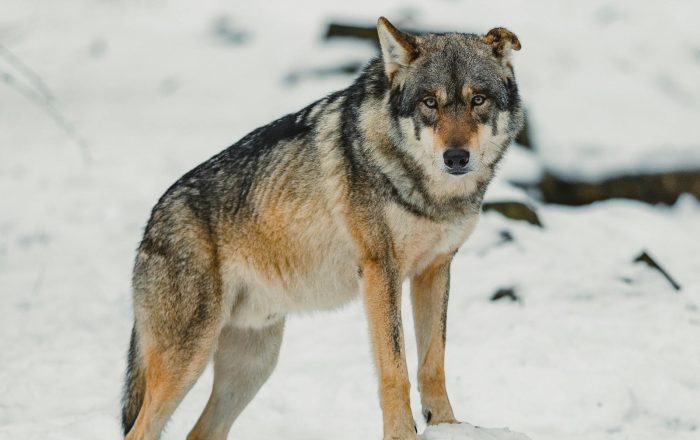
The presence of predators is one of the most powerful forces shaping whether a species is night- or day-active. When a predator operates mostly by day, its prey often shifts toward night. When large nocturnal predators like leopards are the main threat, smaller animals may push toward dawn-and-dusk activity to avoid both the nocturnal cat and the diurnal eagle.
This relationship between predators and prey timing is so strong that scientists have used it to infer historical predation pressure from modern behavior. Species that are now completely diurnal in areas with no surviving predators often retain strong flight responses to predator silhouettes, suggesting that the behavior was shaped by threats that have since been removed. You can explore how this interplay works in more detail in our article on predator and prey relationships.
When Human Activity Reshapes the Schedule
One of the quieter stories in wildlife biology over the last two decades is the creeping shift toward nocturnality in many mammal species living near human activity. A 2018 analysis published in the journal Science examined dozens of species across six continents and found that animals living in human-dominated landscapes had increased their nighttime activity, in some cases doubling it compared to populations in undisturbed areas.
This makes sense as an adaptive response. Humans are overwhelmingly diurnal, concentrated in their activity between sunrise and midnight. An animal that simply moves its active hours away from human peak activity reduces encounters, reduces stress, and in many cases reduces direct mortality. The change has been observed in bears, wild boar, deer, tigers, and coyotes. It is one of the ways that wildlife adapts to a world that was not built with them in mind.
The ecological costs of this shift are still being studied. If predators shift to nighttime to avoid humans, and prey species do the same for the same reason, the predator-prey dynamic can become compressed into a narrow nocturnal window where both are active, potentially increasing encounter rates and changing energy budgets. Understanding how animals adapt to survive in shifting conditions is an active and important field of research.
What to Listen for After Dark
One of the most rewarding ways to appreciate the nocturnal world without any special equipment is simply to listen. Step outside on a still night, give your ears two or three minutes to adjust, and the world resolves into a rich soundscape. In woodland areas, you might catch the territorial hoot of an owl, the dry rasp of a nightjar, or the high-pitched contact calls of bats, just at the edge of human hearing range. Near water, frogs and toads run their own nighttime choruses that can be as loud and complex as any dawn bird chorus.
The nocturnal shift is not a lesser version of the daytime world. It is a fully realized parallel version with its own cast of characters and its own rules. The split between nocturnal and diurnal life is one of the most fundamental organizational principles in the animal kingdom, and once you start noticing it, the natural world reveals twice as much as it did before.