Anúncios
Three weeks after digging a pond the size of a dining table in a suburban garden, the first common blue damselfly appeared. By the end of the first summer there were pond skaters, water boatmen, three species of dragonfly, a visiting heron, and evidence of frogs sheltering in the marginal plants. That speed of colonization is not unusual. Wildlife does not wait for an invitation; it finds water quickly. Your job is simply to build something worth finding.
Choosing the Right Spot for Your Wildlife Pond
Position matters more than size. A pond in full shade will struggle to support plant life and will accumulate leaf litter quickly, reducing water quality. Aim for a spot that receives at least four to six hours of sunlight each day. Morning sun is preferable because it warms the water gently without causing the algal blooms that intense afternoon sun can trigger, especially in shallow ponds.
Anúncios
Avoid placing your pond directly under deciduous trees. Autumn leaf fall will fill it with decomposing organic matter that depletes oxygen levels and can cause problems for overwintering animals. A distance of at least three meters from large trees is a reasonable minimum. Also think about access for you: a pond you can observe easily from a window or seating area rewards you with far more wildlife sightings than one tucked in a forgotten corner.
Planning Depth and Shape
The single most important design feature of a wildlife pond is a gradual slope on at least one side. A gently shelving edge allows small mammals, hedgehogs, and birds to wade in and out safely, and lets insects that fall in climb out again. A pond with sheer sides is a trap for any creature that falls in, regardless of how well-planted it is.
Anúncios
Aim for at least three distinct depth zones. A shallow beach area of five to ten centimeters at the edge allows birds to drink and bathe. A mid-depth shelf of twenty to thirty centimeters suits marginal plants like marsh marigold and water mint. A deeper central zone of forty to sixty centimeters or more provides a refuge for amphibians and invertebrates during drought and hard frosts. Even a small pond can incorporate all three zones with careful digging.
Lining and Filling Your Wildlife Pond
For a dug pond, a butyl rubber liner is the most durable choice and is safe for wildlife, lasting twenty to thirty years if protected from UV light at the edges. EPDM pond liner is a slightly cheaper alternative with similar performance. Before laying the liner, remove any sharp stones from the excavation and lay a protective underlay, an old carpet, or a thick layer of sand to prevent punctures.
Fill your pond with rainwater wherever possible. Tap water contains chlorine and phosphates that can trigger algal blooms and take weeks to settle. If you need to use tap water to get started, let it stand for two to three days before adding plants. A water butt connected to a downpipe from your roof is the ideal long-term solution for topping up the pond during dry spells without reintroducing treated water chemicals.
Do not add water from other ponds. This can introduce invasive plants, non-native invertebrates, or diseases such as chytrid fungus that affects amphibians. Let wildlife colonize naturally, which it will do faster than most people expect.
Planting Around and Inside the Pond
Plants serve three functions in a wildlife pond: they oxygenate the water, provide cover for invertebrates and amphibians, and help regulate algae by competing for nutrients. Choose a mix of submerged, floating, and marginal species, all native to your region if possible.
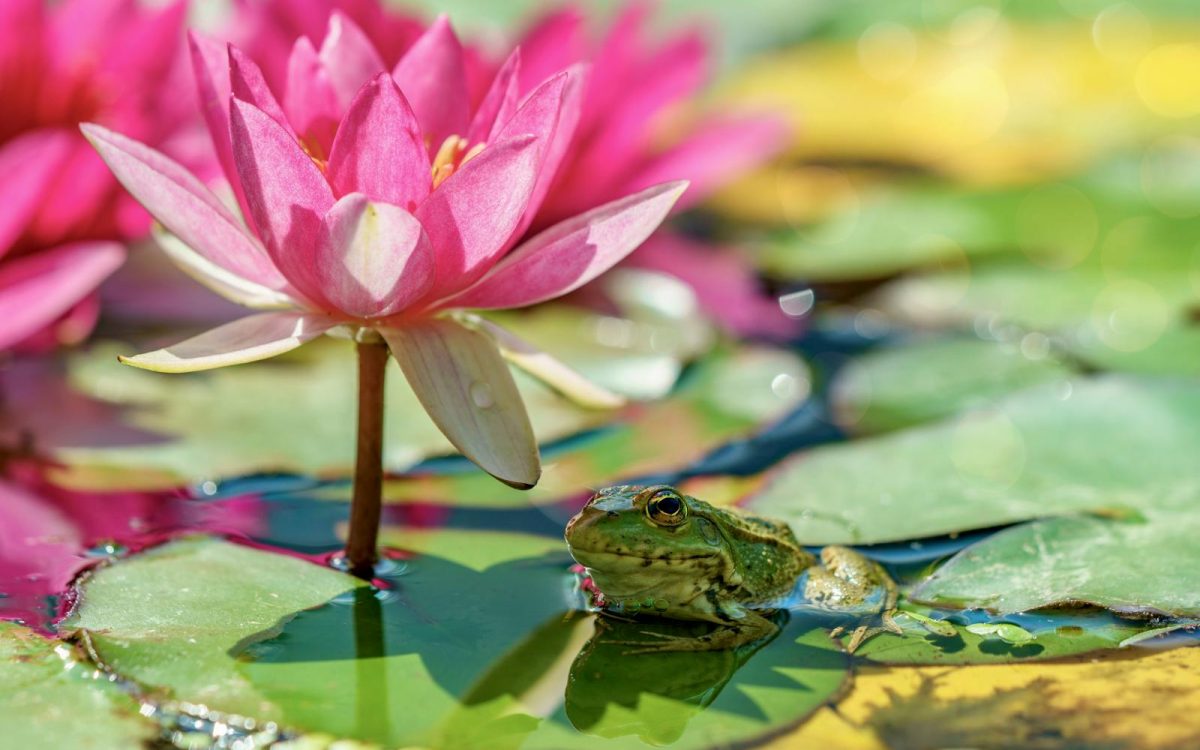
Good submerged oxygenators include hornwort (Ceratophyllum demersum) and native water crowfoot. These grow fully underwater and are essential for water quality in a pond without a pump. Floating plants like water lilies shade the surface, keeping the water cooler in summer and reducing algae. For the shelved margins, native options such as marsh marigold, water forget-me-not, ragged robin, and purple loosestrife (in moderation) provide nectar for insects and shelter for frogs.
Avoid non-native invasives such as water hyacinth (in temperate zones), New Zealand pygmyweed, and any plant sold without a clear native-species label. These can spread beyond your pond into local waterways and cause serious ecological damage. When in doubt, check the label against a regional invasive species list.
Building Wildlife-Friendly Edges
The area surrounding a pond is as important as the water itself. A rough, varied edge with stones, logs, and dense planting gives amphibians somewhere to shelter when they leave the water, and invertebrates somewhere to pupate. A single flat stone tilted slightly over the water makes a perfect perch for a dragonfly to warm itself and watch for prey.
Create a log pile within a few meters of the pond. Toads and ground beetles use log piles as daytime refuges and overwinter in them, and their proximity to water makes the pond more useful as a breeding site. A bank of native wildflowers or a small patch of long grass nearby extends the habitat for the creatures that will emerge from your pond. This kind of layered thinking, connecting your pond to the rest of your wildlife-friendly yard, multiplies its value significantly.
Maintenance Through the Seasons
A well-designed wildlife pond needs relatively little intervention once established. In late summer, remove any blanketweed by hand or with a stick, but leave the removed vegetation on the pond edge for a day before composting it so any trapped invertebrates can return to the water. In autumn, net the pond to catch falling leaves, or remove them regularly by hand. In winter, if the surface freezes hard, make a hole by standing a pan of hot water on the ice rather than smashing it, which sends shockwaves through the water that can harm overwintering animals.
Every three to five years, a wildlife pond benefits from a partial clear-out: removing some of the accumulated silt from the deep zone and dividing overgrown marginal plants. Always leave some of the water and plant material in place so the pond retains its established community of invertebrates and microorganisms rather than starting over from scratch.
What to Expect and When
The first visitors tend to be the ones that travel by air. Water boatmen, pond skaters, and diving beetles can appear within days of filling a new pond. Dragonflies and damselflies investigate any reflective water surface in summer, and egg-laying females will find your pond within weeks if it has suitable marginal vegetation. Frogs and toads are more cautious and usually take a full season or two to move in as breeding residents, though they may visit to drink long before that.
Birds will start using the shallow edge almost immediately, and a hedgehog path through the garden may soon lead directly to the pond edge. If you are also building habitat for insects and pollinators, the guide to attracting butterflies to your garden explains how layered planting near water creates the full spectrum of conditions that makes a garden truly alive.
Build the pond, plant the edges, and then step back. The most rewarding part of a wildlife pond is not the building. It is the first time you kneel down and see, just below the surface, a dozen small lives already going about their business as if the pond had always been there.