Anúncios
A retired schoolteacher once told me she had been dropping money into a well-known environmental charity every month for years, confident she was helping tigers. When I gently mentioned that the charity she named spent most of its budget on print campaigns rather than field work, she was genuinely shocked. She had not been misled by bad people. She had been let down by a myth: the idea that caring and paying is the same as doing something effective. Conservation myths are rarely invented by cynics. Most of them start as half-truths, get repeated in good faith, and eventually calcify into assumptions that shape how millions of people spend their time and money.
Myth 1: Planting Trees Fixes Everything
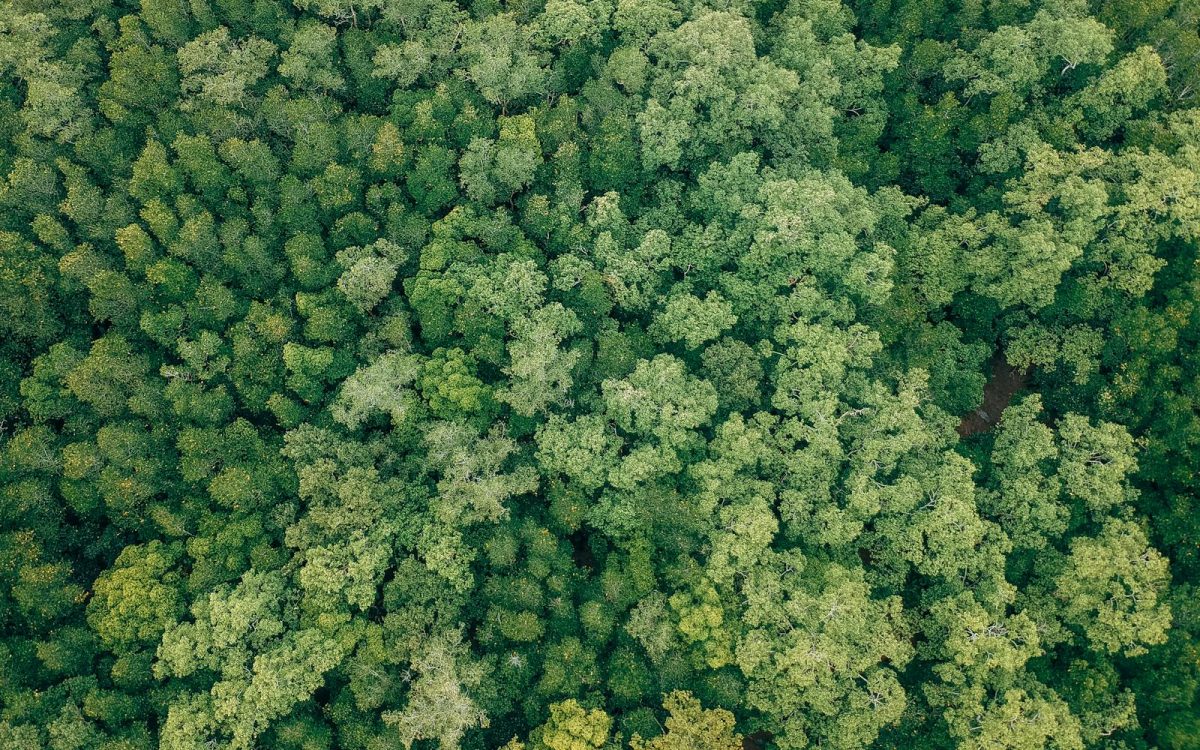
Tree-planting campaigns photograph beautifully, and they genuinely can help. But the phrase ‘plant a tree’ has become such a shorthand for environmental virtue that it now obscures as much as it reveals. The critical variable is what you plant and where. A monoculture plantation of fast-growing non-native eucalyptus soaks up carbon on a spreadsheet while providing almost nothing for local insects, birds, or mammals. Some plantations are established on biodiverse grasslands or peatlands, habitats that store carbon and support specialist wildlife precisely because they are not forests. Replacing them with trees causes a net loss.
Anúncios
Effective reforestation means the right native species in the right place, supported by long-term monitoring. A patch of mixed native woodland planted thoughtfully on degraded agricultural land is genuinely valuable. The problem is the blanket assumption that more trees always equals more nature. Read the small print on any tree-planting scheme before you donate to it.
Myth 2: Wildlife Needs Wilderness, Not Cities
The image of conservation is usually remote and wild — polar bears, rainforests, vast unbroken savannas. That picture is real, but it crowds out an equally important truth: urban and suburban landscapes can support remarkable biodiversity when managed thoughtfully. Cities already host breeding peregrine falcons, thriving populations of native bees, and in some cases more plant species per square metre than the farmland surrounding them. A network of garden ponds across a mid-sized town can support more amphibian breeding sites than a single nature reserve.
Anúncios
This myth does real damage because it makes people in towns and cities feel that their small yards and balconies are irrelevant. They are not. If you want to understand what backyard changes make the most difference, the article on making your yard wildlife-friendly is a good place to start.
Myth 3: Endangered Species Lists Mean the Hard Work Is Done
Being listed as endangered under national or international law is sometimes described as a species being ‘saved.’ In reality, legal listing is the beginning of a process, not the end of one. It triggers protection measures and, in the best cases, recovery plans. But listing without funding, enforcement, and habitat protection achieves little. There are species that have been legally protected for decades while their populations have continued to shrink because the underlying pressures — habitat conversion, invasive predators, illegal trade — were never adequately addressed.
The labels ‘endangered,’ ‘threatened,’ and ‘critically endangered’ describe a species’ current risk level, not a prognosis. Understanding what those labels actually mean is worth your time. A closer look at what the classification system really tells us shows how the categories work and where their limits lie.
Myth 4: Conservation Is Always at Odds With Local Communities
This is one of the most damaging myths in the field, because it has been used to justify both the exclusion of local people from protected areas and the dismissal of conservation as a form of outside interference. The evidence points the other way. Conservation projects that involve local communities in decision-making, that provide economic benefits and respect traditional land knowledge, consistently outperform top-down fortress approaches. When rangers are drawn from local communities and when communities have a direct stake in the survival of wildlife, enforcement becomes something that people participate in rather than resist.
The tension between conservation and local livelihoods is real in specific situations, but it is not structural or inevitable. It is most often a product of poor design.
Myth 5: Individual Consumer Choices Are the Main Lever
Spend any time reading about conservation and you will encounter exhaustive lists of personal habits: carry a reusable bag, skip the straw, choose sustainably sourced fish. These choices have value. But the myth is that individual consumption is the primary driver of biodiversity loss, and therefore that personal virtue is the primary solution. The evidence on habitat destruction, agricultural expansion, and industrial fisheries points to policy, regulation, and institutional change as the dominant levers.
This does not mean personal choices are meaningless — they aggregate into market signals and social norms. It means that channelling conservation energy exclusively into personal lifestyle changes, while ignoring advocacy, voting, and collective action, underestimates the scale of the problem. Changing your own habits and pressing for systemic change are not competing activities. Both matter, but they operate at very different scales.
Myth 6: Predators Are a Threat to Conservation Goals
The instinct to remove predators to ‘protect’ prey species or livestock has shaped wildlife management for centuries, and it has caused enormous ecological damage. The reintroduction of wolves to Yellowstone is the most studied example of what happens when a top predator returns: elk behaviour shifted, overgrazed riverbanks began to recover, and a cascade of changes rippled through the ecosystem. Apex predators regulate prey populations and, through that regulation, shape vegetation structure and the conditions for other species to survive.
Fear of predators is understandable, especially for farmers and ranchers who have experienced livestock losses. But removing predators as a default conservation strategy consistently backfires. Compensation schemes, predator-deterrent livestock techniques, and community engagement tend to produce better results for both farmers and ecosystems.
Myth 7: Conservation Success Means ‘No Human Activity’
The idea of nature as something existing in opposition to humanity produces protected areas designed primarily to exclude people, and it produces a conservation movement that can feel alienating to anyone who does not fit the image of a wealthy ecotourist or a field scientist. Many of the most biodiverse and resilient landscapes on Earth are traditional agricultural landscapes managed by communities for generations — hedgerow-filled European farmland, rice paddies in Southeast Asia, pastoral grasslands in East Africa.
Recognising the role of human stewardship in creating and maintaining biodiversity does not mean every form of human land use is acceptable. It means that sustainable, low-intensity human presence has often been part of the ecological story of a place, and that conservation works best when it is honest about that history. Excluding humans entirely is neither feasible nor always desirable.
Myths persist because they offer simplicity, and conservation is genuinely complicated. The useful habit is to ask, each time you hear a conservation claim: who benefits from this being the dominant story, and what does the field evidence actually say? The science of what works has advanced considerably in the past two decades. Our assumptions should advance with it.