
Anúncios
Dusk settles over the garden and a dark shape swoops low across the lawn in tight, erratic arcs. If you have ever watched that moment with a mix of wonder and unease, you already have a relationship with bats, even if it has been entirely one-sided. Bats around home are far more common than most people realize, and far less problematic than their reputation suggests. With a little background knowledge and a few practical steps, you can share space with them easily.
What Bats Around Your Home Are Actually Doing
The bat you see at dusk is hunting. A single little brown bat, one of the most common residential species in North America, can catch up to six hundred mosquitoes in an hour. Over a full night of foraging, a colony of several dozen bats in your neighborhood quietly eliminates insects by the tens of thousands. This free pest control has genuine economic value, particularly for anyone trying to maintain a garden without heavy pesticide use.
Anúncios
Bats do not nest in hair, do not attack people, and are not blind. These persistent myths have created far more fear than the animals themselves have ever warranted. If a bat swoops close to you during an evening walk, it is almost certainly tracking an insect near your head, not targeting you. Their echolocation is precise enough to detect a single human hair suspended in the dark; they have no difficulty avoiding people entirely when they choose to.
Common bat species found near buildings in North America include the little brown bat, the big brown bat, and the Mexican free-tailed bat. In the UK, the pipistrelle is the most frequent garden visitor. All of them are insectivores with a heavy preference for moths, mosquitoes, beetles, and gnats.
Anúncios
How Bats End Up in or Around Your Home
Bats do not move in permanently on a whim. They return each year to sites where they have successfully roosted before, often using the same entry point for generations. A gap as small as a centimeter between roof tiles, a space behind a loose fascia board, or a crack where a chimney meets the roofline can serve as an entrance to a roost cavity in the attic or wall space behind exterior cladding.
Maternity colonies, groups of females gathering to give birth and raise pups, are the most common reason a homeowner notices bats in the roof. These roosts are usually quiet, odor-free, and completely undetectable unless you watch the exterior at dusk and notice bats emerging. A roost that produces visible staining on walls or a persistent ammonia smell from accumulated droppings (called guano) is a sign the colony is large or long-established and warrants a professional inspection.
Bats roosting in external locations, under roof eaves, behind shutters, in tree cavities, or in gaps in stone walls, generally require no action at all. These outdoor roost sites are perfectly natural and keep the animals away from interior living spaces entirely.
Bats Around Home: When to Act and How
If bats are roosting inside your attic or wall cavity and you would prefer they did not, the appropriate solution is exclusion, not extermination. Exclusion means sealing all entry points except one, fitting that final opening with a one-way device that allows bats to exit at dusk but prevents re-entry. After a week or two, once all bats have left, the final gap is sealed.
Exclusion must never be done during the maternity season (approximately May through August in the Northern Hemisphere). Pups are flightless during this window, and sealing them inside causes them to die, which creates a smell, an infestation of secondary insects, and in many regions a legal problem. The permitted exclusion window is typically late summer through early autumn, after pups have fledged, or late winter before females return to give birth.
Before any exclusion work, contact your state or county wildlife agency. Many have free advisory services and can confirm local regulations and recommended contractors. This is one situation where a quick phone call saves a significant amount of trouble later. For more on understanding how wildlife laws relate to ordinary household situations, the article on what to do with injured wild animals explains how local agencies can help.
Installing a Bat Box: Inviting Bats to the Right Place
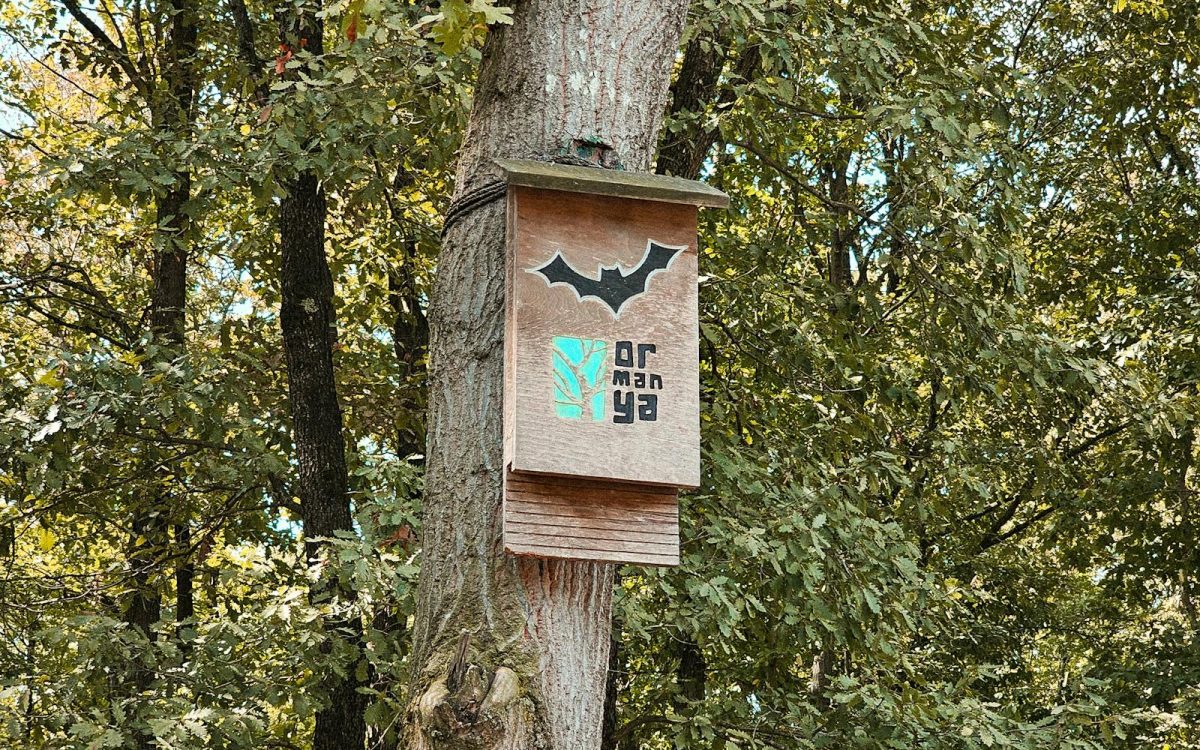
One of the most rewarding ways to support bats while keeping them out of roof spaces is to install a purpose-built bat box nearby. A bat box gives a colony a warm, safe roost cavity that is separate from your home, and it keeps the animals close enough to benefit from their insect control.
Placement is the most critical factor. Bats need warmth for successful pup rearing, so the box should face south or southwest and receive direct sunlight for at least six hours per day. Mount it at a minimum height of four meters, on a building wall or a purpose-made post, away from branches that would give predators easy access. A dark-painted wooden box heats faster than an unpainted one, which is especially beneficial in cooler climates.
Position the box within a few hundred meters of a water source such as a pond, stream, or even a garden water feature, since bats drink on the wing at low speed. A box installed in spring or early summer in a good location may be adopted within the same season, though a wait of one to two full years is entirely normal. Bat boxes near the edge of an area of lawn or mixed planting, where insect populations are highest, tend to be adopted most quickly.
A Bat Indoors: Step-by-Step
A bat inside a living space is the scenario that causes the most distress, but it is almost always a young animal that has lost its way. Juvenile bats fledge in late summer and occasionally enter houses through open windows or chimneys while exploring. The good news is that an indoor bat is usually easy to guide back out.
Isolate the bat to one room by closing interior doors. Open a window or exterior door wide and leave the room entirely, turning off interior lights. Most bats will find the opening and leave within thirty minutes once the room is quiet and there are no people. If the bat has landed and appears unable to fly, put on thick leather gloves, place a small cardboard box or container over it, slide cardboard underneath to trap it, and release it outside well above ground level on a rough vertical surface such as a tree trunk or wall, which allows it to launch. Never release a bat directly onto grass, as it cannot take off from a flat horizontal surface.
If anyone in your household may have been in the same room as a bat while sleeping, consult your local health department. Rabies exposure while sleeping is a rare but real concern because bat bites are small enough to go unnoticed. This precaution is simply good sense, not cause for panic.
Bats and Your Garden: The Bigger Picture
Across much of the world, bat populations are in decline due to habitat loss, pesticide reduction of insect prey, and disturbance of roost sites. In that context, a bat colony near your home is genuinely something worth protecting. Gardens with native flowering plants attract the moths and beetles that bats prefer. Reducing garden lighting at night also helps, since bright lights can disorient bats and suppress the insect activity they depend on.
A garden pond is one of the single best additions for bats. Open water supports aquatic insects during their larval stages, and bats learn the locations of ponds extremely well, returning to drink and hunt above the surface night after night. The article on creating a small wildlife pond covers exactly how to set one up even in a compact space.
Bats have shared territory with people for as long as people have had rooftops. With a patient approach, accurate information, and a bat box in a sunny spot, that relationship can shift from something that worries you to something that genuinely enriches an evening in the garden.