
Anúncios
Some of the most repeated animal facts in common circulation are simply wrong. They have been in books, cartoons, nature documentaries, and everyday conversation long enough to feel like settled knowledge, and that familiarity is exactly what makes them hard to dislodge. Working through them one by one is a useful exercise, not just as myth-busting for its own sake, but because each correction opens up a more accurate and often more remarkable picture of the animal concerned.
Misconceptions About Behavior
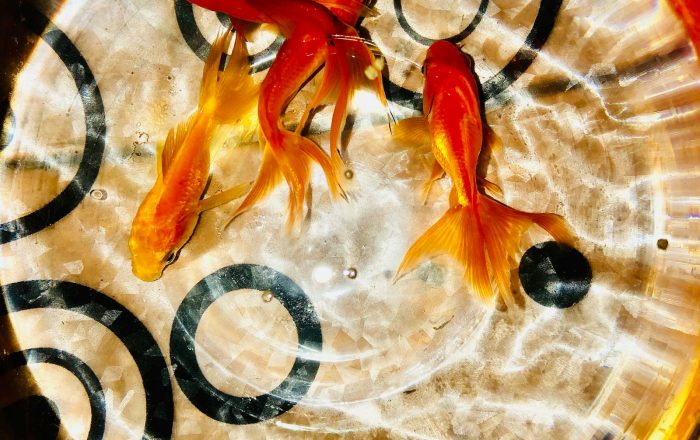
1. Goldfish have a three-second memory. This is one of the most durable myths in animal behavior, and it is thoroughly false. Laboratory studies have trained goldfish to navigate mazes, press levers for food rewards, and return to specific areas at particular times of day. Some of these learned behaviors have been retained for months. The three-second figure appears to have no factual origin whatsoever. Goldfish have a memory capacity appropriate for a fish navigating complex waterway environments, which requires remembering food sources, predator locations, and seasonal patterns.
Anúncios
2. Ostriches bury their heads in the sand when frightened. Ostriches do not do this. The image most likely comes from watching birds tend ground-level nests; from a distance, a bird lowering its head to check eggs can look like a head disappearing into the earth. When threatened, ostriches run at speeds up to 70 kilometers per hour, drop flat on the ground to camouflage themselves, or kick with lethal force when cornered. The full story behind this myth explains where the illusion comes from and how it became fixed in global culture.
3. Lemmings commit mass suicide by jumping off cliffs. Lemmings do not do this. The myth traces directly to staged footage filmed for a 1958 Disney documentary in which filmmakers purchased lemmings from Inuit hunters and pushed them off a cliff for dramatic effect. Lemmings do experience dramatic population cycles and sometimes migrate in large groups, during which some individuals drown crossing water, but this is accidental, not intentional. The suicide image is a complete fabrication rooted in fraudulent filmmaking.
Anúncios
4. A mother bird will abandon her chick if a human touches it. Bird mothers do not recognize their chicks by scent. Most birds have a limited sense of smell and cannot detect human scent on their young. If you find a fallen nestling and can locate the nest, returning it is the right thing to do and will not cause rejection. The myth’s persistence has real consequences: it leads well-meaning people to leave fallen chicks alone when intervention would have saved them. The touching-baby-birds myth is one of the most consequential misconceptions in backyard nature care.
Misconceptions About Senses and Perception
5. Bulls charge because they see red. Cattle are red-green color blind. A red cape looks like a dull olive shade to a bull. What triggers a charge is the rapid movement of the cape, the agitation of confinement, and the stress of the situation. Bullfighting matadors use red capes for tradition and for concealing bloodstains, not because the color provokes the bull. The color is irrelevant to the animal; the full explanation of the red-bull myth covers the visual science of bovine color perception in detail.
6. Bats are blind. No bat species is blind. All bats have functional eyes, and most can see reasonably well in low light. Many fruit bats have excellent vision and use it as their primary navigational sense. The widespread use of echolocation by insect-eating bats has created the impression that they must have traded eyesight for sound, but the two systems coexist. The phrase “blind as a bat” describes something that does not exist in nature.
7. Dogs see only in black and white. Dogs have two types of color receptors compared to three in humans. They see a world of blues and yellows without the red-green dimension that humans have. This is a more limited color range than human vision but a far richer experience than total monochrome. A dog watching a sunset sees blue sky and yellowish light, not grey tones. The black-and-white claim overstates the limitation significantly.
Misconceptions About Danger
8. Sharks are mindless killing machines that target humans. Of the more than 500 shark species, only a handful have ever been involved in an attack on a human, and most attacks are investigatory bites rather than predatory feeding. Sharks do not target humans as prey. The species involved in the majority of documented incidents, the great white, bull, and tiger shark, are large, curious predators exploring unfamiliar objects. Global shark attack fatalities typically number fewer than ten per year. More people are killed annually by falling coconuts or by cows.
9. Daddy long legs spiders are highly venomous but their fangs are too small to bite humans. This claim has two problems. Most creatures called “daddy long legs” in common speech are harvestmen, which are not spiders and have no venom glands at all. The cellar spider, which is an actual spider sometimes called daddy long legs, does have venom, but testing found it comparable in toxicity to other common spiders, not unusually potent. The “too venomous but can’t bite” claim has been tested and does not hold up.
Misconceptions About Intelligence and Capacity
10. Elephants are afraid of mice. This appears to originate from Aristotle and has been illustrated in cartoons ever since. Elephants have poor close-range vision and can certainly startle at small, quick-moving animals in their peripheral vision, but they do not have a specific fear of mice. Studies with African elephants showed more interest in mouse-scented items than alarm. The myth probably persists because the size contrast is so vivid and the image is so memorable.
11. Chameleons change color to match their surroundings as camouflage. This is partly true but significantly oversimplified. Chameleons do change color, but the primary function is communication, not camouflage. Color shifts signal mood, reproductive readiness, temperature regulation, and social status to other chameleons. Their resting coloration already provides reasonable background matching; the active color changes are largely directed at other chameleons, not at predators. Different species use color change differently, and the purely camouflage interpretation misses most of what is happening.
12. Touching a toad gives you warts. Human warts are caused by the human papillomavirus, which toads do not carry. Toads have bumpy skin containing parotoid glands that secrete mild toxins as a defense against predators. These secretions can irritate mucous membranes, so washing hands after handling toads is sensible practice. But the bumps on a toad’s back are glands, not warts, and they cannot transmit anything that causes warts in humans. The visual similarity between the skin texture and human warts seems to be the entire source of this myth.
What These Corrections Have in Common
Looking across these twelve examples, a few patterns emerge. Many myths involve fearsome animals being made more threatening than they are (sharks, daddy long legs, toad toxins) or harmless animals being given comically exaggerated weakness (elephants vs mice, blind bats). Some involve attributing human-like motivations to animals (ostriches avoiding problems, lemmings choosing death). Others simply got started through a visual misreading that was never corrected at scale.
None of these corrections make the animals less interesting. In every case, the accurate biology is at least as compelling as the myth, and often more so. A chameleon communicating complex social information through color shifts is a more impressive animal than one simply hiding from predators. A goldfish with genuine long-term memory is a more capable creature than the amnesiac of the common caricature. Bats navigating the night with echolocation while also using good eyesight are more remarkable for doing both than they would be if the myth were true.
The animal world is strange enough on its own terms that it does not need embellishment. Each correction here is an invitation to look at a familiar creature with less assumed knowledge and more genuine curiosity. That is usually where the more interesting observations begin.
See also: Shark Myths That Refuse to Die, and the Real Facts.