
Anúncios
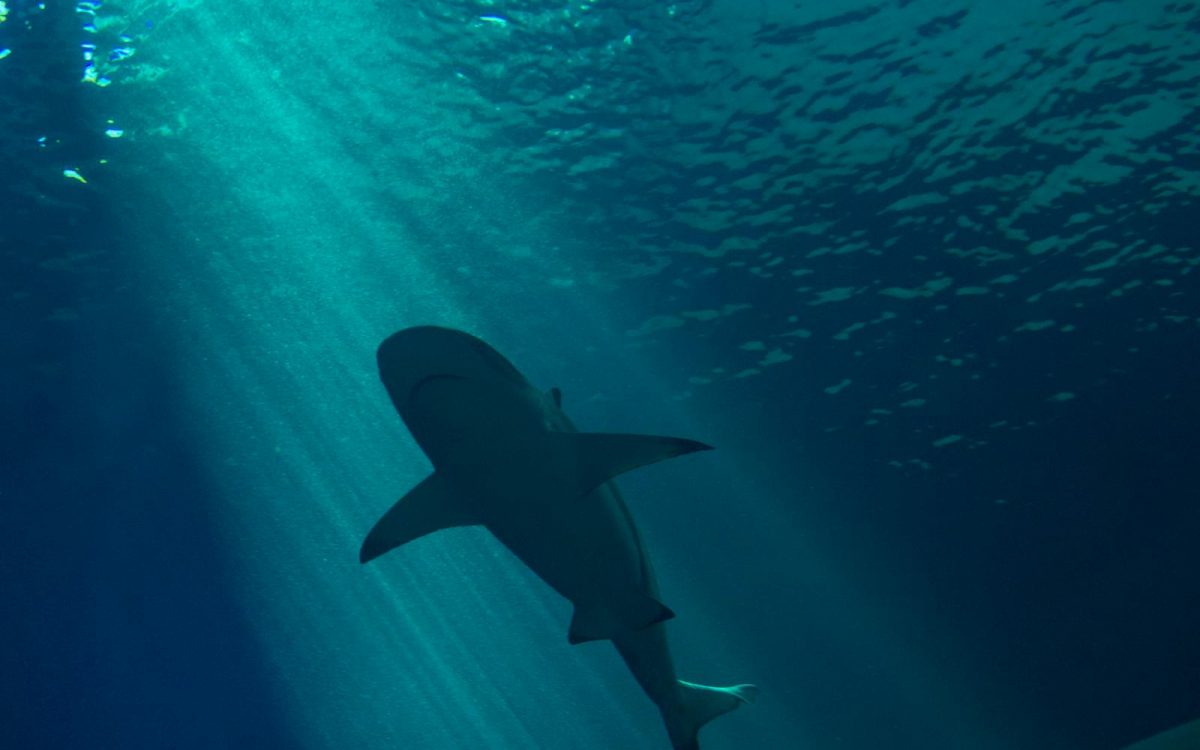
Long before a certain film scored its two-note theme into collective memory, sharks were already objects of fear and fascination. Sailors told stories. Fishermen made claims. But the modern era of shark mythology begins on a summer Friday in 1975, when “Jaws” turned a complex predator into a symbol of mindless menace. Fifty years of popular culture built on that foundation have left shark myths deeply embedded in how most people understand these animals. Many of the myths are not just wrong; they actively undermine conservation efforts for a group of species that is in serious trouble.
The “Man-Eater” Myth
The idea that sharks, particularly great whites, actively hunt and prefer human prey is the foundational shark myth, and it is not supported by how attacks actually happen. The majority of shark bites on humans are single-bite events in which the shark releases and swims away. This is consistent with investigatory behavior, not predatory feeding. Sharks use their mouths to investigate unfamiliar objects the way a dog might use its nose. A human floating on a surfboard presents a profile that may resemble a sea lion from below in turbid water, prompting an investigatory bite. If the shark wanted to feed, the outcome would be very different. Most shark species have no interest in human flesh as food, and the evidence for this comes from the pattern of attacks themselves, not from wishful thinking about shark behavior.
Anúncios
The Numbers That Put Risk in Perspective
The International Shark Attack File at the Florida Museum of Natural History tracks every credible shark bite globally. In a typical year, there are around 70 to 80 unprovoked bites worldwide and roughly five to eight deaths. The United States averages around one shark-related death per year. In the same period, the United States records around 30 to 40 deaths from dog attacks annually. Cows kill more people in the United States per year than sharks do globally. These comparisons are not meant to dismiss shark bites as trivial, a shark bite is a serious traumatic injury. The point is that the risk is so far below its cultural prominence that it distorts public policy and wildlife management in ways that harm sharks without protecting people. The ocean is not, by any measure, a feeding ground for man-eating sharks.
The Smell Myth and What Sharks Actually Detect
Every documentary and thriller repeats some version of the claim that sharks can smell a drop of blood from miles away. The “miles away” figure appears in popular media but has no clear scientific source. What is actually true is that sharks have highly developed olfactory systems, capable of detecting amino acids and other compounds at low concentrations. They navigate toward scent sources by following concentration gradients, moving toward where the smell is stronger. How far away they can first detect a signal depends on water movement, temperature, and the specific chemical involved. A small amount of blood diluted in the open ocean becomes undetectable quite quickly. The myth inflates a genuine sensory capability to cartoonish proportions and contributes to the idea that humans are perpetually at risk simply by entering the water.
Anúncios
Do Sharks Attack People Out of Hunger?
A related myth is that hungry sharks are especially dangerous to humans. Researchers studying great white shark feeding behavior have found that after feeding on a large prey item like a seal, sharks can go weeks without eating again. They are not in a constant state of feeding pressure. The timing of most human-shark encounters has more to do with when and where humans enter the water, at dawn and dusk in areas adjacent to seal colonies, for example, than with shark hunger cycles. Bull sharks, which are among the more commonly implicated species in shallow-water incidents, often explore river mouths and coastal areas where they encounter humans. This overlap of habitat, not shark hunger, explains the encounter rate.
The Shark Fin and the Fisheries Crisis
While the public worries about sharks attacking them, sharks face a survival crisis in the opposite direction. An estimated 70 to 100 million sharks are killed by humans each year, primarily for the shark fin trade, as bycatch in commercial fishing, and for sport. Many shark species have life histories that make them particularly vulnerable to overfishing: they mature slowly, live long lives, and produce few offspring. A great white shark, for example, may not reproduce until its mid-teens and will have relatively few pups in its lifetime. Removing large numbers of sharks from the ocean faster than they can reproduce has caused population declines of 70 percent or more in some species since the 1970s. The very decade that gave us the most famous shark myth is the decade the real shark crisis began. If you want to understand how losing a top predator affects everything else, the article on apex predators is a useful place to start.
What Sharks Actually Do in the Ocean
Sharks function as regulators of marine ecosystems in ways that affect the entire food web. By removing slow, sick, and old individuals from prey populations, they improve the overall health of those populations. By creating zones of wariness around feeding areas, they prevent prey species from overgrazing critical habitats like seagrass beds. A 2016 study in the Pacific found that reef areas with healthy shark populations had measurably healthier coral compared to areas where sharks had been fished out. The prey fish in shark-free areas fed more heavily and with less caution, causing damage to reef structure that cascaded through the ecosystem. Understanding this pattern helps clarify why shark conservation is not merely about protecting an impressive animal, it is about maintaining the architecture of ocean ecosystems. The dynamics mirror what ecologists have found with land-based predators, which you can explore further in the article on how predator-prey relationships actually work.
The Simplest Way to Reduce Actual Risk
For the small number of people who want practical guidance on minimizing the already-small risk of a shark encounter, the patterns are straightforward. Most bites occur at dawn and dusk, when sharks feed actively and visibility is reduced. Staying out of the water at those times in areas known for shark activity is sensible. Avoid entering the water with open wounds that are actively bleeding. Bright contrasts, like white and black wetsuit patterns, may attract attention from sharks hunting in low visibility. None of this is groundbreaking, but it is grounded in how sharks actually behave rather than how films have depicted them.
The sharks that starred in fifty years of monster movies deserve a different kind of attention: the kind that leads to understanding rather than reflexive fear. They have survived five mass extinction events and shaped ocean life for hundreds of millions of years. Protecting them, and correcting the myths that make that harder, is a practical matter as much as a moral one.