Anúncios
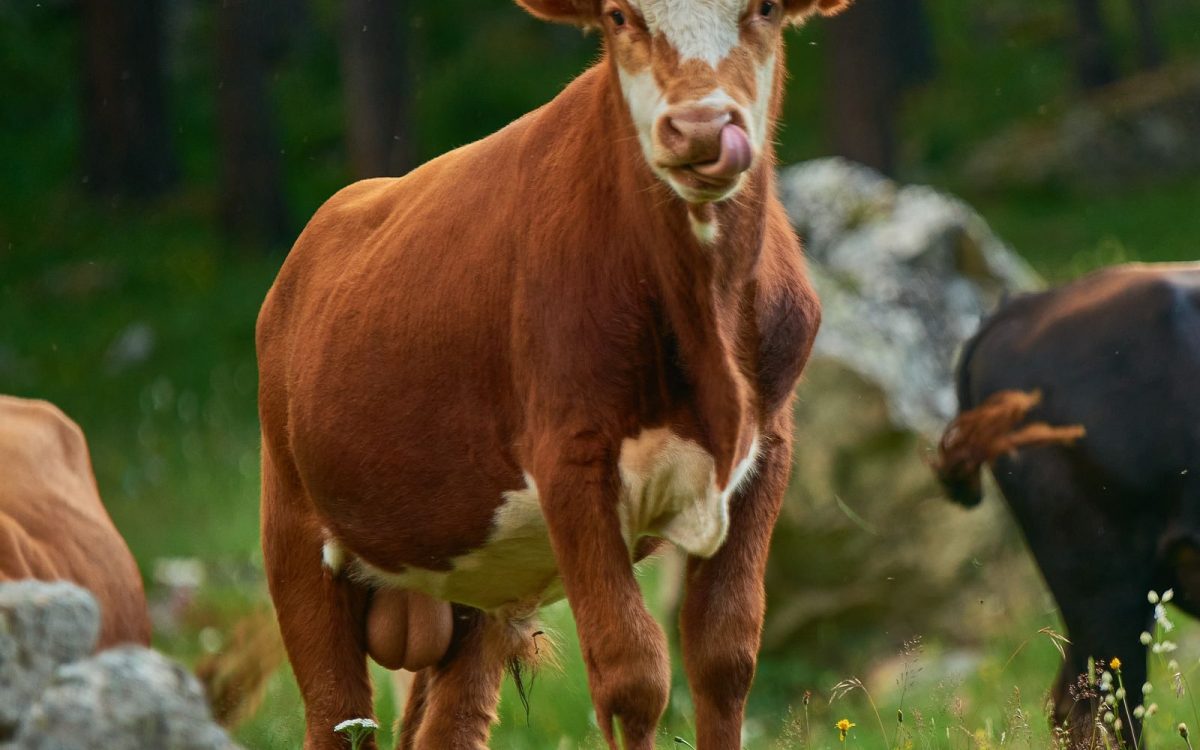
Every bullfighting poster ever printed, every cartoon of a snorting bull, and probably a few playground arguments have cemented the same idea: red makes bulls angry. Wave something red and the bull charges. The color is the trigger. It is such a vivid image that questioning it feels almost absurd. But the science of bovine vision dismantles this belief quickly, and understanding what is really going on is far more interesting than the myth.
What Do Bulls Actually See?
Cattle are dichromats. That means their eyes contain two types of color-sensitive cells, compared to the three types found in human eyes. The practical result is that bulls and cows see a color range similar to a person with red-green color blindness. Red does not register as a distinct, vivid hue. To a bull, a red cape looks roughly the same shade as a dull yellow-brown or olive tone. There is no visual alarm triggered by the wavelength of red light.
Anúncios
This has been confirmed by researchers studying bovine sensory biology. Cattle perceive blues and yellows reasonably well, but they struggle to separate red from green and the many shades between them. A bright red flag and a lime green flag would look nearly identical to a bull standing in a field.
Where the Myth Came From
The red-bull association almost certainly grew from watching bullfighting. In a traditional corrida, a matador eventually uses a small red cloth called a muleta, and the bull charges toward it repeatedly. For generations of spectators, the logical conclusion was that the color was the provocation. The cape is red, the bull charges, therefore red causes the charge. It is a completely understandable inference from what you see.
Anúncios
The muleta is red for two reasons that have nothing to do with the bull. First, it masks bloodstains during the later stages of a fight. Second, centuries of practice and tradition locked the color in place. Matadors used red capes before anyone studied bovine vision, and the tradition continued long after the reasoning would have been corrected.
Movement Is the Real Trigger
Watch any bullfighting footage with fresh eyes and you notice something important: the matador is always moving the cape. The cloth sweeps, flares, and swirls in wide arcs. That motion is what the bull tracks and charges toward. Cattle have excellent motion detection, which makes evolutionary sense for a prey animal that needs to spot predators quickly. Anything that moves fast and unpredictably in their visual field demands immediate attention.
Laboratory experiments testing cattle responses to colored cloths confirm this. When a cloth is held motionless, bulls show no particular interest regardless of its color. When the cloth is moved rapidly, bulls respond to it. The color of the cloth in those tests made no measurable difference to how quickly or forcefully the bull charged.
This is not just an academic point. It has real safety implications. A person who freezes and stands completely still near an agitated bull has a meaningfully better chance of avoiding a charge than someone who waves their arms or runs suddenly. Motion management is the actual variable, not what color you happen to be wearing.
What Actually Makes Bulls Dangerous
Bulls are large, powerful animals, and their capacity for harm is real. The factors that raise danger have nothing to do with color. Confinement stress, particularly in narrow chutes or unfamiliar pens, puts bulls on high alert. Breeding season raises testosterone levels sharply, and bulls during rut are far less predictable than at other times of year. Pain from injury, illness, or poorly fitted equipment can also transform a calm animal into an unpredictable one.
Sudden noise and fast movement from people or vehicles often precede charges on farms. Bulls that were raised with frequent, calm human contact tend to be considerably easier to manage than animals that rarely see people. Handling history matters as much as individual temperament.
It is also worth noting that bulls can be territorial around their herd. A bull that feels a person is threatening nearby cows or competing with him for space may react defensively even if there is no obvious provocation from a human perspective. Understanding how animals assess threat helps explain why a bull’s reaction can seem sudden when from his point of view the tension had been building for minutes.
The Grain of Truth in the Myth
Every persistent myth tends to contain at least a small thread of reality, and this one is no different. Bulls in bullfighting arenas genuinely do charge at red capes repeatedly, so the observation that inspired the myth is accurate. The error was in the explanation. Bullfighting bulls have been agitated before they enter the ring, they are in a stressful, confined environment, and they are reacting to fast movement from a human-shaped target. All of those factors are doing the work that the myth assigned to color.
There is also the fact that red is genuinely a high-contrast color against green pasture, at least to a human observer. If you see someone waving a red flag near cattle, the vividness of the color makes it easy to assume the bull is reacting to it. The myth is a case of misidentifying the cause of a real phenomenon.
Why This Matters Beyond Trivia
Getting this wrong is more than a quiz-night embarrassment. People who believe that red provokes cattle sometimes avoid wearing red near farms, which does nothing useful, while underestimating the actual risks: quick movements, loud noises, cornering animals, and turning your back on a bull that is already watching you. Accurate knowledge about animal behavior is a genuine safety tool.
Cattle welfare also connects here. A bull showing signs of stress or pain is more likely to charge, and recognizing the behavioral cues of an anxious animal, flat ears, a stiff walk, direct staring, is far more useful than keeping a mental list of colors to avoid. Stockmen who work with cattle every day rely on body language reading, not color management, to stay safe.
The wider lesson is that animal behavior myths often persist because they fit a tidy story. A single dramatic cause for a dramatic reaction is easy to remember and repeat. Many well-known animal facts turn out to be just as flawed when tested against actual biology, and each correction opens up a more interesting and more accurate picture of how animals actually experience their world.
A More Accurate Picture of Bull Behavior
Bulls are not hair-trigger aggression machines waiting for the wrong color. Most farm bulls go through their lives without ever injuring anyone. They communicate their mood through posture, vocalization, and behavior, and experienced handlers read those signals the way a practiced naturalist reads tracks. A bull that lowers his head, snorts, and begins pawing the ground is giving a clear warning. A bull that is relaxed, grazing quietly, and glancing up occasionally is simply a large animal going about his day.
Respecting that animal means learning what actually drives his behavior rather than repeating a colorful but inaccurate story. The color red does not make a bull aggressive. Stress, pain, confinement, and fast movement do. That is a far more useful set of facts to carry into any situation where a bull might be nearby.