Anúncios
On a hillside in Costa Rica, a farmer retired his cattle from a steep, eroded pasture in the late 1990s. He put up a fence, stopped burning the grass, and waited. Within five years, a dense thicket of pioneer shrubs had filled the slope. Within fifteen, a mixed forest of sixty-odd tree species had established itself without a single sapling being deliberately planted. Birds arriving from nearby forest had done the seeding.
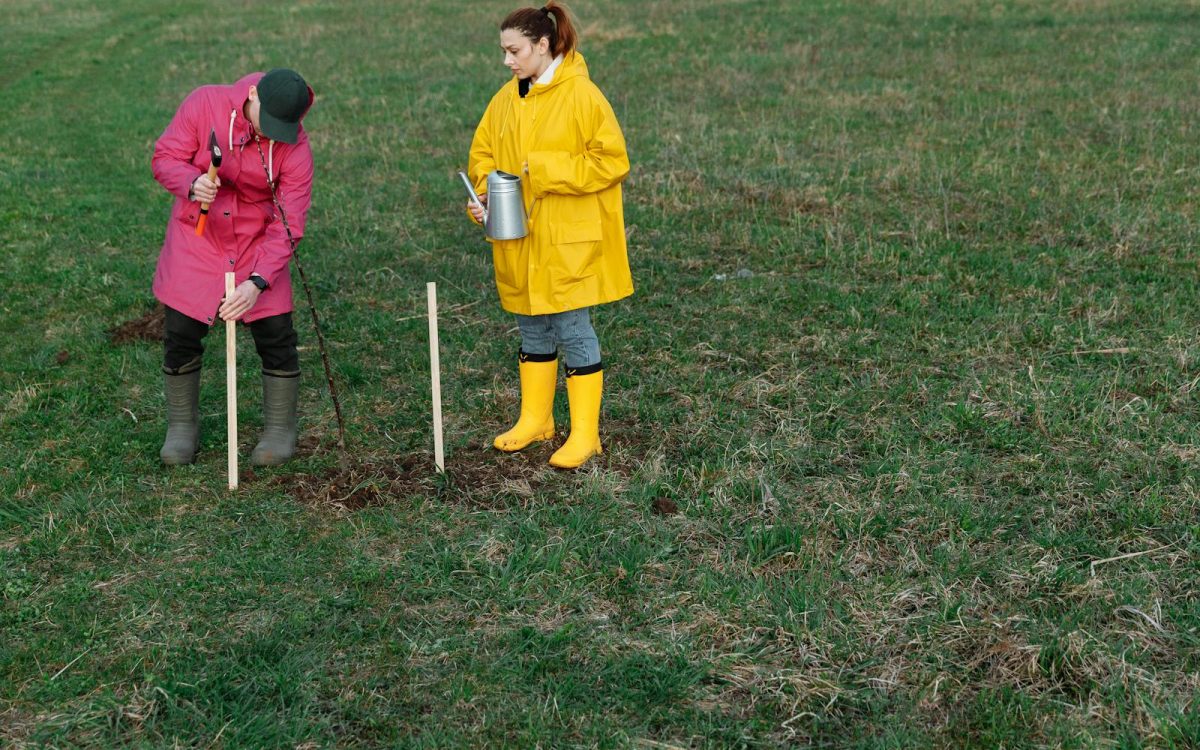
That story is both an argument for reforestation and a complication of the simple version of it. Because when people hear ‘reforestation,’ they often picture volunteers with shovels. The reality is messier, more varied, and, in some ways, more interesting than that image suggests.
Anúncios
What Reforestation Actually Involves
Reforestation is the process of re-establishing tree cover on land that was previously forested. It can take several forms: direct planting of nursery-grown seedlings, assisted natural regeneration where the existing seed bank and surrounding forest do most of the work with some human help, or a combination of both.
Each approach suits different conditions. On severely degraded land where soil has been compacted, eroded, or contaminated, direct planting may be the only way to get started. Without introduced pioneers, nothing else can establish. But on land where degradation is moderate and forest remnants nearby still hold seed-producing trees, active planting can actually interfere with the more diverse and ecologically complex community that would naturally return.
Anúncios
The choice of what to plant, and what to let return on its own, is one of the most consequential decisions in any reforestation project. Get it right and you set the land on a trajectory toward genuine forest. Get it wrong and you may end up with a tidy plantation of fast-growing exotics that looks green from a satellite but houses a fraction of the biodiversity the original forest held.
The Problem With Tree-Planting Campaigns
Large-scale tree-planting pledges have attracted enormous attention and funding in recent years. Governments and corporations have committed to planting billions of trees as a response to both climate change and biodiversity loss. The intention is real and the potential is real. But a number of well-documented problems have emerged in how these pledges are carried out.
The most common failure is species selection. When speed and cost are the primary drivers, projects often default to fast-growing, easy-to-propagate species, sometimes non-native ones, that can be planted in large numbers quickly. In several documented cases, including large-scale programmes in parts of sub-Saharan Africa and South Asia, ecologists found that the planted trees were species better suited to plantations than to ecological restoration. They crowded out native plant communities that were themselves beginning to recover.
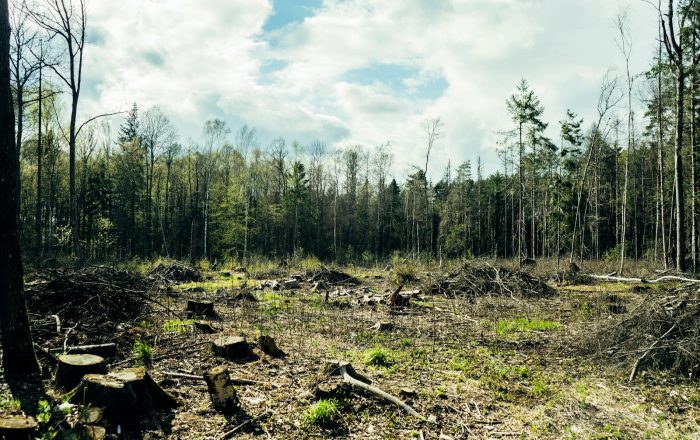
A second problem is site selection. Reforestation is most beneficial on land that was recently deforested. But some pledges have led to tree-planting on ancient grasslands, peatlands, or savannas that are not supposed to be forested. These ecosystems are as ecologically valuable as forests and often store large amounts of carbon in their soils. Converting them to plantations harms biodiversity while providing only modest and uncertain carbon benefits.
Planting trees is not automatically a conservation action. Where, what, and how you plant matters as much as the number you put in the ground.
What Makes a Reforestation Project Work
The evidence on what separates successful from unsuccessful reforestation has grown considerably in the past two decades. Several factors show up consistently.
Native species diversity is near the top of every list. Forests planted with a range of locally appropriate species develop more quickly into functional ecosystems than monocultures. They support more insects, which support more birds, which help distribute more seeds. The system becomes self-reinforcing faster.
Soil preparation matters, particularly on degraded land. Compacted soils limit root penetration and water infiltration. Removing invasive species before or alongside planting prevents fast-spreading exotics from simply outcompeting the newly planted natives. In some contexts, inoculating seedling roots with native mycorrhizal fungi, the fungal networks that help trees absorb water and nutrients, dramatically improves survival rates.
Long-term monitoring and follow-through are often the difference between success and failure. Many plantings look promising in year one and are quietly abandoned by year three as funding runs out. Trees require years of care during establishment, and the sites need ongoing management to prevent invasive regrowth from overtaking them.
Community involvement is consistently linked to better outcomes. When local people have a stake in the restored forest, through timber rights, non-timber forest products, watershed protection for their own water supply, or employment in restoration work, they have a reason to protect it. Reforestation imposed from outside, without meaningful local engagement, tends to be poorly maintained and sometimes actively undermined.
Natural Regeneration as a Partner to Planting
The case for passive restoration, simply removing pressure and letting forest return naturally, has become considerably stronger as more long-term studies have been completed. A major synthesis of tropical forest data published in Nature in 2016 found that naturally regenerating forest recovered biodiversity faster than planted forest in most of the scenarios studied.
This does not mean planting is unnecessary. In areas where the soil seed bank has been destroyed, where invasive grasses form dense mats that prevent tree germination, or where the nearest forest fragment is too far away for seeds to disperse reliably, active planting remains essential. But in areas where natural regeneration is possible, it is often worth protecting and supporting rather than replacing with a planting programme.
Assisted natural regeneration, a middle ground approach, involves removing competing weeds and grasses, protecting naturally germinating seedlings, and occasionally supplementing with direct seeding or targeted planting of species that are not arriving on their own. It tends to be cheaper than full planting programmes and produces more ecologically complex results over time.
Reforestation and the Wider Ecosystem
A recovering forest does not function in isolation. Its long-term success depends on connections to surrounding habitats and the presence of the animals that forests need. Seed dispersers, primarily birds and mammals, are essential to forest regeneration beyond the immediate planting area. Large fruit-eating animals like tapirs, toucans, and certain primates carry seeds far greater distances than wind or small birds can manage.
This is one reason why wildlife corridors connecting patches of forest matter so much to reforestation outcomes. An isolated restored patch surrounded by bare agricultural land will recover slowly and incompletely. The same patch connected to a larger forest block recovers faster, draws in more species, and becomes more resilient to drought and pest pressure over time.
It is also why halting ongoing habitat loss is more urgent than planting programmes, not because planting is unimportant, but because no amount of replanting keeps pace with active clearing. The arithmetic of forest loss versus forest gain has to eventually favour gain before restoration work can meaningfully change the overall picture.
How to Support Reforestation Meaningfully
If you want to support reforestation efforts, the most useful things you can do are look past headline numbers and ask the harder questions. Which species are being planted? Are they native to the region? What happens to the site after the planting day? Is there a long-term management plan? Who in the local community is involved and how?
Organisations that publish transparent project data, use locally appropriate native species, involve local communities, and report on survival rates rather than just planting numbers are worth supporting. Those that sell credits based on trees planted without follow-up monitoring deserve more scepticism.
Closer to home, letting a patch of your own property go unmanaged, or gradually replacing lawn with native shrubs and ground cover, contributes to the same regeneration processes at a small but real scale. The forest on that Costa Rican hillside did not need anyone to plant it. It needed someone to stop clearing it. That is sometimes the most important action of all.