Anúncios
A few years ago, I spent a week watching a pair of spotted flycatchers choose a nest site in a cottage garden. They inspected a dozen possible ledges and holes, often returning to the same spots twice, hovering briefly, then moving on. On the fifth day they chose a spot on a wall covered in climbing roses, three meters up, sheltered from the prevailing wind, directly above a patch of garden where insects gathered. They had not been random about it. They had been methodical.
What Animals Are Actually Assessing
When an animal moves through a landscape, it is constantly collecting information. Smells carry clues about food, predators, and the presence of competitors. Sounds tell it who else is using the space. Visual features, the density of cover, the height of vegetation, the proximity of water, feed into an ongoing assessment that happens largely below the level of conscious thought.
Anúncios
Biologists call the outcome of this process habitat selection. It is the process by which an individual ends up in the place that best matches its needs. The match is rarely perfect, but animals tend to make choices that bring them closer to the conditions that maximise their chances of surviving and reproducing.
For most species, the core requirements are consistent: food, water, shelter, and a safe place to breed. But the specifics vary enormously. A willow warbler needs dense low scrub for nesting, open woodland for foraging insects, and proximity to water. A kestrel needs open land for hunting, elevated perches for scanning, and a cavity or ledge for nesting. Overlap the two maps and you get a landscape that works for both. Remove the open ground and you lose the kestrel. Remove the scrub and you lose the warbler.
Anúncios
Instinct, Learning, and the Signals Animals Use
Some habitat preferences are hardwired. A newly hatched sea turtle needs no instruction to head toward the brightest horizon, which under natural conditions means the sea. A young puffin fledging from a cliff burrow does not deliberate about whether to go north or south; ocean-going instincts drive it away from land until it is ready to return to breed.
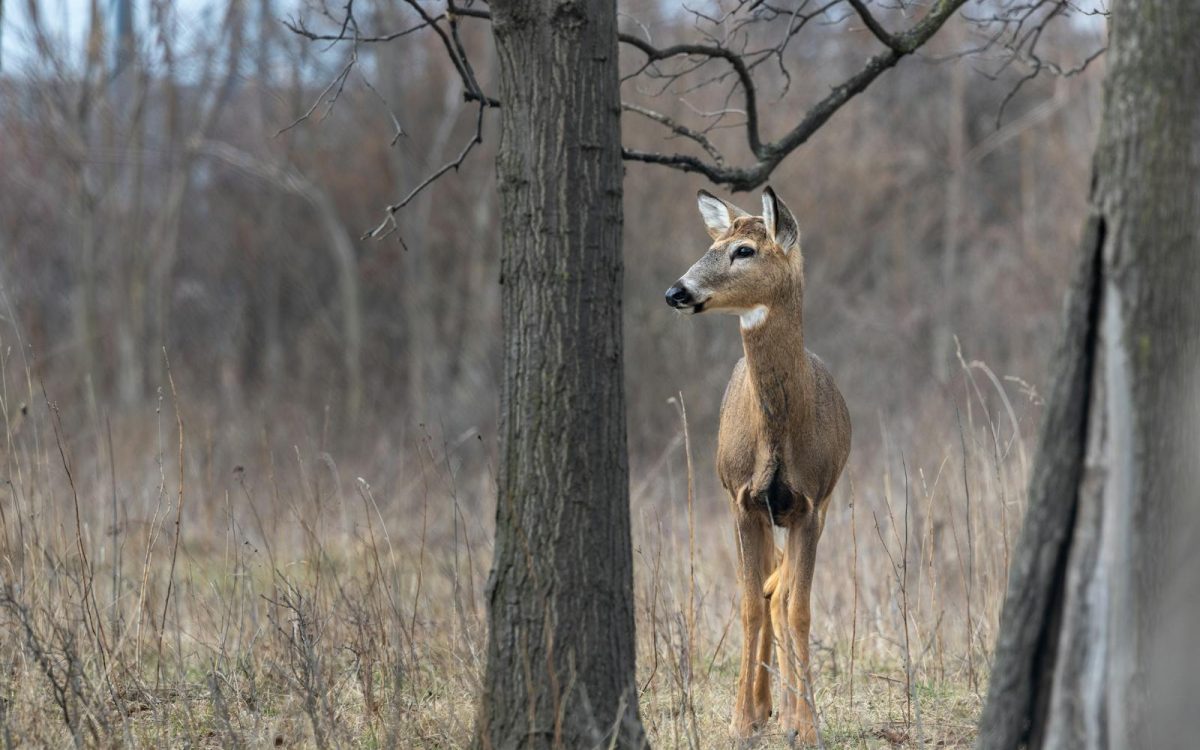
But instinct alone rarely provides fine-grained guidance. That is where learning comes in. Many birds imprint on the habitat type where they were raised, developing a strong tendency to settle in similar conditions as adults. Young deer observe where their mothers feed, drink, and shelter, and those observations shape the animal’s own preferences for years. For social species, the choices of others provide real-time information. A songbird hearing the settled calls of other birds in a patch of woodland may take that as a signal that the patch supports a viable territory.
This social information can be so compelling that biologists have used it deliberately. Conservation projects sometimes play recordings of species calls in restored habitats to attract real birds. The technique works because it mimics a signal that has evolutionary weight: if others are settled here, conditions are probably good enough to try.
Generalists and Specialists: Two Very Different Strategies
Species fall broadly into two camps based on how specific their habitat needs are.
Generalists are flexible. Foxes, crows, and rats thrive in cities, farmland, forests, and coast. They eat a wide range of foods, tolerate varied temperatures, and find suitable shelter in almost any environment that provides reasonable cover. Their broad tolerance is both their strength and the reason they persist in human-dominated landscapes where many other species cannot.
Specialists occupy a narrower niche. The capercaillie needs mature boreal forest with specific blueberry ground cover and structural diversity across centuries-old trees. The natterjack toad requires shallow, warm, slightly saline pools on sandy ground. The hazel dormouse needs a very particular structure of woodland edge, with sufficient hazel coppice and a dense shrub layer, to find the variety of food sources it needs across the seasons.
Specialists are often the species most at risk from habitat change. Their requirements evolved over a very long time in stable conditions. When those conditions shift quickly, as they have in recent decades, specialised species can find themselves in landscapes that no longer meet their needs, even if those landscapes look similar to an untrained eye.
Territory, Competition, and the Limits of Choice
The best habitat in a landscape may already be occupied. Animals do not choose freely from all available options; they choose from what is available after existing residents have established territories. This creates a hierarchy of habitat quality across any given landscape.
In most species, the most productive habitat supports the densest or highest-quality resident animals. As that habitat fills, younger or less dominant individuals are pushed toward the margins, to less productive sites with fewer resources and greater exposure to predators or weather. Ecologists call this the ideal free distribution, a model describing how individuals spread across a landscape according to the profitability of different sites.
This matters for conservation. A population may look superficially stable, with animals present across a large area, while most of the breeding success is concentrated in a small core of high-quality habitat. Protect only the marginal areas and the core population declines. This is one reason why wildlife corridors linking patches of good habitat are so valuable: they allow individuals to reach suitable territory rather than settling in sites that cannot sustain them.
How Habitat Choice Responds to Change
Animals are not passive. When conditions shift, many species adjust their behaviour, their diet, and sometimes their habitat use. Urban foxes have expanded into cities over the past century, not because they changed genetically but because a subset of individuals discovered that cities offered food and shelter, and their offspring learned those preferences.
Some birds have shifted their breeding range northward as temperatures have risen, tracking the habitat conditions they need rather than the geographic locations where their ancestors bred. Barn owls in parts of Europe now breed at higher altitudes than they did fifty years ago. These shifts show that habitat selection is dynamic, capable of changing within generations when conditions warrant it.
But flexibility has limits. A species can only shift its range or habitat use if suitable habitat exists to move into, and if individuals have the opportunity to learn new conditions. If the surrounding landscape is heavily modified or fragmented, that flexibility is constrained. The animal may sense that conditions are declining but have nowhere better to go. Understanding habitat loss and what it means for these choices is crucial to reading the fate of wildlife populations.
What You Can Do With This Knowledge
Understanding habitat selection gives you a useful framework for interpreting the wildlife around you. If a particular bird or mammal has disappeared from a patch you used to see it in, the first question is not what happened to the animal but what happened to the habitat. Did the scrub get cut back? Did the pond dry out? Did the old tree that provided nest cavities fall and get removed?
Equally, if you want to attract wildlife, the most effective approach is to create or restore the conditions a species needs. A hedgehog does not appear in a garden because you wish for one. It appears because there is good invertebrate prey in the soil, dense cover for shelter, connected access from nearby green space, and no barriers blocking movement. Meeting those requirements is the real invitation.
The flycatchers in the cottage garden eventually raised two broods that summer. The roses stayed. So did the insects. Next year, a new pair showed up and spent three days making exactly the same careful assessment. They chose the same wall.