Anúncios
A flash of yellow in the hedge. A loud, liquid song from somewhere in the oak tree. A bird you cannot name yet lands on the fence post and stares at you for a full three seconds before it vanishes. That moment of not-quite-knowing is exactly where bird watching begins, and it is more accessible than most people expect.
Why Bird Watching for Beginners Is Easier Than It Looks
People sometimes assume birding is a hobby for retirees with binoculars the size of telescopes, or for scientists who can identify every chip note. That picture is wrong. Bird watching requires only two things: the desire to pay attention, and a basic framework for what to look for. The framework you can learn in an afternoon. The paying attention part is actually the reward.
Anúncios
Birds are everywhere. They are active during the day, they make noise, and many of them visit the same spots repeatedly. That predictability is your advantage. Once you know that house sparrows love low, dense shrubs and that robins hunt earthworms on open lawns in the early morning, you can position yourself to see them rather than stumbling across them by luck.
The Gear You Actually Need
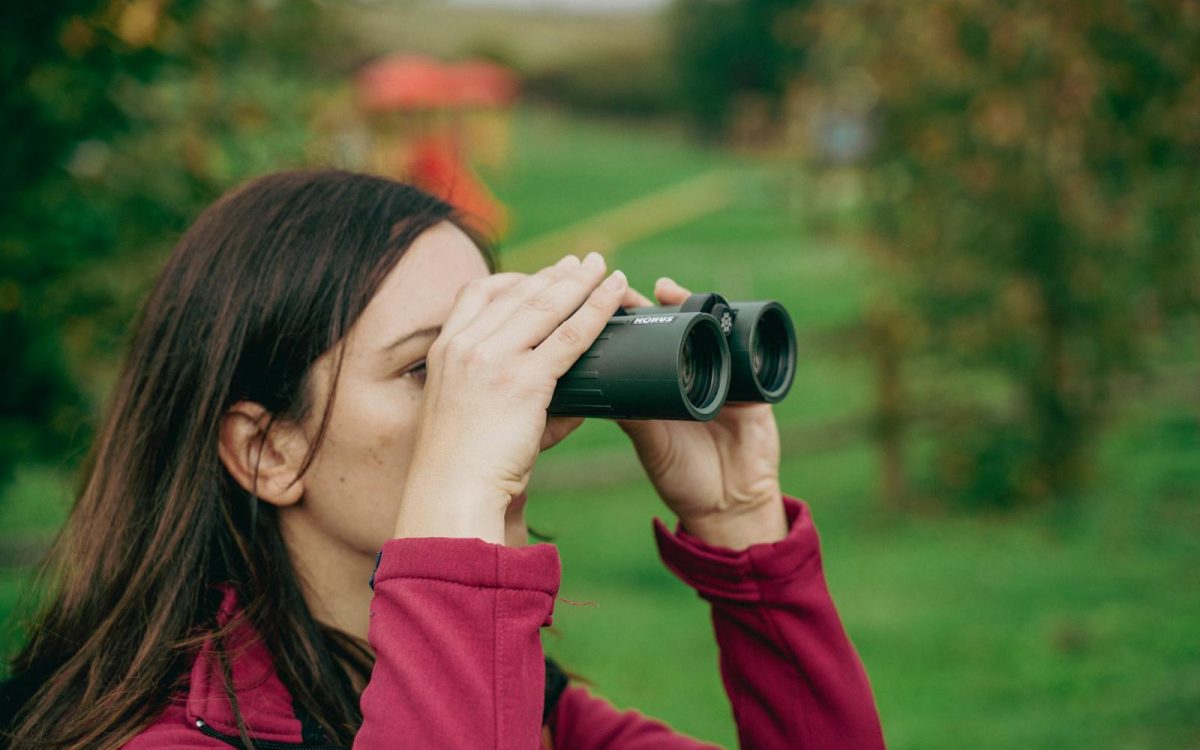
A pair of binoculars is the one piece of kit worth spending a little money on. An eight-by-forty-two (8×42) model gives a magnification of eight times while gathering enough light through the forty-two millimetre lens to work well in the shade of trees. Avoid anything higher than ten-power to start: the image shakes more with hand movements, and the narrower field of view makes it harder to find a moving bird. A mid-range pair for sixty to one hundred twenty dollars will serve you well for years.
Anúncios
Beyond binoculars, a regional field guide is useful. The Peterson Field Guides series and the Sibley Guides are well-regarded printed options. If you prefer a phone, the Merlin Bird ID app from Cornell Lab is free and includes a sound identification feature that listens to birdsong and suggests matches in real time. A small notebook and a pen round out the kit.
Clothing matters more than most beginners realise. Neutral colors, quiet fabrics, and soft-soled shoes let you move without startling birds. You do not need camouflage, but bright white or vivid red will turn heads, bird heads included.
How to Read a Bird Before You Name It
The temptation for new birders is to flip straight to images in a guide and try to match what they saw. A better method is to slow down and note four features in order: size, shape, color pattern, and behavior.
Size is your anchor. Compare the bird to something familiar. Is it smaller than a house sparrow, about the size of a starling, or close to a crow? Shape tells you a great deal even in silhouette: a long tail, a round head, a thick seed-cracking bill, or a slender insect-probing one. Color pattern means the arrangement of markings, not just the overall hue. A bird with a rusty chest and gray back is a robin; a bird with a rusty chest, gray back, and a black mask is a different species entirely. Behavior is often overlooked but genuinely helpful. Woodpeckers hitch upward on bark; nuthatches go head-first down. Finches bound through the air in waves; swallows carve long arcs.
Take thirty seconds to absorb these details before reaching for your guide. The physical description you build in your head will lead you to the right page far faster than flipping through images at random.
Your Best Starting Locations
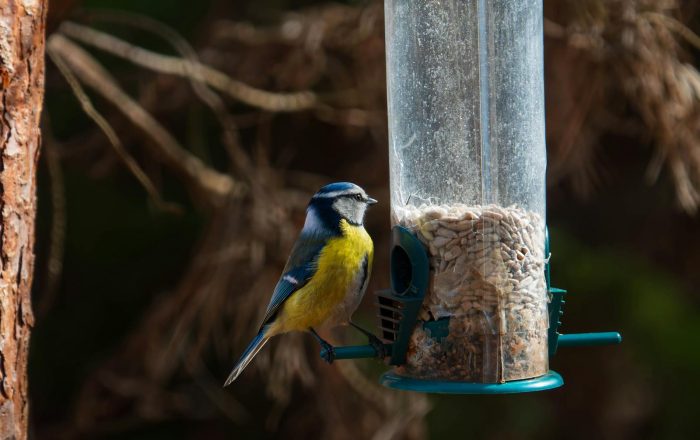
Begin at home. A feeder stocked with black-oil sunflower seeds will bring finches, chickadees, nuthatches, and sparrows close enough to study at leisure. A shallow dish of water in a shaded spot draws even more species, including many that ignore feeders entirely. If you add a small brush pile of trimmed branches in a corner of the yard, thrushes and sparrows will pick through it for invertebrates.
When you are ready to venture further, look for habitat edges: the boundary between a woodland and an open meadow, or the strip of shrubs along a stream. More bird species use edges than either habitat alone. Parks with mixed trees, short grass, and a pond are often better for variety than deep forest or open farmland on their own.
Seasonal timing shapes what you find. Spring migration, which runs roughly from late March through late May in most of North America, brings extraordinary numbers of warblers, flycatchers, and shorebirds passing through. These migrants often appear in spots they would never use in summer or winter, so a patch of trees in an urban park can hold surprises during migration weeks. For more on why birds move through your area, this guide to animal migration gives useful background.
Common Mistakes and How to Avoid Them
Moving too quickly is the most common error. Many beginners walk at a normal pace through a patch of habitat and then wonder why they saw so little. Experienced birders often cover less than a kilometre in two hours, stopping every few metres to listen and scan. The birds are there; the trick is giving them time to show themselves.
Pishing is a technique where you make a soft, repeated sssh-sssh sound with your lips. It mimics the alarm calls that small songbirds make, and curious chickadees and warblers often come in close to investigate. It works best in dense shrubs and is worth trying when you can hear birds but cannot see them.
Chasing rare birds as a beginner can be discouraging. A rarity spotted sixty kilometres away may have moved on by the time you arrive, and the long drive will feel wasted. Start with common species and learn them deeply. The satisfaction of correctly identifying a yellowthroat by its song before you even lift your binoculars is greater than a fleeting, back-view glimpse of a bird you cannot be sure about.
Learning Bird Songs
Song recognition transforms bird watching into a richer experience. Once you know a few calls, a walk through the woods goes from seeing perhaps five or six species to detecting twenty or more. Start with three songs and learn them cold before adding a fourth. The American robin’s liquid, caroling phrase, the chickadee’s name-saying chick-a-dee-dee-dee, and the house wren’s cascading chatter are good first targets in North America. In the UK, the robin, great tit, and wren give an equally useful starter set.
Playing a recording from Merlin or the Xeno-canto website, then stepping outside to listen, then coming back inside and repeating the recording, builds the pattern in your memory. Once you have it, you will hear that song everywhere and wonder how you missed it before.
Recording What You See
A bird list is not about competition. It is a personal record that sharpens your memory and gives you baseline data about what visits your patch through the seasons. Even a rough count, such as noting three blue jays on a Tuesday in October, becomes interesting over years when you can see that blue jays always peak in your yard during autumn migration.
The free eBird app handles all of this automatically and connects your records to a global database used by conservation scientists. You can also see real-time maps of what other birders are finding near you, which is a practical way to know whether a flock of cedar waxwings is moving through your area right now. For a closer look at how the birds you spot fit into the broader web of life in your yard, this piece on how ecosystems connect fills in the picture nicely.
Taking the Next Step
Once you have a season or two of local birds under your belt, joining a local bird club opens up guided walks with experienced birders who can point out details you might miss alone. Many clubs run free beginner walks in spring and autumn, and the collective enthusiasm of a group makes the whole experience more rewarding. Your local Audubon Society chapter in the United States, or a Royal Society for the Protection of Birds (RSPB) group in the UK, are good places to start looking.
Bird watching has a way of reorganizing how you move through the world. A trip to the grocery store becomes an opportunity to note whether the osprey is back on the utility pole. A lunch break in a courtyard turns into five minutes of genuine quiet as you watch a house finch crack open a seed. Start with what is outside your window, give it a few unhurried mornings, and the birds will meet you more than halfway.