Anúncios
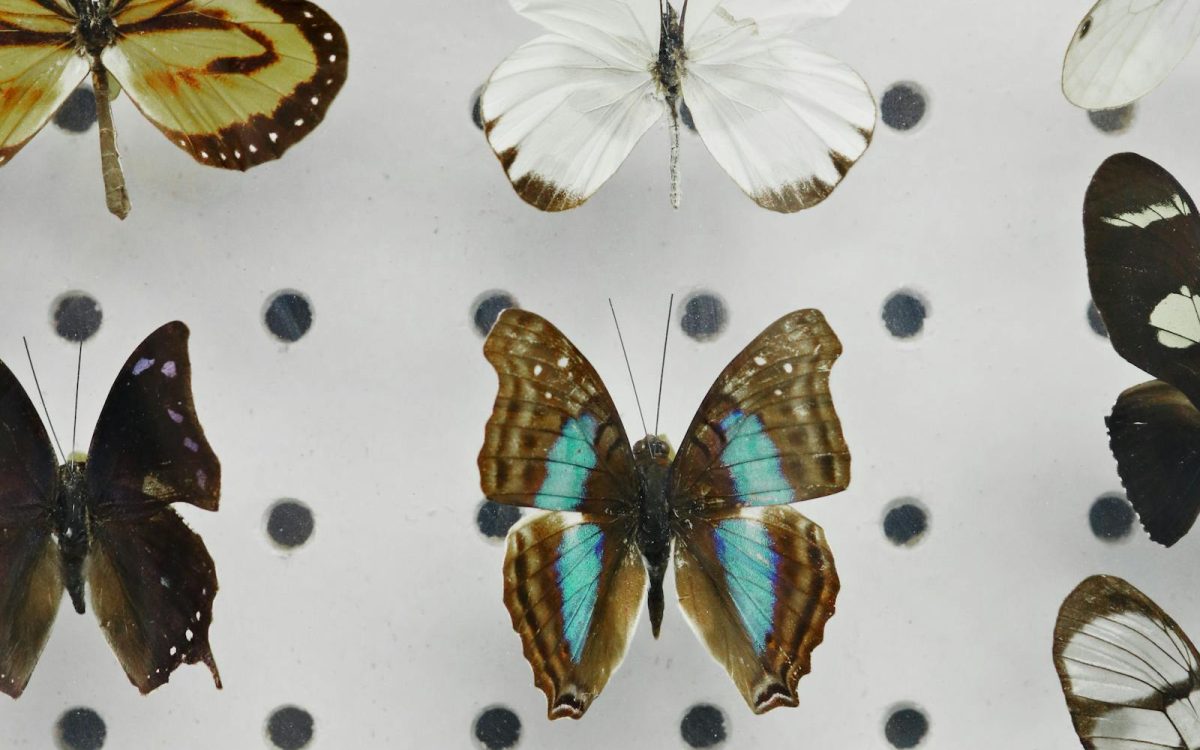
Picture a library with millions of books and no shelving system. You could spend years searching for a single title. That frustration is exactly what early naturalists faced before anyone organised the living world into a coherent system. Species classification is essentially the library catalogue of life, and once you understand its basic logic, the natural world stops feeling like an overwhelming jumble and starts feeling like a well-organised archive.
Why Classification Matters Beyond the Textbook
Species classification is not just a school exercise. It shapes how conservationists prioritise their work, how vets identify diseases across animal groups, and how field guides are organised. When scientists discovered that the previously unknown Olinguito, a small carnivore in South American cloud forests, belonged to its own species in 2013, the classification was not mere bookkeeping. It meant the animal qualified for its own conservation assessment, its own legal protections, and its own place on the map of biodiversity.
Anúncios
Classification also reveals ancestry. Animals that sit close together on the tree of life share inherited traits, behaviours, and sometimes vulnerabilities to the same diseases. Knowing a bat belongs to the order Chiroptera tells a wildlife biologist a great deal before they have even seen the animal up close.
The Seven Main Levels, From Broad to Specific
The classification system has seven main levels, stacked from the most general to the most precise. A helpful way to remember the order is the phrase “King Philip Came Over For Good Soup,” standing for Kingdom, Phylum, Class, Order, Family, Genus, Species.
Anúncios
Kingdom is the widest category. Animals all belong to the kingdom Animalia, separating them from plants, fungi, and bacteria. Phylum narrows things down by body plan. Vertebrates, animals with backbones, share the phylum Chordata. Class gets more specific: mammals, birds, reptiles, amphibians, and fish are each a separate class. Order groups families that share a common ancestor, while Family clusters closely related genera. Genus and Species are the two levels that make up an animal’s scientific name.
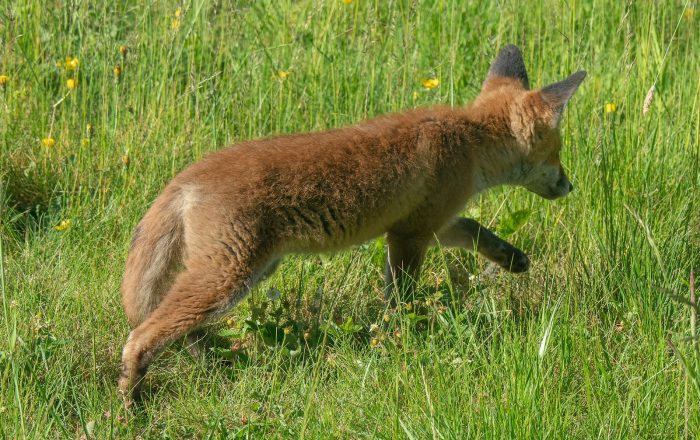
Take a grey wolf as an example. Its full classification reads: Kingdom Animalia, Phylum Chordata, Class Mammalia, Order Carnivora, Family Canidae, Genus Canis, Species lupus. Written together, its scientific name is Canis lupus. A domestic dog is Canis lupus familiaris, a subspecies so closely related that the two can interbreed.
What Makes a Species a Species
The species level is both the most familiar and the most philosophically tangled. The working definition most biologists use is the biological species concept: a species is a group of organisms that naturally interbreed and produce fertile offspring. This works well for most animals but breaks down in a surprising number of real cases.
Ligers are the offspring of a lion and a tiger. They exist, they are large and striking, but they are almost always infertile. That infertility is the clue that lions and tigers are genuinely separate species, even though they can produce young under unusual circumstances. By contrast, dogs and wolves can produce fertile offspring, which is why many scientists classify them as subspecies of the same species rather than separate ones.
Then there are ring species, a genuinely mind-bending phenomenon. In California’s Central Valley, two populations of Ensatina salamanders live side by side but do not interbreed. Follow the chain of populations around the valley, though, and each neighbouring group can interbreed with the next. The ring of populations is all one species except where the two ends meet. Cases like this remind us that species classification is a human system mapped onto a natural world that does not always respect our categories.
Common Names Versus Scientific Names
Common names are comfortable and familiar, but they are unreliable. The animal called a “robin” in North America is a thrush, while the “robin” in the UK is a flycatcher. They share a name because both have red breasts, not because they are closely related. A scientist writing about either bird has to use the scientific name to avoid any confusion: Turdus migratorius for the American robin, Erithacus rubecula for the European one.
Scientific names also carry information. The genus Ursus tells you immediately that you are dealing with a true bear. Polar bears (Ursus maritimus), brown bears (Ursus arctos), and American black bears (Ursus americanus) all share that genus, signalling their close relationship. The species name often describes something distinctive: maritimus means “of the sea,” hinting at the polar bear’s marine lifestyle.
How Modern DNA Has Changed the Picture
For most of history, classification rested on physical features: bone structure, body shape, colouration, and behaviour. Scientists compared specimens and made their best judgements. The arrival of genetic sequencing has reshuffled parts of the tree significantly.
One of the most dramatic revisions involved whales. For a long time, their closest living relatives were thought to be some form of land mammal, but the exact connection was unclear. DNA analysis confirmed that hippos are the whale’s closest living relatives, a finding that physical anatomy alone had never suggested. The two groups diverged from a common ancestor around 54 million years ago.
Birds have been similarly reorganised. Flamingos, which most people assume are related to herons or storks because of their long legs and wading lifestyle, turn out to be most closely related to grebes. Appearance can be deeply misleading when animals evolve similar body shapes in response to similar environments, a process called convergent evolution. Genetics cuts through that confusion.
Understanding how biodiversity is measured and valued becomes much richer once you appreciate that classification is the scaffolding holding all that measurement together. Each branch of the tree represents a unique evolutionary history that, once lost, cannot be recovered.
Subspecies, Breeds, and the Fuzzier Edges
Below the species level sits the subspecies, a geographically or behaviourally distinct group within the same species that can still interbreed freely with other members. Tigers offer a clear illustration. Bengal tigers, Siberian tigers, and Sumatran tigers are all Panthera tigris, but each population has adapted to its environment over thousands of years, producing distinct sizes, coat patterns, and behaviours. Conservation plans treat each subspecies separately because losing one would mean losing a unique set of adaptations even if the species as a whole survived.
Breeds in domestic animals are different from subspecies. A German Shepherd and a Chihuahua are both Canis lupus familiaris, shaped by human selection rather than natural geographic separation. Both can interbreed, though the size difference makes it practically complicated. The distinction matters because breeds reflect human choices, while subspecies reflect the pressures of wild environments over time.
Reading a Field Guide with New Eyes
Once you understand classification, a field guide transforms from a picture book into a map of relationships. When a guide groups all the hawks together in the family Accipitridae before moving on to falcons in the family Falconidae, it is telling you that hawks and falcons are not as closely related as they appear. Falcons evolved their sharp, notched beak independently. The groupings in a good field guide mirror the tree of life.
If you find yourself curious about how the animals you spot in your garden or on a nature walk fit into that tree, try looking up their scientific name. You will often find the genus tells a story. For a deeper look at how all these classified animals interact in their environments, the piece on what makes an ecosystem picks up right where classification leaves off.
Species classification began as one naturalist’s attempt to impose order on a chaotic catalogue of living things. Three centuries later, it has grown into a dynamic, DNA-informed framework that keeps revealing surprises. The tree of life is far stranger, and far more fascinating, than any single textbook suggests.