Anúncios
Every expert naturalist started from zero. The difference between a beginner and someone who reads a landscape fluently is not innate talent; it is a collection of core ideas that make observations click into patterns. Below are 20 wildlife facts for beginners that form the foundation of how biologists and naturalists actually think about the natural world. Taken together, they are a map for making sense of almost anything you see outdoors.
The Building Blocks: What Everything Else Rests On
1. Every species is part of a food web. Nothing eats without being connected to something else that eats, or is eaten. A food web is not a ladder with one species on top; it is a net, and tugging any strand sends vibrations through the whole structure. Understanding this one idea is enough to make you see wildlife in a fundamentally different way.
Anúncios
2. Every animal has a habitat it depends on. A species is not just an animal: it is an animal-plus-habitat. Take away the habitat and the species follows. The pronghorn antelope of North America is built for open grassland: its speed, its long-distance vision, its digestion all make sense only in that context. Put it in a forest and it cannot function. This is why understanding the major habitat types reveals so much else about wildlife.
3. Adaptations are answers to specific problems. Every unusual feature of an animal, the giraffe’s neck, the platypus’s bill, the arctic fox’s white coat, is an evolutionary answer to a specific environmental challenge. When something looks strange, ask: what problem does this solve?
Anúncios
4. Energy is always the limiting factor. Every animal spends its life solving an energy budget: taking in enough food to cover the cost of finding food, staying warm or cool, reproducing, and avoiding predators. Every behavior makes more sense when you ask, ‘how does this help the animal balance its energy budget?’
5. Species interact in more ways than eating and being eaten. Mutualism, where both species benefit. Commensalism, where one benefits and the other is unaffected. Competition, where both lose something. Parasitism, where one benefits at the other’s expense. These relationship types exist everywhere in nature, and recognizing them adds a layer of meaning to what you observe.
Reading Animal Behavior
6. Most animal behavior is about resources or reproduction. If you watch an animal doing something and cannot figure out why, one of these two categories almost always provides the answer. A robin singing at 5 a.m. is defending a feeding and nesting territory. A deer sniffing the air is assessing risk before moving toward food. Behavior makes sense once you understand what the animal is trying to accomplish.
7. Animals communicate constantly. Vocalizations are the obvious channel, but most species also use scent, posture, color display, and movement to communicate information about identity, status, and intent. A dominant wolf carries its tail high; a submissive one holds it low. A frightened cat makes itself larger; a threatening one makes itself smaller. Reading these signals accurately is one of the most satisfying skills a naturalist develops.
8. Fear is the background music of wildlife life. Prey animals live in a state of managed anxiety. Their sensory systems are tuned to detect threats, their resting positions tend to face open areas for visibility, and their movements balance food-finding against exposure risk. A deer at a forest edge is not just browsing; it is constantly running a threat assessment that has been refined over millions of years.
9. Seasons drive the rhythm of almost everything. Migration, breeding, denning, food caching, molting, dormancy: all of these behaviors are triggered by seasonal cues, primarily day length and temperature. An animal’s annual calendar is as precisely organized as a human work schedule, and for the same reason: the resources it needs are not available all year round.
10. Juveniles and adults often live very differently. Young animals of many species occupy different habitats, eat different food, and face different threats than adults. A juvenile robin eats mostly invertebrates; the adult diet shifts more toward fruit in autumn. A young salmon lives in a river; the adult spends years in the open ocean. Do not assume that what you know about an adult applies to the young of the same species.
How Ecosystems Work
11. Biodiversity is a measure of ecosystem health. A place with many species, spread across many levels of the food web, is generally more stable and more resilient to disturbance than one with few species. Biodiversity is not just an aesthetic value; it is a functional one. More species means more ways for the system to respond to change without collapsing.
12. Apex predators do far more than hunt. Top predators regulate prey behavior, prevent overgrazing, and maintain habitat quality in ways that cascade through the entire food web. Their absence changes landscapes in ways that can take decades to become visible. For a full look at why this matters, see our article on apex predators and why they matter.
13. Decomposers are the unsung heroes. Fungi, bacteria, beetles, worms, and a host of other organisms break down dead material and return nutrients to the soil. Without them, the cycle of matter through an ecosystem would stop. A single rotting log can host hundreds of decomposer species and is as ecologically rich as many living habitats.
14. Water is the organizer of landscapes. Follow water and you follow wildlife. Rivers, lakes, wetlands, and even temporary puddles are the focal points of most terrestrial food webs. In arid environments, a single water source can concentrate species from an enormous surrounding area.
15. Edge habitats are often the most active. The zone where two habitat types meet, forest edge meeting meadow, for instance, often supports more species than either habitat alone. This is because animals can use both habitat types depending on their needs. Deer feed in the meadow but shelter in the forest. Foxes hunt in both. This ‘edge effect’ is one reason that varied, patchwork landscapes often hold more wildlife than large blocks of uniform habitat.
Conservation Basics That Every Observer Should Know
16. Habitat loss is the biggest driver of species decline. Not hunting, not pollution, not invasive species, though all of these matter. When an animal’s specific address disappears, the animal disappears too, regardless of how well-protected it is on paper. This is why land protection and land-use decisions are central to conservation in a way that nothing else can substitute for.
17. Invasive species disrupt established relationships. A species introduced to a place where it did not evolve arrives without the predators, parasites, and competitors that kept it in check at home. Without those checks, it can expand rapidly and displace species that evolved without defenses against it. The brown tree snake introduced to Guam drove multiple bird species to extinction within decades. Invasions do not always look dramatic, but their effects can be severe.
18. Small actions at the local level genuinely matter. The collective weight of millions of people making small decisions, planting native plants, reducing pesticide use, securing food waste, and driving more slowly in wildlife-active areas, adds up to something measurable. It is easy to feel that individual choices are trivial against the scale of environmental challenges. They are not. Local conditions are the sum of local choices.
19. Wildlife populations fluctuate naturally. A year with fewer butterflies in your garden, or fewer frogs in a local pond, does not automatically mean a long-term decline. Natural variation in weather, food availability, and disease cycles causes populations to rise and fall from year to year. The concerning signal is a trend across multiple years, particularly if the lows keep getting lower. Single-year observations, while valuable, need context before they become alarm signals.
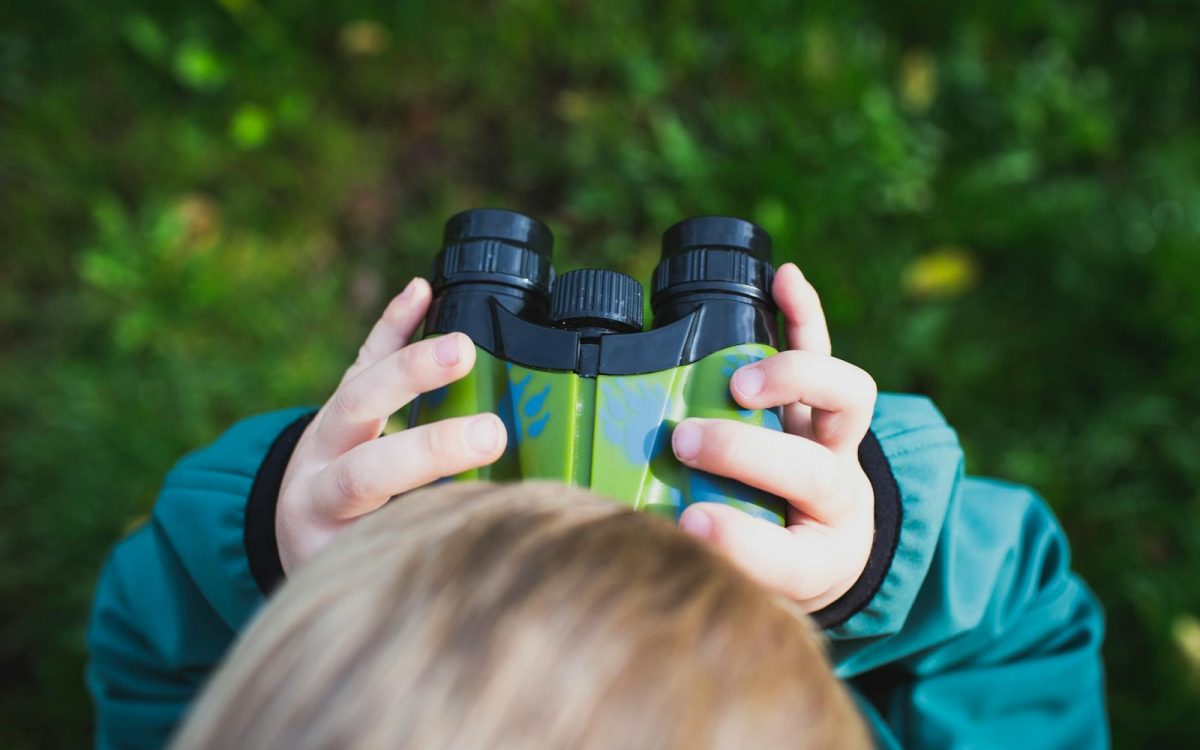
20. Observation is the foundation of everything. All of ecology, all of conservation biology, all of the knowledge encoded in field guides and research papers began with someone sitting quietly and watching. You do not need instruments, credentials, or elaborate equipment to contribute meaningfully to your understanding of wildlife. Patient, repeated observation of the same place across seasons will teach you things that a hundred videos cannot. Go outside, sit still, and pay attention. The rest follows.
Putting It Together
These 20 points are not an end point. They are a frame. With them in place, every nature walk becomes more legible, every nature documentary carries more depth, and every wildlife news story fits into a larger context you understand. Start with the ideas that feel most new to you and let them shape what you notice next time you are outdoors. The natural world rewards curiosity more generously than almost any other subject, and you are already most of the way there simply by wanting to understand it.