Anúncios
Every community already has people who notice wildlife. Someone photographs the fox family that denned under the garden shed. Someone else keeps a mental record of which garden the barn owls hunt over. A handful of neighbors have independently noticed that the hedgehog numbers have been thin for the past few years. Community wildlife awareness starts not by importing something new, but by connecting these existing observations and the people who made them.
Why Community Engagement Matters for Local Wildlife
Local wildlife does not recognize the boundaries of nature reserves. The animals that conservation organizations work hard to protect within protected areas spend significant parts of their lives in ordinary neighborhoods, gardens, farmland edges, and urban green spaces. What happens in those unprotected spaces, the management decisions, the physical changes, the attitudes of residents, shapes wildlife populations as much as anything inside a formal reserve.
Anúncios
Community wildlife awareness builds the social conditions that allow good decisions to happen. A neighborhood where residents know that hedgehogs travel corridors between gardens is a neighborhood where gaps in fences get made, where slug pellets get reconsidered, where the rough patch at the end of the garden gets left unmowed. None of those decisions require policy or legislation; they require knowledge and a mild shift in how people think about the non-human residents of the same streets.
Small collective changes in land management across a neighborhood can create habitat value that far exceeds what any single garden or reserve could offer alone. A linked network of wildlife-friendly yards produces corridors, foraging areas, and shelter belts that fragmented individual efforts cannot. The role of awareness-building is to make that network possible by getting enough people thinking the same way at the same time.
Anúncios
Starting Points That Actually Work
The most durable community wildlife projects begin with something concrete and low-barrier. A dawn chorus walk in a local park requires no equipment, no expertise beyond identifying a few common birdsong patterns, and produces an immediate sensory experience that is difficult to forget. A lunchtime nature spot survey, where participants spend ten minutes recording everything they see in a small area and share results, is achievable for almost anyone with a smartphone.
Connecting with groups that already exist saves enormous amounts of energy. Local wildlife trusts, natural history societies, conservation volunteers, and park friends groups are active in most towns and cities, often without most residents knowing about them. Joining one of these groups, rather than starting a new one, gives you an established network, credibility, legal footing for activities, and usually access to equipment, expertise, and contacts with local land managers.
If no suitable group exists in your area, starting informally is entirely reasonable. A neighborhood WhatsApp group where people share wildlife sightings has, in multiple documented cases, evolved into organized surveys, successful applications for local improvement grants, and formal local wildlife groups with ongoing programmes. The starting mechanism matters far less than consistency: showing up, keeping the conversation going, and celebrating what people find.
Events That Build Real Connection to Nature
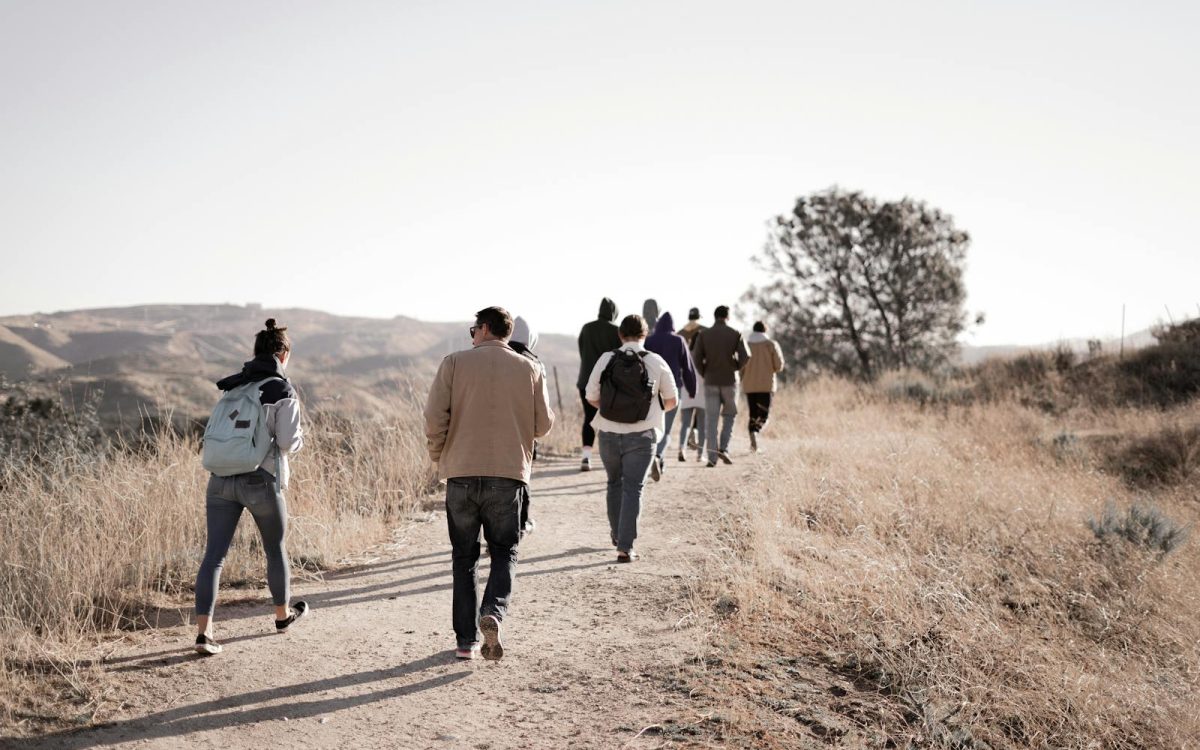
The most effective community wildlife events share a few qualities. They are held outdoors in familiar locations rather than in halls or meeting rooms. They include at least one moment of genuine discovery, something seen or heard that participants did not expect. They are structured loosely enough to allow conversation but focused enough to produce a specific output, a list of species recorded, a sketch, a photograph, a planted section of ground.
Scenario: A local park in a mid-sized town runs a monthly early-morning bird walk led by a retired teacher with a lifelong interest in birds. The walk lasts ninety minutes and covers a regular route. Attendance fluctuates between eight and twenty people depending on season and weather. Three years in, the walk has produced a continuous species list that now forms the basis of a successful application to the local council for sympathetic mowing management in one section of the park. The dataset created by ordinary residents walking a familiar route has changed land management policy.
Bioblitzes, events where participants try to record as many species as possible in a defined area over a short period, are particularly good at drawing in people who might not attend a wildlife walk but enjoy a competitive or scavenger-hunt format. Children are especially enthusiastic, and their participation naturally draws in parents. The data produced is genuinely scientifically useful when submitted to recording schemes, which gives participants a concrete sense that their efforts matter beyond the day itself.
Using Local Data to Make the Case for Change
Community wildlife data, consistently collected over time, has direct practical value beyond education. Local authorities, planning departments, and land managers respond to evidence in ways they do not always respond to opinion. A well-presented report showing that a specific green corridor is used by five species of bat, three species of butterfly, and a declining mammal species carries weight in a planning meeting that a general statement about the importance of green spaces does not.
Apps such as iNaturalist, the Big Garden Birdwatch, and national amphibian and reptile recording schemes provide the infrastructure for collecting shareable, verifiable data without any specialist knowledge. Organizing a group effort through these platforms multiplies individual observations into a coherent local dataset. The article on why so many animals die on roads discusses how citizen-science roadkill data has directly influenced infrastructure decisions, which is one of the most tangible examples of community data driving practical conservation outcomes.
When approaching a local authority or landowner, presenting a specific, costed request tends to be more effective than a general ask for better wildlife management. A proposal for a specific hedgehog gate in a cemetery fence, a request for the postponement of a hedge cut until after nesting season, a suggestion for a bat box installation on a community building: these are manageable, budget-light actions that decision-makers can say yes to without significant organizational disruption.
Communicating Wildlife Awareness Beyond the Converted
The people who attend a wildlife walk or join a nature recording group are, by definition, already interested. Reaching the wider community requires going to where people already are rather than waiting for them to come to a wildlife event. Nature notice boards at school entrances, brief posts in community Facebook groups, a simple leaflet drop in partnership with a local veterinary practice, or a display in a local library reach audiences who would never search for wildlife content independently.
Tone matters enormously here. Positive, specific, and locally grounded messages consistently outperform general warnings about biodiversity loss. Telling someone that hedgehogs visited a garden two streets away is more motivating than a national statistic about hedgehog population decline. Connecting wildlife awareness to neighborhood identity, local pride in a specific green space, or the particular animals people already feel affection for generates engagement that abstract conservation framing rarely achieves.
Schools are one of the highest-use points. A single afternoon session connecting primary-school children with local wildlife, a pond-dipping session, a bird box build, a surveying exercise in the school grounds, reaches dozens of households simultaneously through the children involved. Teachers often welcome well-organized external input that maps to curriculum content, particularly for science and outdoor education. For ideas on making nature activities work for families specifically, the article on family nature activities covers formats that children consistently respond well to.
Sustaining Momentum Over Time
The commonest reason community wildlife initiatives fade is over-reliance on a single organizer. Building in shared responsibility from the start, rotating leadership of events, training others to deliver walks and surveys, and creating simple systems for recording and sharing data, makes a group resilient to the inevitable times when a key person is unavailable or moves away.
Celebrating what the group achieves matters more than most organizers realize. Sharing a year-in-review of species recorded, a photograph of a newly installed bat box, or a thank-you to landowners who made changes reinforces the sense that the effort produces real results. People stay involved in activities where they see evidence that their participation changes something, however small, in the local landscape.
Building wildlife awareness in a community does not require a grant, a formal organization, or scientific training. It requires reliable presence, genuine curiosity, and the practical habit of connecting what people observe to what they can do about it. The gap between a neighbor who notices fewer swifts this summer and a neighbor who puts up a swift box is often just one good conversation.