Anúncios
In 2014, a small group of conservationists fenced off 3,500 acres of farmland in West Sussex, England, removed the cattle and sheep, and waited. Within a few years, the land at Knepp Estate had transformed in ways nobody fully anticipated. Turtle doves, one of Britain’s most rapidly declining birds, began nesting there for the first time in decades. Purple emperor butterflies, rare enough that entomologists travel hundreds of miles to see them, established one of the largest known colonies in the country. Nightingales sang in newly tangled scrub. The land had not been planted or engineered into this richness. It had simply been left alone.
That project, now widely known as the Knepp Rewilding Project, helped bring the concept of rewilding to a much broader audience. But what does rewilding actually mean, and is it as simple as just stopping?
Anúncios
The Core Idea Behind Rewilding
Rewilding starts from an observation: natural ecosystems, left to their own devices, tend to develop complexity, diversity, and resilience over time. Humans have spent centuries simplifying and managing landscapes, removing predators, draining wetlands, plowing grasslands, and replacing diverse plant communities with a handful of crop or pasture species. Rewilding asks whether some of that simplification can be reversed.
The word itself was coined in the 1990s by conservation biologist Michael Soule and writer Dave Foreman, who used it in the context of large American wilderness areas. Since then it has been applied to projects of wildly different scales, from continent-spanning wildlife corridor proposals to pocket gardens in suburban neighborhoods.
Anúncios
At its core, rewilding is about restoring natural processes rather than maintaining a fixed state. A traditional nature reserve might be managed to keep a particular habitat type, say a chalk grassland, exactly as it is, mowing and grazing to prevent scrub encroachment. A rewilding approach would remove that intensive management and let the landscape find its own dynamic equilibrium, which might involve scrub, woodland, open water, and grassland all shifting and moving across the land over time.
The Three Cs: Cores, Corridors, and Carnivores
Early rewilding thinking in North America was organized around three principles: large core wilderness areas, wildlife corridors connecting them, and the restoration of large carnivores. The logic was ecological. Apex predators regulate prey populations, which in turn affects vegetation, which affects soil, water, and the hundreds of species that depend on those conditions.
The reintroduction of wolves to Yellowstone, which led to vegetation recovery along rivers and the eventual return of beaver, is the most cited example. Remove the top predator and the whole system gradually simplifies. Restore it and complexity returns.
Not every rewilding project involves predators. In Europe especially, where truly wild land is scarce and large carnivores are politically contentious, many projects focus on restoring large herbivores instead. Animals like bison, wild horses, and free-roaming cattle create a mosaic of grazed and ungrazed patches that supports far more species than uniformly grazed or uniformly ungrazed land. The grazing creates bare ground for insects, diverse vegetation structure for birds, and woody debris for fungi.
What Happens When You Step Back
Consider a stretch of river that has been straightened and drained for farming. The natural river would have wandered across its floodplain, depositing sediment, creating backwaters, and flooding periodically. Those floods, though inconvenient for agriculture, deposited nutrients, created habitat for amphibians, and recharged groundwater. A rewilding intervention might involve removing the drainage pipes, allowing the river to meander again, and reintroducing beaver.
Beaver are extraordinary engineers. A single family of beaver can transform a degraded stream into a complex wetland within a few years, raising the water table, filtering pollutants, and creating habitat for dozens of other species. They do the work for free. This is one reason rewilding advocates are enthusiastic about species like beaver: they are ‘ecosystem engineers’ whose presence restores the processes that support everything else. You can read more about how certain species drive ecosystem function in our article on keystone species.
Rewilding in Practice: Who Is Doing It
Rewilding projects exist on every inhabited continent. In Patagonia, Kristine and Douglas Tompkins purchased and rewilded millions of acres of former farmland, eventually donating the land to the Chilean and Argentine governments as national parks. Pumas, huemul deer, and giant anteaters have all returned or expanded their ranges within these areas.
In the Netherlands, the Oostvaardersplassen reserve has been a controversial experiment since the 1980s, when wild Konik horses, Heck cattle, and red deer were introduced to a former polder and largely left to manage themselves. The project has generated debate about animal welfare during hard winters, illustrating that rewilding is not always simple or without ethical tensions. Those debates are real, and they are part of any honest account of the practice.
In Scotland, rewilding projects are restoring native Caledonian forest, native woodland that once covered much of the Highland landscape. Aspen, rowan, birch, and Scots pine are expanding as deer browsing is controlled, and with them come red squirrels, black grouse, and a host of woodland insects.
Small-Scale Rewilding: What You Can Do
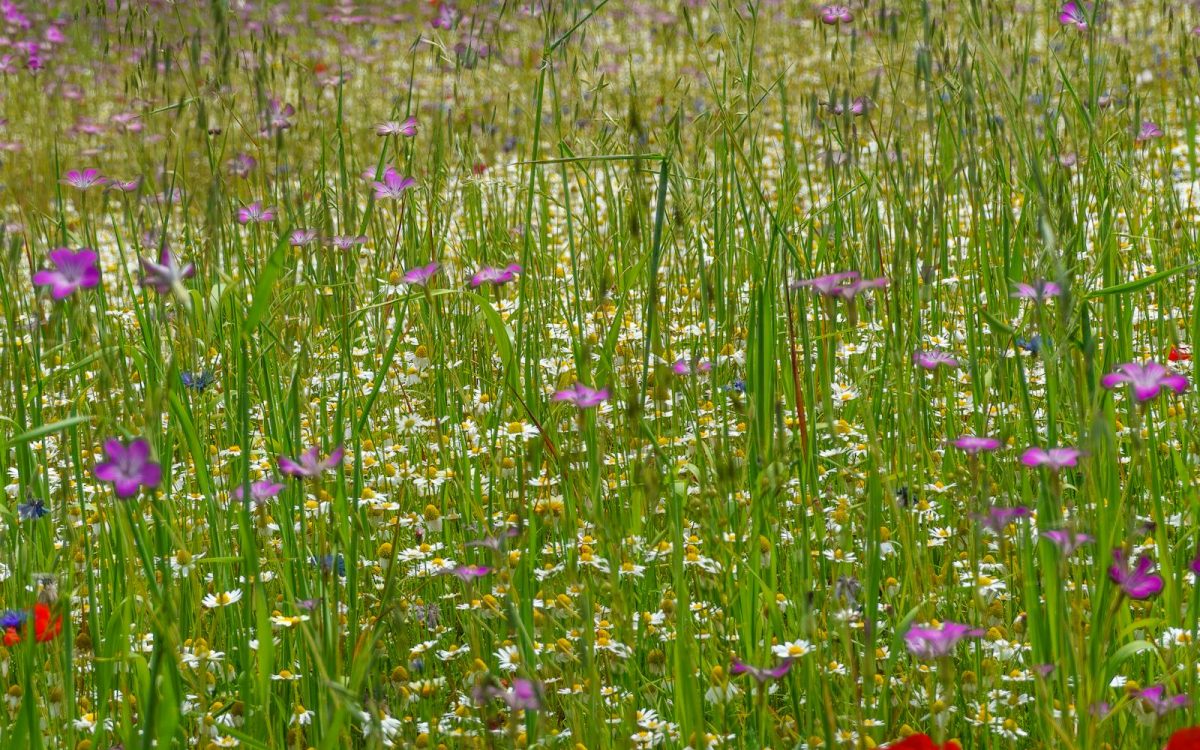
You do not need 3,000 acres to participate in rewilding. A corner of a garden left unmowed for a season will attract different insects than a closely cropped lawn. Removing paving and planting native wildflowers creates habitat. Leaving a log pile to decay supports beetles, fungi, and the birds that feed on them.
These small actions matter collectively. A neighborhood where several households let sections of garden grow freely becomes a patchwork of micro-habitats that insects and birds can actually use. The scale of individual action is small, but the principle is the same as the large projects: trust the natural process, reduce the intervention, and see what comes back.
For practical ways to make your own outdoor space more welcoming to wildlife, our guide on how to make your yard wildlife-friendly offers a solid starting point that aligns well with rewilding principles.
The Limits and the Promise
Rewilding is not a solution to every conservation problem. Highly degraded soils may need active restoration before natural processes can work. Invasive species can sometimes colonize rewilded land before native species establish. And political and social opposition, especially from farming communities, can halt promising projects before they demonstrate results.
What rewilding offers is not a shortcut but a shift in approach: working with natural processes rather than against them. Where it has been done thoughtfully, the results have repeatedly surprised even experienced ecologists. Life, given the chance, tends to find a way back.
The Knepp Estate still looks, to a casual eye, like a bit of a mess. Bramble thickets and fallen trees, muddy pig-rooted ground and thistled clearings. But that mess is alive in a way that neatly farmed fields are not. And that, in a nutshell, is the argument for rewilding.