Anúncios
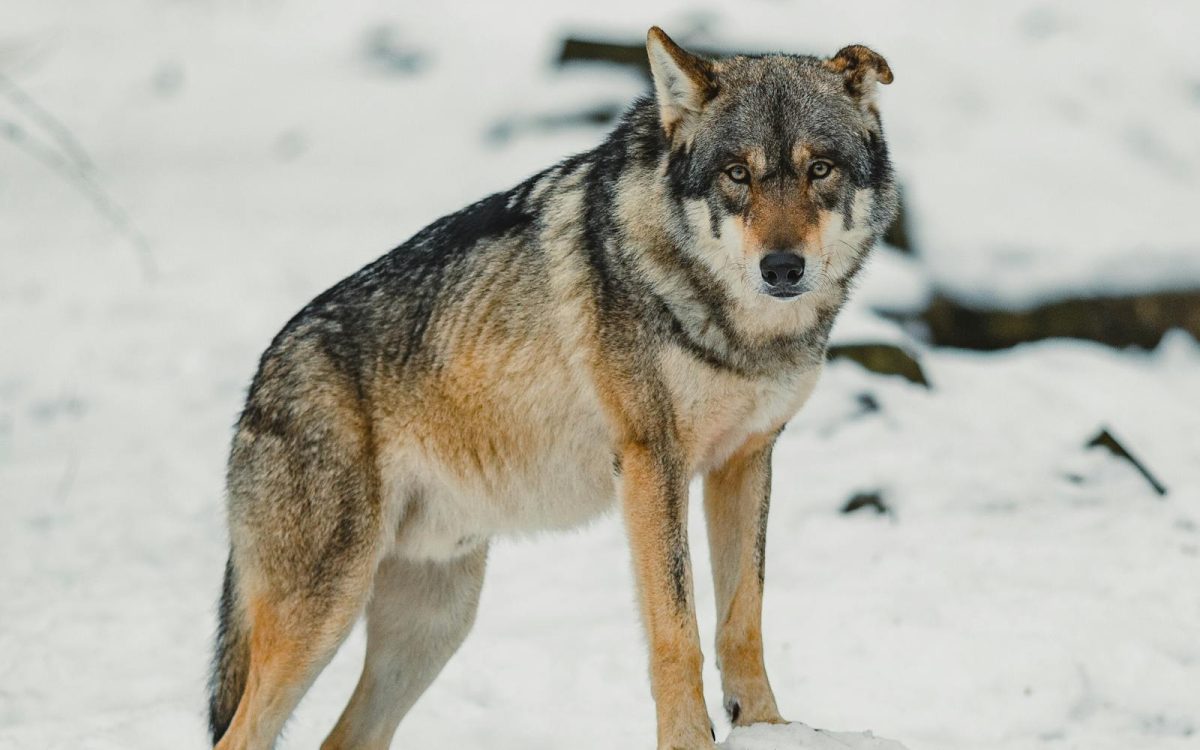
In 1995, wildlife managers released fourteen wolves into Yellowstone National Park after a 70-year absence. What followed over the next decade surprised almost everyone. Elk began avoiding riverbanks. Willows and aspens regrew along streams. Songbirds returned to nest in the recovering shrubs. Beavers came back and built dams that created new wetland habitats. The rivers themselves shifted course as stabilized banks resisted erosion. All of this from fourteen wolves. The story of the apex predator is really a story about how deeply interconnected an ecosystem is, and how much a single species at the top can change everything below it.
What an Apex Predator Actually Is
An apex predator is any animal that has no natural predators as an adult in the ecosystem it inhabits. That is the technical definition. But it understates the role enormously. Apex predators do not just hunt: they regulate. By controlling prey populations, they prevent overgrazing, maintain habitat quality, and even influence which plant species thrive. Ecologists call this top-down regulation, as opposed to bottom-up regulation, where resources like food and water drive population sizes from below.
Anúncios
The title belongs to a wide range of animals depending on the ecosystem. Wolves and mountain lions on North American land. Great white sharks and orcas in the ocean. Nile crocodiles in African rivers. Harpy eagles in the Amazon canopy. Golden eagles over Eurasian mountain ridges. Each one sits at the pinnacle of a particular food web, and each one has evolved to do so with a mix of physical tools, hunting intelligence, and social behavior shaped over millions of years.
The Ecology of Fear: More Than Just Killing
Here is something that surprises many people: apex predators shape ecosystems as much through fear as through the animals they actually kill. When elk or deer know predators are present, they become more cautious. They spend less time grazing in one spot. They avoid the open riverbanks where a wolf pack could corner them. This behavior change, sometimes called the ‘ecology of fear,’ has as much ecological impact as the kills themselves.
Anúncios
In Yellowstone, elk stopped lingering in river valleys not because wolves were killing them there constantly, but because they could not afford to be caught. That behavioral shift was enough to let riverbank vegetation regenerate. The plants grew, roots held soil, banks stabilized, and the rivers changed shape. Scientists call this kind of chain reaction a trophic cascade, a ripple of effects that flows from the top of the food web to the bottom and even into the physical landscape.
Take apex predators out of the picture, and prey animals become bolder. They overuse the most productive areas, strip vegetation, and in the end damage the habitat that sustains them. This is one reason protected areas that exclude hunting but have no apex predators can still degrade over decades: the regulation mechanism is gone.
Mesopredator Release: The Knock-On Effect
There is another layer to the apex predator story. When a top predator disappears, the mid-level predators, called mesopredators, are no longer suppressed. Coyotes increase when wolves are absent. Raccoons and foxes multiply when larger carnivores are removed. These mesopredators then hammer smaller wildlife: ground-nesting birds, small mammals, amphibians.
A study in parts of the American Southeast found that ground-nesting bird success rates declined sharply in areas where the suppression of coyotes had allowed raccoon and opossum populations to surge. The chain ran: remove top predator, mesopredators expand, small prey species suffer. This is called mesopredator release, and it is one of the cleaner pieces of evidence that apex predators regulate entire communities, not just the species they hunt directly.
The same dynamic plays out in the ocean. Where shark populations have been reduced by fishing, rays and skates, freed from predation pressure, have expanded rapidly and in some regions have devastated shellfish populations. A fishing industry built on scallops and clams suffered commercially because the animals that kept their predators in check were gone.
Why Apex Predators Are So Vulnerable
Large predators have life history traits that make them particularly fragile in the face of human pressure. They reproduce slowly: a wolf pack might produce one litter per year. They need vast territories: a mountain lion in the American West may range across hundreds of square miles. They require prey populations dense enough to sustain them, which means they need large, intact habitats.
They also provoke direct conflict with people. A wolf that learns to prey on livestock becomes a problem for ranchers and is often killed. A leopard that moves through a village on the edge of protected land is a threat to children and livestock alike. Throughout history, large predators have been trapped, poisoned, and shot in numbers that most prey species would have survived. Predators could not. Their slow reproduction meant every death was harder to replace.
Today, the range of most apex predators is a fraction of what it was a century ago. Mountain lions have been eliminated from the entire eastern United States except for a small remnant population in Florida. African lions occupy perhaps 25 percent of their historic range. Tigers are gone from 93 percent of their historical territory. Understanding these losses is easier when you understand why species become endangered in the first place.
What Happens When Apex Predators Come Back
Yellowstone is the most famous example, but it is not the only one. The recovery of sea otters along parts of the Pacific Coast of North America illustrates the same principle in a marine context. Sea otters eat sea urchins. Sea urchins eat kelp. When otters were hunted to near-extinction for the fur trade, urchin populations exploded, kelp forests were grazed to bare rock, and a rich underwater habitat that sheltered fish, invertebrates, and marine mammals largely disappeared. As otter populations recovered in protected areas, the kelp forests returned, and with them, fish populations increased, providing more food for eagles and bears that foraged along the shore. One predator, one prey item, cascading through an entire coastal ecosystem.
Rewilding projects in Europe have been working to restore wolf and lynx populations to areas where they have been absent for generations. Early results suggest the same patterns appearing: reduced overgrazing by deer, recovery of woodland ground flora, and a gradual return of species that had been squeezed out. The process takes time, sometimes decades, but the ecological memory of the land seems to respond when top-down regulation is restored.
Apex Predators and the Food Web
To fully understand the apex predator’s role, it helps to see how food webs are structured. Energy flows from plants to herbivores to carnivores, losing roughly 90 percent of its energy at each step. This means large predators are always rare compared to their prey, and their prey is rare compared to the plants. A grassland that can sustain millions of grass plants and hundreds of thousands of grasshoppers might sustain a few hundred deer and only one or two mountain lions.
This pyramid structure means that even small changes at the top, a few predators lost, can cascade disproportionately downward. It also means that measuring the health of a food web by counting predators gives you a sensitive early-warning signal: when top predators are declining, something in the whole system has shifted. You can get a deeper sense of how this plays out species by species by reading about predator and prey relationships and how the balance actually works on the ground.
Living in a World of Apex Predators
For most of human history, people lived in landscapes where apex predators were present. We have deep instincts about large carnivores, some of them warranted and some of them exaggerated far beyond what the actual risk justifies. A wolf very rarely attacks a human. A mountain lion encounter on a trail is memorable but statistically rare. Sharks kill far fewer people each year than bee stings or falling coconuts.
This does not mean the risks are zero, or that coexistence is simple. Farmers and ranchers in predator country face genuine economic losses that deserve real, practical solutions. Compensation programs, livestock guardian dogs, range riders, and secure enclosures have all shown results in different settings. The goal is not to pretend the challenges do not exist, but to solve them in ways that do not require removing the predator from the landscape entirely.
Apex predators are, in a real sense, a measure of the health of a place. Where they persist, the ecosystem beneath them tends to be intact enough to sustain complex food webs. Where they are gone, the landscape is quieter but also more fragile, prone to the boom-and-bust cycles that come when nothing regulates the grazers. Protecting them is not about sentimentality. It is about keeping the system whole.