Anúncios
A garbage bin is, from a raccoon’s perspective, a concentrated food cache that refills itself every week and requires almost no effort to access. The same logic applies to bears, opossums, coyotes, and even crows. These animals are not being mischievous — they are being efficient. Your job is to make that efficiency calculation fail, so they stop finding the effort worthwhile.
Understanding Why Wildlife in Trash Is a Safety Problem
Beyond the mess, regular trash access is genuinely dangerous for the animals involved. Animals that feed on garbage consume spoiled food, food packaging, and non-food items that cause intestinal blockages. They also lose their natural wariness of people, which places them at increased risk of vehicle strikes, poisoning from other human food sources, and euthanasia after they escalate from bin-raiding to entering homes or confronting pets.
Anúncios
Wildlife in trash is also a community problem. One household that provides a reliable food source creates a local population of animals that is bolder and more concentrated than it would naturally be. Neighbors who do not want wildlife visits still get them, because animals working a productive territory cover ground. Securing your bins is an act of neighborly courtesy as much as self-interest.
Choosing the Right Container
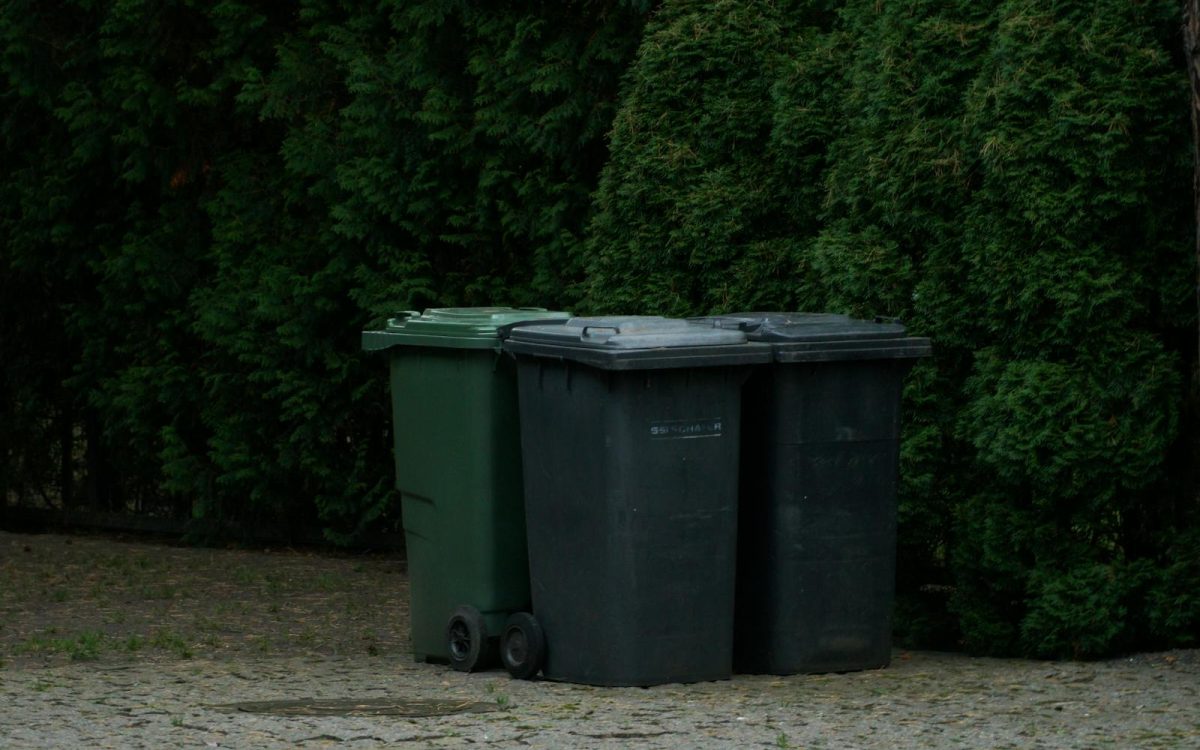
The most common reason wildlife gets into bins is a lid that is not genuinely secure. Standard flip-top lids that just rest in place offer no real barrier to a raccoon, which can lift them easily. A few upgrades make a significant difference.
Anúncios
For raccoons, coyotes, and opossums, a can with a latch mechanism that requires a two-step action — such as pressing a button while lifting — is usually sufficient. Animals learn single-action operations quickly, but a second step reliably defeats most non-ursine raiders. Metal cans outlast plastic ones because raccoons and bears can puncture plastic given enough time and motivation.
For bear country, invest in a container that has been independently tested. The Interagency Grizzly Bear Committee certifies containers specifically for bear resistance, and many municipalities in bear habitat require them. A standard latching lid is not remotely adequate against a black bear or grizzly. If you are unsure whether bears are active in your area, check with your local wildlife agency — their range maps are usually publicly available and updated regularly.
Where and When You Store Bins
Even a good container is an attractant sitting in the open. Where and when you store your bins matters as much as the hardware.
Store bins inside a garage, shed, or enclosed area until the morning of collection. Most wildlife foraging happens overnight, so putting bins out the evening before collection is the most common way to lose the contents. If early-morning bin placement is not realistic for your schedule, a storage enclosure outside — a simple wooden cabinet with a latching door — removes the visual and olfactory cue from the street or yard.
In the scenario where you live in a townhouse complex with shared bins, advocate with your property management for bear-rated or lockable communal containers. A single unsecured bin in a cluster defeats all the others. This is worth raising at a residents’ meeting because the problem is shared and the solution has to be coordinated.
Managing the Smell
Wildlife finds bins through scent before it finds them by sight. Reducing the odor profile is a meaningful supplement to physical security. A few practical steps:
- Rinse food containers before placing them in the bin — even a film of food residue produces detectable odor.
- Double-bag food scraps, particularly meat, fish, and dairy, which generate stronger scent signals.
- Sprinkle baking soda or a commercial bin deodorizer in the bottom of the can after each emptying.
- Clean the bin itself with a diluted bleach solution or biodegradable cleaner once a month, paying attention to the underside of the lid.
- If possible, freeze meat scraps and add them to the bin on collection morning rather than days before pickup.
These steps reduce how much of a signal your bin broadcasts. They will not make a bin invisible to a determined bear with a full night to work, but they reduce casual investigation by animals that were not specifically targeting your property.
What Not to Do
Avoid deterrents that can harm animals or that create secondary problems. Mothballs are toxic to wildlife and pets, and illegal to use as animal repellents in many jurisdictions. Ammonia rags are a short-term measure that rain neutralizes within hours. Snap traps or poisons placed near bins are dangerous to pets, children, and non-target wildlife, and they do not solve the underlying problem — another animal will locate the food source within days.
Trapping and relocating problem animals requires care and, in most places, a permit. Relocated raccoons frequently die within weeks because they lack familiarity with the new territory. The animal that was visiting your bin gets replaced by a new animal locating the same attractant. Removal without habitat modification is one of the least effective long-term strategies available.
If wildlife activity around your home has escalated beyond bin access to entry attempts or confrontational behavior, that is the point to call a licensed wildlife control professional or your local animal control agency rather than handling it independently.
Addressing a Specific Offender
Suppose you have secured your bins with a latching lid, but a large raccoon has figured out the latch. You have found it working the mechanism two mornings in a row. At this point, add a secondary fastener: a carabiner clipped through the handle holes, or a bungee cord looped through the lid latch. The combination of two different mechanisms defeats most persistence.
Also check whether you are inadvertently providing other attractants. A compost bin without a secure lid, a pet food bowl left outside, fruit fallen from a tree, or a bird feeder that drops seed all contribute to a raccoon’s assessment that your property is worth regular visits. Removing all food signals simultaneously is far more effective than securing any single one in isolation. The guide on living with urban raccoons covers the full picture of raccoon behavior and long-term management.
Thinking at the Neighborhood Scale
In many urban and suburban neighborhoods, wildlife pressure on bins is genuinely a collective problem. A single block where most households have secured bins but two or three do not will still have abundant wildlife activity, because the animals working that territory cover it thoroughly. Sharing information with neighbors — even just pointing out that the municipal waste authority sometimes offers subsidized wildlife-proof cans — can produce much better results than individual action alone.
Some municipalities have formal programs for this. Wildlife agencies in areas with significant bear or coyote activity sometimes run community outreach campaigns that include bin audits, subsidized hardware, and educational materials. Checking what your local agency offers takes only a few minutes and might save you considerably more effort in the long run.
For a broader look at how to structure your property to reduce all kinds of wildlife conflict, the article on making your yard wildlife-friendly addresses habitat, attractants, and coexistence principles together. The goal is not to exclude wildlife from your neighborhood but to remove the conditions that put them and you in conflict — that distinction makes the whole project considerably more satisfying.
Consistent bin security, timed placement, and scent management together eliminate the food reward that drives most trash raids. Once the reward disappears, so does most of the behavior. Give it two to three weeks of consistent practice and most wildlife will reroute their foraging to places that are actually productive for them.