Anúncios
Sit near a window for ten minutes this morning and count how many different birds you see. Most people are surprised to find it is more than two or three, and even more surprised when they realize they cannot name half of them. Identifying common backyard birds is one of the most accessible skills in nature study, and the starting point is simpler than most beginners expect: size, shape, color, and behavior tell you almost everything you need.
How to Look at a Bird: The Four-Step Method
Before diving into individual species, it helps to train your eye. When you spot an unfamiliar bird, run through these four observations quickly. First, how big is it compared to a bird you already know? House sparrow-sized, robin-sized, crow-sized? Second, what is the overall color pattern, including any obvious patches, streaks, or wing bars? Third, what shape is the beak? Thick and seed-cracking, thin and insect-probing, or hooked for tearing? Fourth, what is it doing? Hopping on the ground, clinging to bark, or hovering over flowers?
Anúncios
Those four data points, gathered in the first few seconds, will narrow most common backyard birds down to two or three possibilities. From there, a single distinctive marking or behavior usually closes it. The descriptions below follow this same order of features.
Ground-Level Foragers
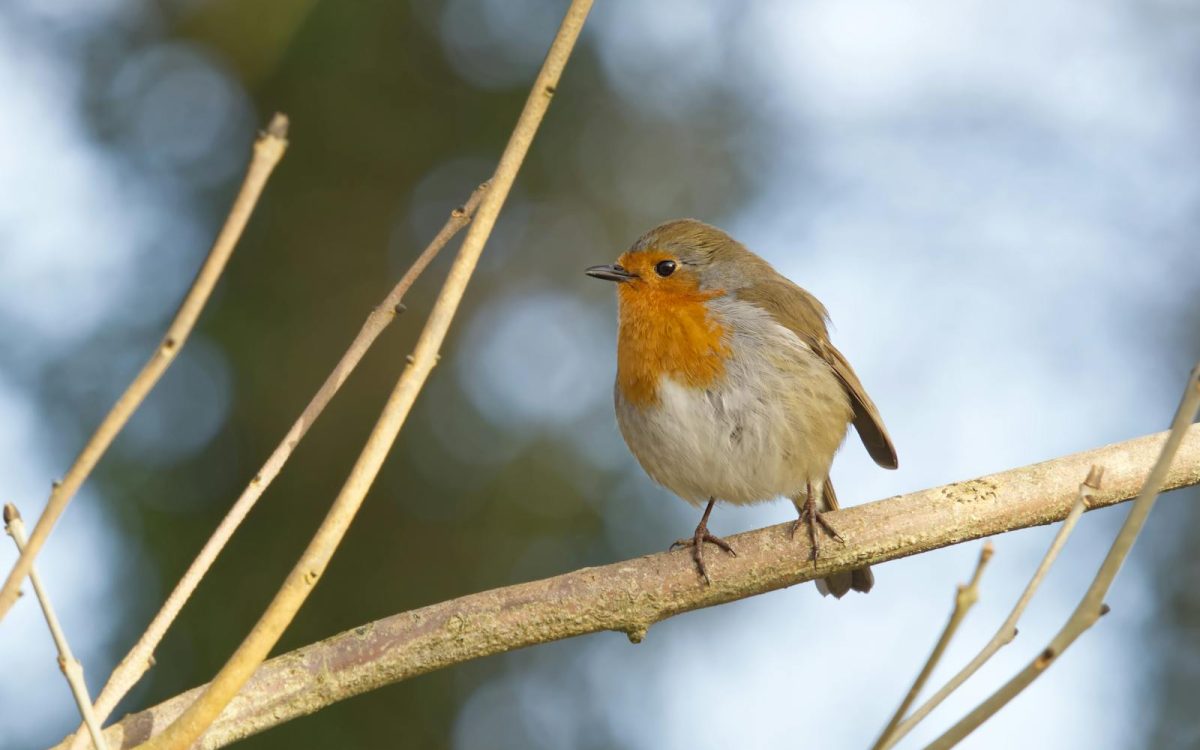
American Robin is one of the most recognized birds in North America. Adults have a brick-orange breast, a dark gray-black back and head, and a yellow beak. They forage by running across lawns and stopping suddenly, head tilted, to pull earthworms from the soil. Their song is a cheerful, rolling series of phrases that sounds like the bird is asking and answering its own questions. Robins often appear in lawns after rain when worms come to the surface.
Anúncios
Dark-eyed Junco is a small, neat sparrow that spends most of its time hopping along the ground beneath feeders or in leaf litter. Eastern birds are slate-gray above with a white belly; western birds show more variation, including tan and rusty coloring. The clearest field mark is the white outer tail feathers that flash when the bird flies away. Juncos are among the first birds to arrive in autumn and among the last to leave in spring, making them a reliable cool-weather companion.
Northern Cardinal is impossible to mistake once you have seen one. Males are entirely red with a distinctive crest and a heavy orange-red beak. Females are tan-brown with warm red tinges in the wings, tail, and crest, and the same heavy beak. Cardinals rarely migrate and are present year-round across most of the eastern United States. Their song is a loud, clear whistle that sounds like “cheer-cheer-cheer” or “birdy-birdy-birdy.”
Feeder Regulars
Black-capped Chickadee (or Carolina Chickadee in the south) is a tiny, acrobatic bird with a black cap, black bib, white cheeks, and gray back. It weighs about as much as two nickels. Chickadees are bold at feeders and will often take sunflower seeds one at a time to eat on a nearby branch. Their call, a clear “chick-a-dee-dee-dee,” changes in urgency depending on the threat level they perceive, adding extra dee notes when a predator is nearby.
House Finch males have a raspberry-red head, breast, and rump, with brown streaks on the back and sides. Females are plain brown with streaky undersides. They travel in flocks and are enthusiastic at tube feeders filled with sunflower seeds. House finches have a bright, bubbly song that ends with a distinctive upward or downward slur. Do not confuse them with purple finches, which are slightly larger and have more uniformly rosy coloring without streaking on the sides.
American Goldfinch in summer is unmistakable: males are canary-yellow with black wings and a black forehead patch. In winter they become olive-drab, which trips up many beginners. The wing bars and the bouncy, undulating flight pattern persist year-round and are reliable identification cues. Goldfinches love nyjer (thistle) feeders and cling to seed heads of coneflowers and sunflowers in the garden. If you want to draw them in, leaving seedheads standing through autumn and winter is more effective than any feeder.
Tree and Bark Specialists
Downy Woodpecker is the smallest woodpecker in North America and a common backyard visitor. It has a black-and-white checkered pattern on the back, a white belly, and, in males, a small red patch on the back of the head. The beak is short and stubby compared to other woodpeckers. You will often see it clinging vertically to tree trunks or suet feeders. Its call is a high, sharp “pik,” quite different from the rolling laugh of the larger Hairy Woodpecker, which is its near look-alike but noticeably bigger.
White-breasted Nuthatch is the bird that walks headfirst down tree trunks, a posture no other common backyard bird shares. It has a blue-gray back, white face and underparts, and a rusty-orange patch on the lower belly. Nuthatches stuff seeds and insects into bark crevices to retrieve later, a behavior that accounts for their common name. Their call is a nasal “yank-yank” that carries well across a yard.
Common Visitors You Might Overlook
Mourning Dove is one of the most abundant birds in North America, yet beginners often fail to give it a proper look. It is a slim, long-tailed dove with soft brown-gray plumage, small black spots on the wings, and a distinctive cooing call that many people mistake for an owl at dawn. Mourning doves prefer to feed on the ground beneath feeders and are often seen in pairs. Their wings make a whistling sound on takeoff, which is a reliable sound to learn.
House Sparrow is a stocky, short-billed bird introduced from Europe that now lives across nearly all of North America. Males have a gray crown, chestnut stripe behind the eye, black bib, and heavily streaked brown back. Females are plain buff-brown with a pale eye stripe. House sparrows are social and nest in loose colonies in eaves, nest boxes, and dense shrubs. They can be competitive at feeders, so recognizing them helps you notice when less common birds are being displaced.
Distinguishing Similar Species: A Common Point of Confusion
Beginners often confuse house finches with purple finches, and Downy with Hairy Woodpeckers. The quickest fix for the finches is to look at the streaking: house finches have clear brown streaks on the flanks, while male purple finches look as if they have been dipped in raspberry juice with no distinct streaking. For the woodpeckers, hold a ruler in your mind: Hairy Woodpeckers are closer to robin-sized and have a much longer, heavier beak relative to their head.
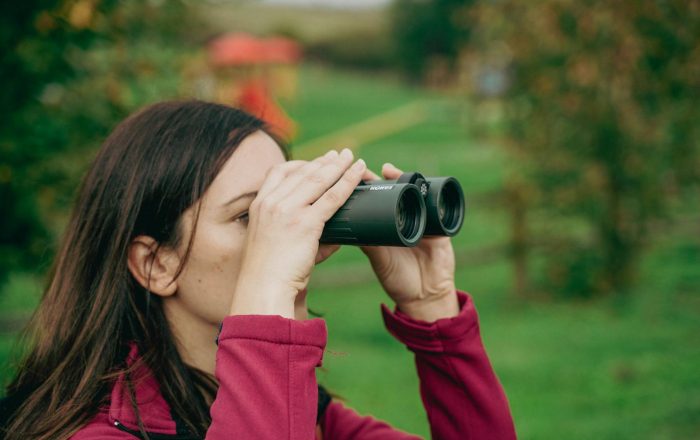
The bird watching for beginners guide covers the equipment and habits that help you get close enough to notice these fine details, and if you want to bring more of these birds within easy viewing distance, the article on choosing the right bird feeder explains which feeder types attract which species.
Two More Worth Knowing
Blue Jay is large, loud, and hard to miss. It has a blue crest, blue-and-white wings with black barring, a white face, and a bold black necklace. Blue jays are intelligent, adaptable birds that cache acorns and will mob predators fearlessly. Their mimicry of red-tailed hawk calls is convincing enough to send other birds fleeing from feeders, which is one of several ways they make their presence felt.
Song Sparrow rounds out this list as a representative of the many streaky brown sparrows that challenge beginners. It has heavily streaked brown upperparts, a bold central breast spot, and a moderately long rounded tail. The song is a distinctive mix of buzzes and trills, often described as starting with three repeated notes before breaking into improvisation. Song sparrows live near low, dense vegetation and water, and are among the most studied birds in North America due to their range-wide variety.
Each of these twelve birds rewards closer attention the more familiar they become. Start by confirming the ones you already suspect you know, then work outward from there. Over a few weeks of regular watching, you will find that your yard feels less like a blur of wings and more like a familiar neighborhood with recognizable faces. That shift, once it happens, tends to make you want to keep going.