Anúncios
A friend of mine spent thirty years walking the same stretch of river path before she started listening properly. On the day she decided to stop and simply hear what was there, she stood on the bank for twenty minutes without moving. By the end she had heard a dipper working the fast water beneath a bridge, a treecreeper calling from somewhere in the alders above her, and the faint piping of a kingfisher as it shot through her field of view. None of those things were new to that stretch of river. She had just never been quiet enough to notice them.
Why Nature Sounds Deserve More Attention
Vision dominates how most adults engage with the world, and it dominates how we engage with nature too. We go looking for things. We photograph what we find. But the natural world communicates in sound with a richness that rivals anything visual, and most of that communication is happening around us constantly while we remain largely unaware of it.
Anúncios
Learning to listen to nature sounds is not a specialist pursuit reserved for birders or sound recordists. It is a basic enrichment of outdoor experience that anyone can develop, and it pays off quickly. Within a few months of deliberate listening, you will begin to notice things on an ordinary walk that previously existed entirely outside your awareness. That shift does not wear off. The richer your listening becomes, the more worth having every outdoor moment proves to be.
There is also a calming dimension to this. Research on natural soundscapes consistently shows that biological sound, the kind produced by living things rather than machines, reduces physiological markers of stress more reliably than silence. Standing inside a dawn chorus and simply receiving it is one of the most restorative experiences the natural world offers, and it is available to almost everyone.
Anúncios
The Architecture of a Natural Soundscape
A soundscape is not a collection of individual sounds happening simultaneously. It has structure. Ecologists who study acoustic ecology often describe natural soundscapes in terms of layers: geophony (non-biological sound like wind and water), biophony (the sounds of living things), and anthrophony (human-made noise). In a healthy natural environment, these layers interact in ways that are anything but random.
Birds, frogs, and insects tend to use different frequency ranges and call at different times of day, which reduces competition for acoustic space. This is why a dawn chorus sounds full and complex rather than cacophonous: the singers are, in effect, scheduling themselves. You can hear this layering if you listen for it. The low croaking of crows and wood pigeons sits in a different register from the thin, high songs of warblers. Bats use ultrasound that sits above most of what human ears detect, though basic bat detectors bring their calls into range.
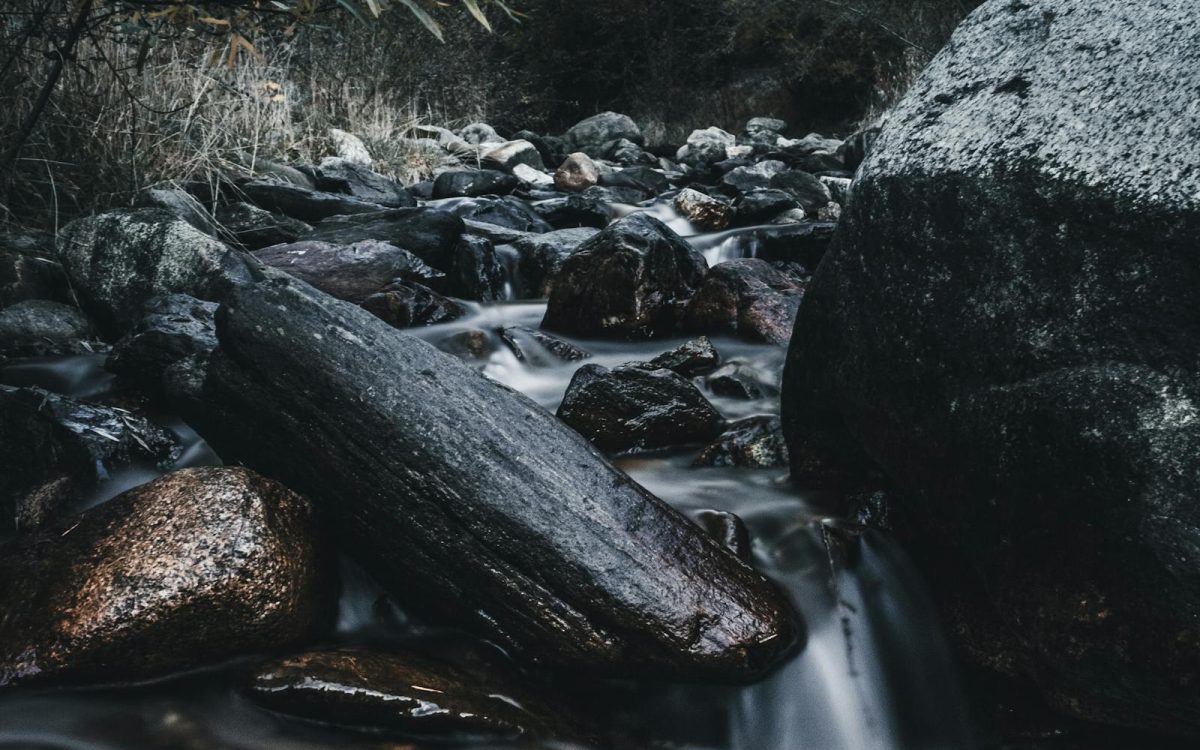
Water is the constant of most natural soundscapes. Rain on leaves, a moving stream, waves on a shore: these geophonic sounds form a background that biological calls emerge from. Many people find the combination of running water and bird calls more restorative than either alone. If you have access to a stream or river path, it is one of the richest places to develop your listening practice.
How to Build a Listening Practice
The technique is genuinely simple, though it requires a different kind of patience than most of us exercise regularly. Stand or sit in a natural setting. Close your eyes, or let them rest unfocused. Let your attention soften from the visual and rest instead in your ears. Do not try to identify anything yet. Just notice the layers: near and far, high and low, continuous and intermittent.
After two or three minutes of this unfocused listening, begin to pick out individual sounds and follow them. A single bird calling repeatedly from the same location. The intermittent rustle of something moving in leaf litter. The wind shifting through different tree species, each with its own particular sound. Try to locate each sound spatially: how far away is it, and in which direction?
Doing this practice on the same patch regularly teaches you what is baseline and what is new. On a quiet Tuesday morning you may hear five species. On a migration morning in October you might hear twelve, including calls you have never heard in that spot before. The surprise only registers because you know what ordinary sounds like. Regular practice makes these departures from the norm vivid and exciting.
Learning Birdsong Without Being Overwhelmed
Birdsong is the most accessible and richest layer of most temperate soundscapes, and it is worth investing a little time in learning. The key is not to try to learn everything at once. Pick five species you can see and hear regularly in your area and focus on those until they are reliable knowledge. The robin’s flowing, slightly melancholy song. The wren’s extraordinarily loud, rattling burst for such a small bird. The blackbird’s fluent, unhurried melody. In North America, the ascending spiral of the Swainson’s thrush, or the rich phrases of the wood thrush.
App-based identification tools have transformed this process. Merlin Bird ID from the Cornell Lab of Ornithology identifies bird calls in real time from your phone’s microphone, which means you can stand in a garden, hold up your phone, and have calls identified as they happen. This is not cheating; it is exactly like using a field guide. It accelerates learning enormously and helps you build the connection between sound and name that your memory then retains.
If you prefer learning from recordings at home before heading outside, free online resources including xeno-canto for birds globally and similar databases for frogs and insects make it possible to familiarise yourself with a target species before you encounter it in the field. Pairing this with slow birding techniques creates a particularly rich combination of listening and watching that reinforces both skills at once.
Seasonal Changes in Natural Soundscapes
One of the most rewarding things about developing a listening practice is tracking how dramatically soundscapes shift across the year. Spring is the season of maximum sound: breeding birds are singing at full intensity, frogs are calling from every pond, and insects begin to add their own layers as temperatures rise. A single spring morning in good habitat can feel almost overwhelming after the quiet of winter.
Summer brings a different kind of fullness: insects dominate in meadows and hedgerows, grasshoppers and crickets creating a dry, continuous hiss that becomes the signature sound of a warm afternoon. Birdsong drops off sharply after mid-summer as breeding ends and the acoustic landscape becomes less competitive. Autumn, as leaves fall and migrants move through, produces a transitional mix of familiar residents and passing strangers, with thin contact calls from overhead migrants on clear nights.
Winter sounds are spare and specific, which makes each one vivid. The drums of a great spotted woodpecker on a dead branch carry remarkable distances. A flock of redpolls working through birch catkins creates a soft, conversational chorus. Tawny owls call long into winter nights, their sound carrying across a still suburb as clearly as any alarm. For more on the particular gifts of the cold months, finding nature in winter covers the full season’s richness in detail.
Recording and Remembering What You Hear
Keeping a sound journal does not require specialist equipment. A voice memo app on your phone captures plenty of usable audio for identifying calls later, and writing brief notes about time, location, and the conditions you heard something in creates a record that grows into something genuinely interesting across seasons and years.
Some listeners find that the act of recording changes the listening experience, focusing attention more sharply and slowing the walk down in productive ways. Others prefer to leave their phone in a pocket and simply listen, which has its own completeness. Both approaches are valid and worth trying.
If you want to extend your engagement with natural soundscapes beyond your own locality, there are archives of field recordings from around the world, freely available online, that let you spend an evening listening to a dawn chorus in Borneo, the evening frog chorus of a Louisiana bayou, or the wind in a Patagonian beech forest. These recordings are not substitutes for direct experience, but they are a genuine form of nature connection, and they widen the world considerably.
Start small: find a quiet spot, close your eyes, and listen for ten uninterrupted minutes. What you hear in that time will surprise you. The world is noisier with life than most of us ever allow ourselves to notice, and all it takes to find that out is a little stillness and the willingness to simply receive what is already there.