Anúncios
A friend of mine once described what she called the death march: an earnest family nature walk with her two young children that started well, degenerated at the halfway point, and ended with one child carried over a parent’s shoulder while the other refused to move. She had planned a two-mile loop with lovely views. What the children had planned, it turned out, was to spend forty minutes investigating a single muddy puddle near the start. The walk became a negotiation neither side was prepared for.
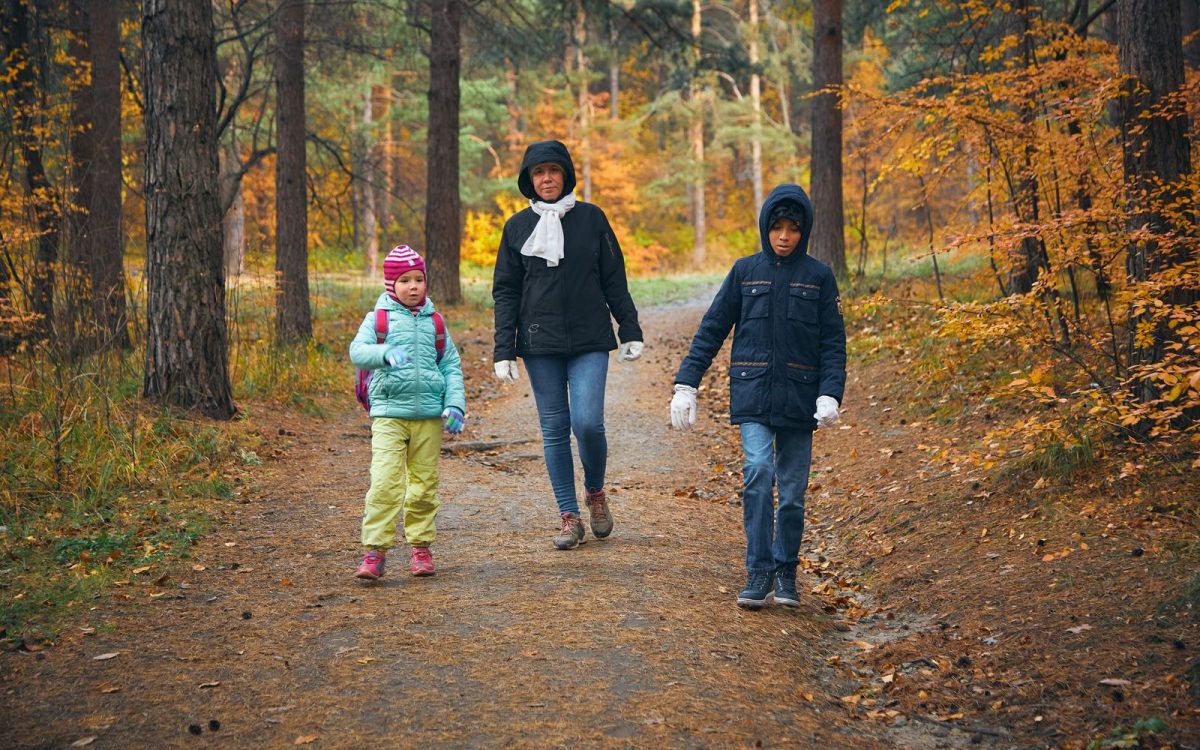
The nature walk with kids that works is almost never the one planned for adults. It is slower, lower to the ground, messier, and much more interested in small things than large ones. Once you accept that, the whole experience transforms.
Anúncios
Adjust Your Pace First
The single most effective thing an adult can do on a nature walk with kids is slow down dramatically. The pace that feels natural to an adult, even a gentle adult stroll, is hurrying by the standards of most children, who move at the speed of their curiosity rather than the speed of the walk.
A child who spots a caterpillar and wants to watch it does not need to be moved along. That caterpillar is the walk. The scheduled distance, the planned viewpoint, the timed return to the car: all of these can flex. The caterpillar cannot. Get down to the child’s level and look at it together, ask what they notice, and let the stop run its natural course. You will find the walk progresses perfectly well between these stops, and the children will walk more willingly because they trust that you will not rush past interesting things.
Anúncios
This mindset shift from destination to discovery is the foundation of every enjoyable nature walk with kids. It also, incidentally, makes you a better nature observer yourself.
Give Children Concrete Missions
Open-ended outdoor time can be wonderful, but children with no focus often default to fidgeting, squabbling, or asking when it will end. A simple mission structure channels that energy toward observation. Missions work best when they are specific, achievable, and slightly competitive.
Try: find five different textures before you reach the next bench. Count every flying insect you see for five minutes. Spot every different shade of green you can between here and the big oak. Collect three things that smell different from each other. The specific nature of each mission focuses attention on the environment rather than on the walk itself, and children who are hunting for something walk remarkable distances without complaint.
Keep missions varied across the walk to cover different senses and scales. A sound-focused mission followed by a texture mission followed by a close-look mission covers different types of attention and prevents any single activity from wearing out.
Let Them Lead Sometimes
Giving a child the role of guide for a stretch of the walk produces a fascinating shift in their engagement. Tell them it is their job to take you to three interesting things before the next junction. They will examine the route ahead very differently when they are responsible for finding something, rather than being brought somewhere.
Children who lead tend to look more carefully, take ownership of the walk’s direction, and remember what they found there far better than children who simply followed an adult. The game also gives you useful insight into what they actually find interesting, which is often quite different from what you expected.
For families building regular outdoor habits, pairing guided walks with some of the broader family nature activities described elsewhere on this site gives you a rich repertoire to draw on across different settings and seasons.
Make Stops Last
Children tend to linger at genuinely interesting finds. Adults tend to wrap up and move on before the interest is exhausted. Resisting this impulse pays dividends. A good stop, where a child is fully absorbed in watching a beetle, poking at a stream bank, or examining a fungus, generates more nature learning and more positive feelings about outdoor time than three hurried stops combined.
A useful field rule: whenever a child stops spontaneously, assume the stop will last at least three minutes before you nudge forward. Then, if they are still engaged at three minutes, extend again. Most genuine finds hold attention for five to ten minutes of sustained looking if the adult stays engaged alongside the child rather than checking their phone or looking ahead.
Getting muddy is part of this. Children who know they are allowed to kneel in mud, handle bark, wade through shallow water, and get grass stains on their knees engage physically and emotionally with the environment in a way that clean, hands-off children simply cannot. Dress for it, bring a bag for wet things, and then let it happen. The mess washes out; the curiosity is worth protecting.
What to Do When They Find Wildlife
Children and unexpected wildlife encounters are a combination of excitement and the need for calm guidance. The core rule for any wild animal is watch from a distance and do not touch. Frame this positively rather than restrictively: the animal cannot understand that you are friendly, so staying still and quiet is how you show it respect.
A child who freezes and watches a fox trot across a path ahead, who stays quiet for the full minute it takes a heron to take off from the edge of a pond, or who kneels motionless while a robin investigates nearby for worms, has learned something about coexistence that no book can fully convey. These moments are the real harvest of a nature walk, and they tend to arrive precisely when the adult relinquishes the walk’s schedule and lets things unfold at their own pace.
If a child finds an injured or apparently abandoned animal, the guidance in what to do with an injured wild animal is worth reading before your next walk, so you are ready with a calm, clear response.
After the Walk
The walk does not fully end when you get back to the car or the kitchen. Talking about what you saw, in the car on the way home or over a meal, consolidates memory and builds vocabulary. Ask children to describe one thing they found surprising, one thing they want to know more about, and one thing they would look for differently next time. These three questions produce remarkably good nature conversations with children from about age five upward.
A shared family nature journal, even a simple scrapbook, gives the walk a tangible output that children return to with pride. Pressed leaves, a sketch of the caterpillar, a note about the date and the weather: small records accumulate into something genuinely meaningful over months and years. For a practical guide to keeping this kind of record, nature journaling for beginners offers a low-pressure starting point.
The Walk That Stays With Them
Children remember the walks where something unexpected happened: the snake that crossed the path, the deer that stood and watched them from the field edge, the moment the whole flock of starlings lifted at once from the hawthorn. They remember these things because the adults with them stopped, stayed quiet, and let the encounter run. Your willingness to be surprised alongside them, genuinely, without performance, is the single most powerful gift you can bring to a nature walk.
Go slowly, follow their curiosity, bring snacks, dress for mud, and leave the schedule at home. The rest takes care of itself.