Anúncios
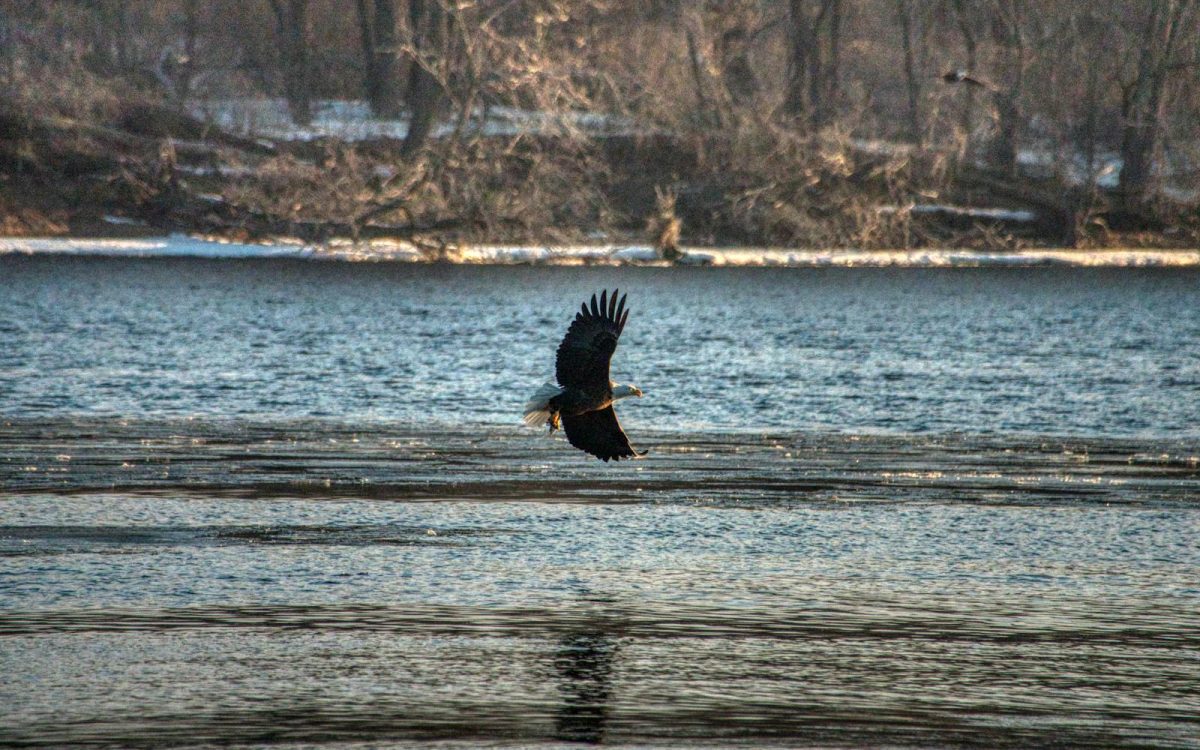
A few decades ago, bald eagles were disappearing from the United States at a frightening pace. By the early 1960s, fewer than 500 nesting pairs remained in the lower 48 states, pushed to the edge by hunting, habitat destruction, and a pesticide called DDT that caused their eggshells to thin and crack before hatching. Today, there are more than 300,000 bald eagles in North America. That turnaround did not happen by accident.
Recovery stories like this one are not flukes. They follow a recognizable pattern: a species reaches a crisis point, people take notice, and a combination of legal protection, habitat work, and sustained effort slowly tips the balance. The process is rarely dramatic or fast. But it works.
Anúncios
The Bald Eagle: From Crisis to Comeback
The bald eagle’s recovery began with two decisions. In 1972, the United States banned DDT. Then, in 1973, the Endangered Species Act gave the eagle legal protection against hunting and allowed the government to fund recovery programs. Biologists began monitoring nests, relocating eggs in some cases, and protecting riverside habitats where eagles hunt and breed.
By 2007, the bald eagle was removed from the Endangered Species List. The lesson here is that removing the primary threats, in this case a toxic chemical and unregulated hunting, gave a resilient species room to do what it naturally does: reproduce and expand.
Anúncios
The eagle’s story also matters because DDT was harming more than eagles. Peregrine falcons, osprey, and brown pelicans all recovered once the pesticide was removed. One targeted action had ripple effects across multiple species. That is how interconnected healthy ecosystems tend to be, as explored in our piece on what ecosystems are and how nature connects.
Wolves and the Yellowstone Cascade
Few conservation stories have reshaped scientific thinking as dramatically as the return of gray wolves to Yellowstone National Park. Wolves were extirpated from Yellowstone by the mid-1920s. When 31 wolves from Canada were reintroduced between 1995 and 1996, researchers expected to see some effect on elk populations. What they did not expect was a change to rivers.
Here is what happened. With wolves present again, elk became wary of grazing in open valleys and near riverbanks where they were vulnerable. The vegetation in those areas began recovering. Tree roots stabilized stream banks. Rivers narrowed and deepened. Beaver returned because willows grew back. Fish populations improved because of better water quality. Scientists call this a trophic cascade, a chain reaction running from predator down through an entire ecosystem.
The Yellowstone wolf reintroduction did not happen without controversy. Ranchers near the park had real concerns about livestock predation, and those concerns required real negotiation and compensation programs. That negotiation was part of the conservation work, not separate from it. The recovery succeeded because it was treated as a social challenge as much as a biological one.
The Humpback Whale’s Long Road Back
Commercial whaling brought humpback whale populations to somewhere between 5,000 and 10,000 individuals worldwide by the mid-twentieth century, down from an estimated 125,000 before large-scale hunting began. The International Whaling Commission’s moratorium on commercial whaling, which took effect in 1986, gave humpbacks a chance to recover without the constant pressure of hunting.
Today, global humpback numbers have rebounded to roughly 80,000, and in 2016 fourteen of the 14 recognized humpback whale populations were removed from the endangered and threatened lists by the U.S. government. That represents decades of international cooperation, monitoring, and sustained legal pressure.
The recovery is not complete everywhere. Some Pacific populations still face challenges from ship strikes, fishing gear entanglement, and climate-driven changes to food availability. But the core story, that removing the primary threat of hunting allowed the population to rebuild, holds firm.
Southern Sea Otters and the Kelp Forest
Sea otters were hunted nearly to extinction for their fur during the 18th and 19th centuries. By 1911, when an international treaty finally halted the trade, as few as 2,000 sea otters remained worldwide. A small remnant population of about 50 California sea otters survived near Big Sur, discovered in 1938 and protected under California law.
From that tiny founding group, California’s southern sea otter population has grown to roughly 3,000 animals. Their recovery has transformed the kelp forests along the California coast. Sea otters eat sea urchins, and sea urchins eat kelp. Without otters, urchin numbers explode and the kelp forests are grazed down to bare rock, what biologists call an ‘urchin barren.’ With otters present, urchin populations are kept in check and kelp forests thrive, providing habitat for hundreds of species of fish and invertebrates.
This is what ecologists mean when they describe sea otters as a keystone species: their presence or absence determines the character of an entire ecosystem.
Mountain Gorillas: Recovery Through Community
In 1981, biologist Diane Fossey estimated that only 254 mountain gorillas remained in the Virunga Volcanoes, a cluster of mountains shared by Uganda, Rwanda, and the Democratic Republic of Congo. Poaching, habitat loss, and civil unrest all contributed to their precarious position. The prognosis was grim.
The recovery that followed was built around something that wildlife conservation sometimes overlooks: the involvement of local communities. Conservation organizations partnered with village leaders. A network of community rangers was trained and employed from local populations. Revenue from gorilla trekking permits, which allowed small groups of tourists to observe gorillas from a respectful distance, was shared with communities near the park.
By 2018, the mountain gorilla’s status on the IUCN Red List was moved from ‘critically endangered’ to ‘endangered,’ a significant step, as the total population had grown to over 1,000 individuals. That upgrade reflected decades of community-based work, not just wildlife biology. As of recent surveys, the population continues to grow steadily.
The gorilla story offers a clear lesson for any conservation effort: local people who live alongside wildlife need to benefit from its survival, not simply be asked to sacrifice for it. Conservation that serves only distant interests tends to fail. Conservation that improves local lives tends to endure.
What These Stories Tell Us
Each of these five recoveries happened under different conditions, in different countries, involving different species. But a few threads run through all of them. First, the primary threats, whether DDT, hunting, or habitat destruction, had to be significantly reduced before recovery could begin. Second, sustained effort over years or decades was essential. None of these were quick fixes. Third, and perhaps most overlooked: recovery almost always involved people working together across disagreements, across borders, and across interests that did not naturally align.
There is a tendency in nature writing to focus on what is lost, and there is real loss worth documenting. But these stories exist too, and they matter. They show that conservation is not a holding action against inevitable decline. It is a practice with a track record of working.
Recovery is possible. The evidence is flying over American rivers, swimming off the California coast, and walking mountain forests in central Africa.
See also: How Reforestation Works, and Why Planting Trees Is Not Always Enough.