Anúncios
Look at a horse’s mouth and you will see a dental biography. Wide, flat grinding molars built for crushing fibrous grass. No long canines. A digestive system long enough to run slowly through an enormous volume of plant material. Everything about a horse’s body is written in the language of herbivory. That is the beauty of dietary categories: once you understand what an animal eats, you can read its body like a set of notes left by evolution.
Herbivores: Built for Plants
Herbivores eat plant material, and the variety within that single category is enormous. A giant panda eats almost exclusively bamboo, spending up to sixteen hours a day chewing through a food source so low in nutrition that it must consume staggering quantities just to maintain its body weight. A giraffe browses the canopy of acacia trees, using a 45-centimetre tongue adapted for reaching past thorns. A caterpillar methodically consumes leaf tissue, sometimes nothing but one species of leaf that it has been chemically primed to recognise by genetics.
Anúncios
All of these are herbivores, but their adaptations are radically different because their specific plant foods make completely different demands.
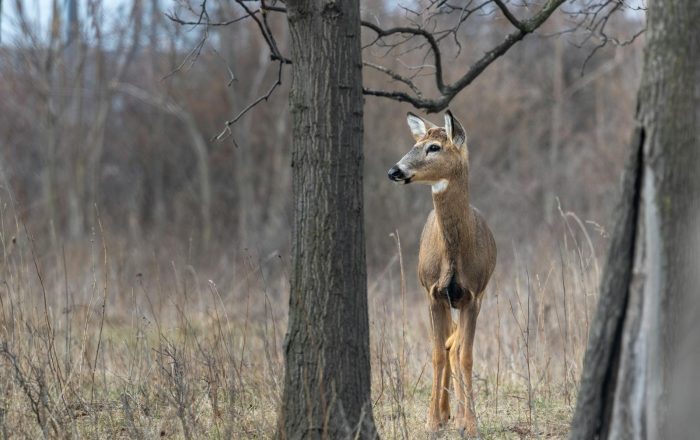
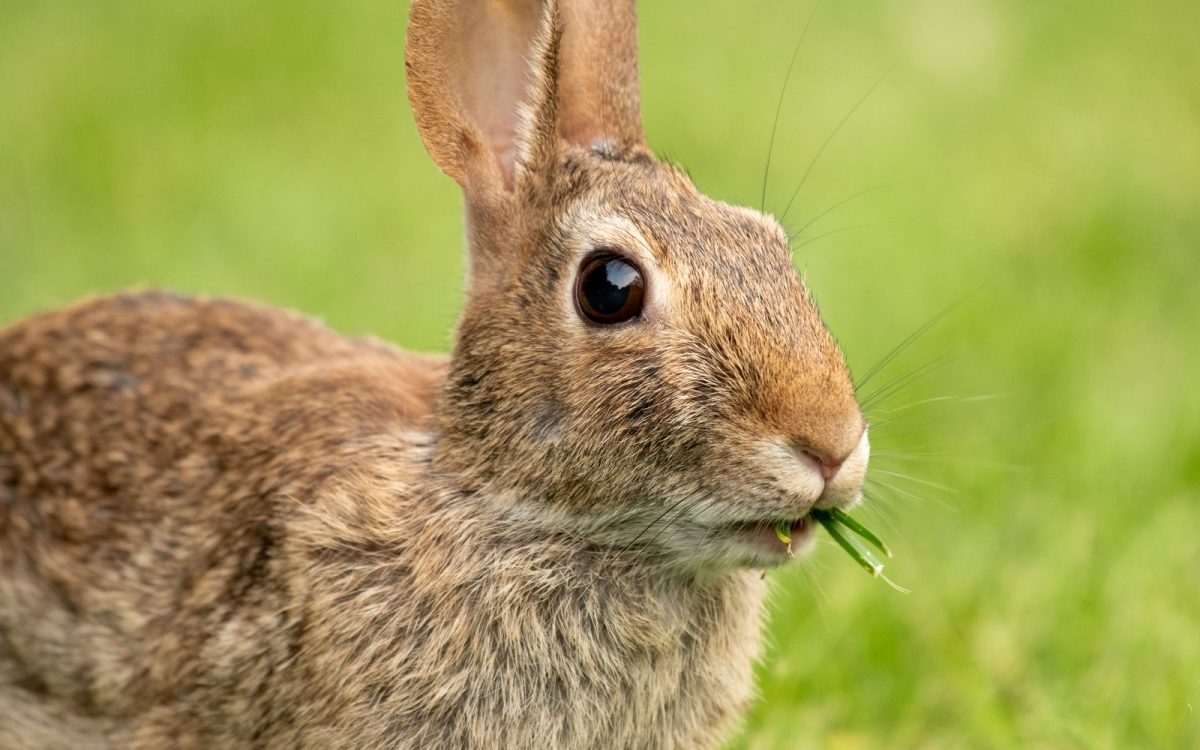
Grass-eating herbivores, called grazers, typically have teeth that grow continuously because grass contains silica particles that grind teeth down quickly. Horses, rabbits, and voles all have this feature. Browsers, animals that eat leaves, bark, and shrubs, tend to have sharper front teeth for cropping rather than the flat continuous-growth molars of grazers. Deer occupy a middle ground, switching between grazing and browsing depending on the season.
Anúncios
The digestive challenge for herbivores is cellulose, the structural compound in plant cell walls. Mammals cannot produce the enzyme needed to break it down directly. Instead, most herbivores rely on microbes living in their guts. Ruminants, including cattle, deer, giraffes, and sheep, have a multi-chambered stomach. They swallow plant material, ferment it in the first chamber, regurgitate and re-chew it (this is what cows are doing when they chew their cud), then pass it through further chambers for more digestion. This elaborate process allows them to extract nutrition from material that is nearly useless to carnivores.
Carnivores: Shaped by the Hunt
Carnivores eat other animals. Their bodies reflect the demands of locating, capturing, killing, and digesting prey, and those demands have produced some of the most extraordinary adaptations in the animal kingdom.
Teeth tell the first part of the story. A wolf’s skull shows prominent canines for gripping and holding struggling prey, carnassial teeth, pairs of blade-like molars that work like scissors to shear flesh, and relatively small flat molars because wolves do very little grinding. Compare this to a horse skull and the contrast is striking. Everything is designed for a different job.
Eyes are another giveaway. Most carnivores have forward-facing eyes that provide binocular vision and excellent depth perception, essential for judging the distance of fast-moving prey. Prey animals more often have eyes on the sides of their heads, giving them a wide field of view to detect approaching danger. An owl can see a mouse in near-darkness from fifty metres away. A rabbit can see almost three hundred and sixty degrees around its body, making it almost impossible to sneak up on from behind.
A lion might eat once every several days, consuming a large meal and then resting extensively while digesting. An active hunter like a weasel, with a very fast metabolism and a small body that loses heat quickly, must hunt nearly constantly, eating its own body weight or more in prey every few days. The same broad category, carnivore, encompasses an extraordinary range of lifestyles.
Hypercarnivores get the most attention, animals like big cats and crocodilians whose diet is more than 70 percent meat. But mesocarnivores, like foxes, raccoons, and coyotes, eat meat as a significant but not exclusive portion of their diet. Many animals classified as carnivores supplement with fruit, insects, or other non-meat items when available.
Omnivores: The Flexible Middle
Omnivores eat both plant and animal material, and their flexibility is generally a competitive advantage. A brown bear is one of the clearest examples. In spring, bears eat grasses, sedges, and overwintered berries. In summer they shift to roots, ground squirrels, and insects. In autumn, during a period called hyperphagia, bears consume tens of thousands of calories daily from berries, nuts, and any salmon they can catch at river crossings. That dietary flexibility allows brown bears to inhabit an enormous range of environments, from Pacific coast rainforests to Eurasian steppe.
Crows are another standout case. They eat insects, eggs, carrion, grain, fruit, small mammals, and food discarded by humans. Their cognitive flexibility and dietary flexibility seem to be linked: a brain capable of problem-solving is useful when the food source constantly changes. Crows have been observed using tools to extract food, caching food for later, and even stealing from other animals by distracting them.
Omnivory also shows up in surprising places. Box turtles eat mushrooms, berries, earthworms, and carrion with apparent equal enthusiasm. Piranha, famous in popular culture as fearsome carnivores, actually consume a significant amount of plant material and seeds in their native Amazonian rivers, making them true omnivores. The carnivore reputation is not entirely wrong but it is heavily overstated.
For a look at how these different dietary strategies fit into the broader flow of energy through natural systems, the article on food chains and food webs shows how herbivores, carnivores, and omnivores each occupy a specific layer in that energy transfer.
Reading the Clues: How Diet Shapes a Body
Spending time noticing how body features match diet is one of the most satisfying exercises in wildlife observation. Here are some patterns that hold consistently across many species:
- Eye position: forward-facing usually signals predator, side-facing usually signals prey animal.
- Tooth shape: flat grinding teeth point to plant-eating; pointed canines and shearing molars point to meat-eating.
- Gut length: long, complex digestive systems belong to herbivores; shorter, simpler ones belong to carnivores.
- Claws: retractable, curved claws built for gripping live prey differ from non-retractable claws used for digging or running.
- Body size vs. territory size: carnivores often need far larger territories than equivalently sized herbivores because prey is scarcer and more dispersed than plant food.
None of these rules is absolute, but taken together they give you a quick biological read on an unfamiliar animal. A bird with a hooked beak, forward-facing eyes, and taloned feet is almost certainly a carnivore. A round-headed, side-eyed rodent with chisel-shaped incisors is almost certainly eating plants.
How Diet Drives Ecological Role
What an animal eats determines what it does for the ecosystem. Herbivores are the primary consumers, converting plant energy into animal tissue that carnivores can then eat. Without herbivores, the energy stored in plants would have no efficient route to the rest of the food web. Herbivores also shape vegetation directly: grazing pressure keeps grasslands from converting to scrub, browsing by deer opens forest understorey, and seed dispersal by fruit-eating animals plants tomorrow’s trees.
Carnivores regulate herbivore populations, preventing the overgrazing and habitat degradation that can occur when plant-eaters are unchecked. Their role in maintaining that balance is one reason the loss of predators causes such cascading effects in ecosystems. Omnivores fill a connecting role, moving energy between plant and animal pathways and often serving as important seed dispersers.
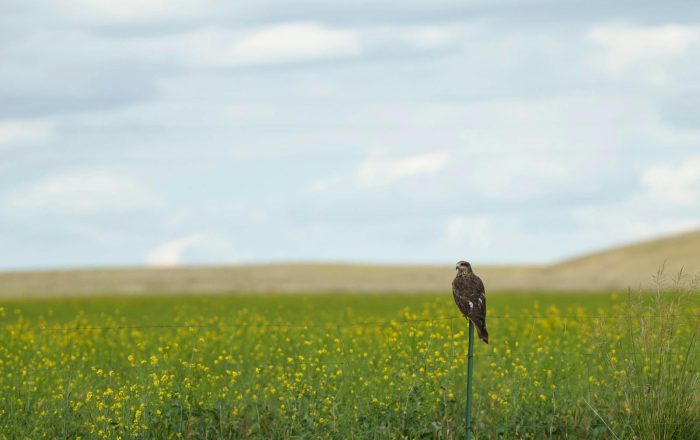
Understanding the dietary category of any animal you encounter gives you an immediate insight into its body, its behaviour, and its place in the web of life around it. It is one of those basic frameworks that makes the natural world more legible at a glance, from the rabbit cropping grass in your garden to the hawk watching it from the fence post above.
If you want to understand more about how animals have physically evolved to fill these feeding roles over time, the piece on animal adaptations goes deeper into the physical and behavioural tools that evolution has produced for every lifestyle imaginable.