Anúncios
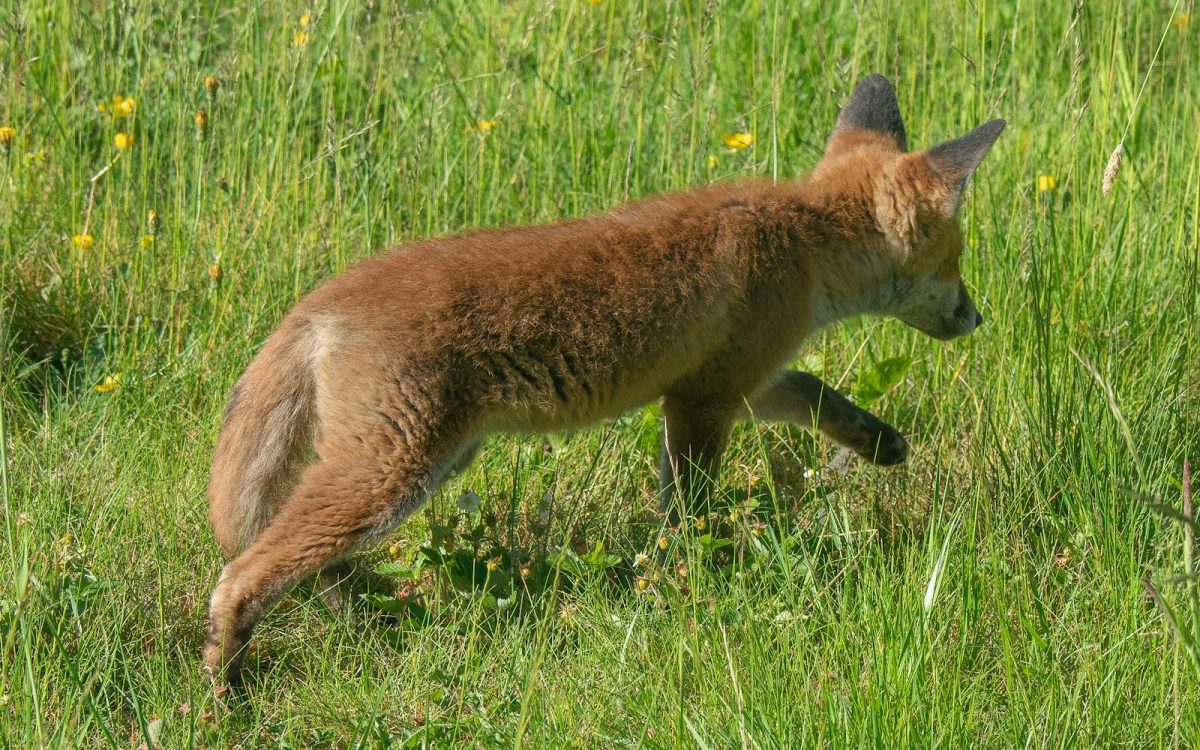
A red fox trots across a frost-covered meadow at dawn, nose low to the ground. It is tracking a field vole, which spent the night eating grass seeds. That brief morning hunt is three trophic levels of ecology playing out in under a minute. The grass captured sunlight. The vole converted plant material into warm flesh. The fox is about to convert that flesh into the energy for another day of hunting. A food chain, made visible.
The Basic Food Chain, Step by Step
A food chain always starts with a producer: a plant, alga, or photosynthesising bacterium that captures energy from the sun and builds it into sugars and organic molecules. Everything else in the chain is, in a sense, feeding on stored sunlight.
Anúncios
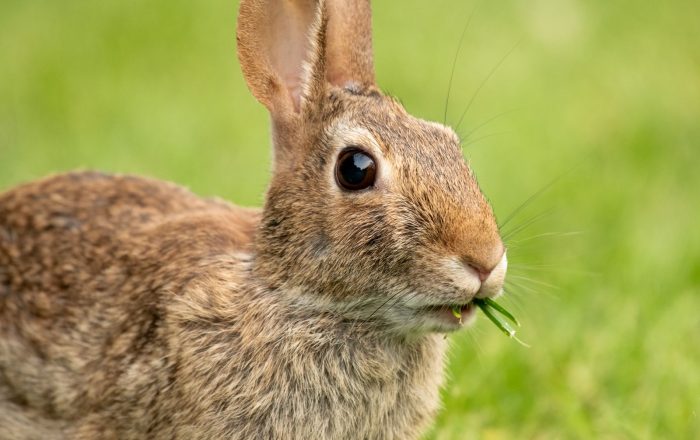
Next come the primary consumers, animals that eat producers directly. Caterpillars, rabbits, deer, grasshoppers, and seed-eating birds are primary consumers. They are herbivores, though some occasionally eat small amounts of other material.
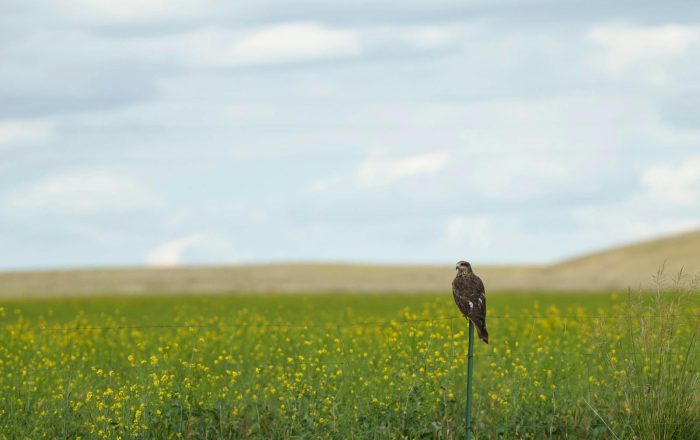
Secondary consumers eat the primary consumers. A sparrowhawk eating a seed-eating finch is a secondary consumer. So is a trout eating mayfly larvae. Then come tertiary consumers, predators that eat other predators. A golden eagle taking a fox would occupy the fourth trophic level.
Anúncios
At each step, energy is transferred. But not efficiently. The rough rule ecologists work with is the ten percent rule: only about ten percent of the energy stored in one trophic level makes it to the next. The rest is spent on metabolism, heat production, and movement. This explains why a meadow can support a thousand rabbits but those rabbits might sustain only a handful of foxes. Energy bleeds away at every transfer.
Why Real Nature Does Not Work in Simple Chains
The food chain is a useful teaching tool, but nature ignores it. Most animals eat a variety of things, and most animals are prey for more than one predator. A wood mouse eats seeds, berries, beetles, and fungi. It is eaten by owls, foxes, weasels, and kestrels. Where exactly does it fit in a simple chain? The honest answer is everywhere at once.
This is where food webs come in. A food web is a diagram showing all the feeding relationships in a community, not just one pathway but the whole interlocked network. Draw one for a temperate meadow and you will quickly run out of space. Grasses connect to dozens of herbivores. Each herbivore connects to multiple predators. Predators eat each other. Decomposers link back to the base of everything.
Food webs are a more accurate model of how ecosystems actually function. They also reveal something reassuring: a web with many connections is more stable than a simple chain. If one prey species declines, a predator with options can switch to another. The system absorbs the shock. A chain, by contrast, breaks if any single link fails.
Trophic Levels and the Pyramid of Energy
Ecologists describe feeding positions as trophic levels. Level one is producers. Level two is primary consumers. Each level up the chain has progressively less energy available and typically supports fewer and larger organisms.
This creates what is called the energy pyramid, or trophic pyramid. The base is wide, representing the vast biomass of plants. Each level above is smaller. By the time you reach apex predators, like a great white shark or a golden eagle, the available energy is so diluted that you expect only a handful of individuals per large area.
This is not a flaw in nature’s design. It is a consequence of thermodynamics. Energy cannot be created, and it is always lost as heat at each conversion. The pyramid shape is the inevitable result.
Understanding trophic levels helps explain why removing a top predator has such large effects. Apex predators sit atop a pyramid of energy that extends all the way down to soil bacteria. Removing them does not just eliminate one species; it reshapes the flow of energy through every level below.
A Real Food Web in a Woodland Edge
Picture a woodland edge in late summer. Oak trees produce acorns and leaves. Caterpillars eat the leaves. Wood mice eat both acorns and caterpillars. Jays collect and cache acorns, sometimes forgetting them, which plants new oaks. Tawny owls hunt the wood mice. Sparrowhawks take small birds. Foxes hunt mice and also take young rabbits, which graze the grassy edge. Rabbits are also taken by buzzards. Earthworms break down leaf litter and are eaten by blackbirds, which are in turn eaten by sparrowhawks.
Already we have a tangle, and we have barely mentioned the fungi linking tree roots underground, the aphids on the oak shoots, the parasitic wasps laying eggs in caterpillars, or the deer browsing the shrub layer. A food web diagram for even this small patch would require a large sheet of paper and a very fine pen.
The practical point is this: the more threads in the web, the more resilient the system. A woodland supporting thirty species of insect-eating birds can afford to lose one. A woodland that has been reduced to two or three cannot.
Decomposers: The Overlooked Leg of Every Web
Most food chain diagrams end with a top predator, but that is misleading. When any organism in the web dies, decomposers take over. Fungi send threads through dead wood. Bacteria colonise carcasses. Beetles and flies process dung and remains. These organisms break complex organic molecules back into mineral nutrients that dissolve into soil water and become available to plant roots again.
Without decomposers, nutrients would lock up in dead tissue and the base of the food chain, the producers, would slowly starve. Every ecosystem runs two parallel cycles at once: the energy flow through feeding relationships, and the nutrient cycle driven by decomposition. They are inseparable.
This is worth keeping in mind if you garden for wildlife. A tidy garden with no leaf litter, dead wood, or plant debris removes the decomposer layer and impoverishes the soil web. Messy corners are not neglected; they are ecologically active.
How Humans Fit Into Food Webs
Humans are omnivores, which places them at multiple trophic levels simultaneously. Someone eating a salad is a primary consumer. The same person eating a beef burger is a tertiary or even quaternary consumer, since cattle eat grain that fed on sunlight, and the grain may have been grown with fertiliser derived from other biological processes.
Our footprint in global food webs is enormous, not just through what we eat but through what we change. Intensive farming simplifies food webs by replacing diverse natural vegetation with monocultures. Commercial fishing removes huge amounts of biomass from marine food webs faster than populations can replace it. Even lighting at night disrupts the feeding patterns of nocturnal predators and their prey.
Understanding the food chain gives you a practical lens for evaluating these choices. Reducing the complexity of any food web, whether a prairie or an ocean shelf, reduces its resilience.
Putting It Together
A food chain is where the concept starts: one line from plant to predator. A food web is where real understanding begins: a net of connections, each one a dependency, each dependency a source of both vulnerability and strength. The energy flowing through that web came from the sun and will return, eventually, to the soil.
Next time you see a bird hunting, a bee visiting a flower, or a worm working its way through a compost heap, you are watching the food web in action. Each moment is a small transaction in an economy that has been running for hundreds of millions of years, and understanding it starts with noticing it. For a closer look at how these relationships can break under pressure, the article on predator and prey dynamics picks up where this one leaves off.