Anúncios
Step outside on a clear October morning and the season announces itself before you have taken three steps. The light is lower and more golden than summer ever managed. A squirrel moves fast along a fence, cheeks stuffed, focused on a project that has nothing to do with you. The air carries the faint sweet rot of fallen apples from somewhere nearby. Autumn nature works on you without asking permission, and the more you slow down to meet it, the more you find.
Reading the Autumn Colours
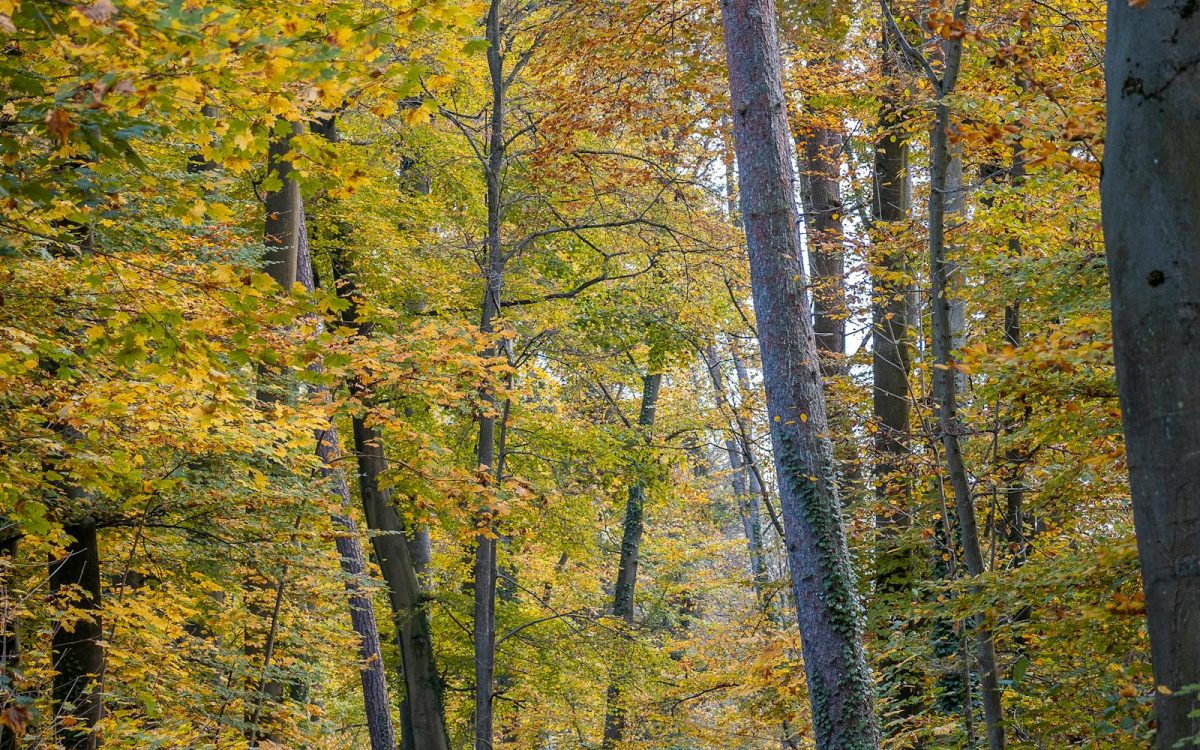
The colour change is the season’s most celebrated spectacle, and it repays close attention even if you have watched it your whole life. Green leaves look uniform from a distance, but as chlorophyll drains away, individual trees reveal personalities. Sugar maples go scarlet and flame orange. Aspens turn clean butter yellow. Oaks hold their russet and bronze longer than almost anything else, often well into December in milder climates.
Anúncios
Pay attention to the edges of woodland rather than just the interior. Where trees meet open ground, they receive more light and often colour most intensely. A forest margin seen from a hillside on a sunny afternoon, with late light catching the canopy, is one of the quietest pleasures the season offers. You do not need a scenic overlook to find it; a local park or even a street lined with mature trees can give you the same gift.
If you want to deepen your connection to autumn nature, start noting which trees colour first and which hold on longest. Over a few seasons, you will build a mental map of your neighbourhood’s calendar that no app can replicate.
Anúncios
Creatures on the Move
Animals spend autumn in one of two broad modes: storing up or shipping out. Both are worth watching. Squirrels, jays, and nuthatches are in full harvest mode, carrying nuts and seeds to caches that some of them will never recover. Grey squirrels alone may bury thousands of acorns in a season, and the ones they forget become next spring’s oak seedlings. There is a kind of accidental generosity in that.
Migration, though, is autumn’s other great drama. Billions of birds cross the sky in autumn, most of them at night, following routes shaped by millions of years of pressure. On a clear night in September or October, you can stand outside and hear thin, high contact calls drifting down from the darkness above your head. Thrushes, warblers, pipits: they are up there, navigating by stars and magnetic fields, bound for warmer ground. Listening for those calls is one of the most atmospheric things you can do on an autumn evening, and it costs nothing at all.
Coastal and lakeside spots concentrate migrants beautifully. If you have never visited a known migration watchpoint during peak autumn passage, it is worth planning a single morning for it. The experience of seeing hundreds of small birds moving purposefully south, often in mixed flocks, changes how you understand the season entirely. For more on the journeys they take, our guide to why animals migrate explains the mechanics behind these remarkable trips.
The Fungi Beneath Your Feet
Walk through almost any woodland in autumn and you will find fungi, if you look at ground level rather than straight ahead. The fruiting bodies we see are just the visible tip of a vast underground network of mycelium that threads through the soil and connects tree roots across surprisingly large areas. A single woodland can hold hundreds of fungal species, many with no common name and little scientific study behind them.
You do not need to become an expert to enjoy this world. A basic field guide to local species and a phone for photographing caps and gills is enough to get started. Focus on learning three or four distinctive common species well, such as the shaggy ink cap, fly agaric, or giant puffball, depending on your region. Each one has a personality and a story. The fly agaric, that red-and-white toadstool of fairy tales, has genuine psychoactive properties and a complex relationship with birch trees; it can be toxic if eaten, but it is perfectly safe to photograph at close range and admire.
What to Listen For
Autumn has its own soundscape. The rustling of dry leaves underfoot is obvious, but beneath it are subtler things. Robin song returns strongly in autumn across Europe as birds re-establish winter territories. In North America, the long trills of dark-eyed juncos signal their arrival from northern breeding grounds. Geese move in skeins overhead, calling in that distinctive ragged chorus that seems to pull the sky lower.
Early mornings in October, before traffic picks up, can be quietly extraordinary. Stand still for ten minutes at the edge of a park or patch of scrub and let your ears do the work. You may hear a treecreeper spiralling up bark, a nuthatch working headfirst down a trunk, or the distant drumming of a woodpecker making the most of the last insects in decaying wood. If you want to build this skill more deliberately, listening to nature is something you can practise in small steps.
Autumn Nature at Ground Level
Most people walk through autumn looking outward and upward. Try reversing that. Get down close to a patch of moss, a fallen log, or the leaf litter at the base of a tree. What looks like dead material from standing height is a working ecosystem. Centipedes, ground beetles, woodlice, and millipedes are all active until hard frost, processing leaf litter into soil. Lift a damp log gently and replace it carefully: the animals underneath deserve not to have their winter shelter dismantled.
Fallen leaves themselves are worth collecting in small handfuls and examining. Hold them up to the light and you will see the architecture of veins that fed the leaf all summer. Some leaves will show the mines of tiny moth caterpillars, curved trails where larvae fed between the leaf surfaces. Others carry galls, strange growths induced by wasps or mites that are each a tiny, specific relationship between insect and plant.
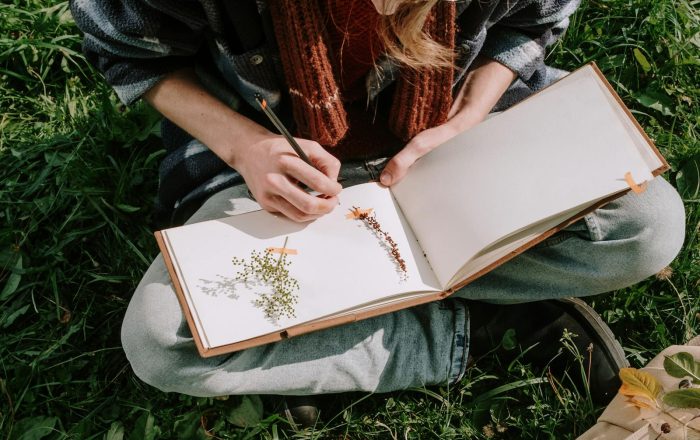
If you are new to nature journaling, autumn gives you beautiful, touchable material to press and sketch. Starting a nature journal does not require artistic ability; it just requires looking carefully and writing down what you notice.
Making the Most of Short Days
The light changes fast in autumn and the windows for being outside in good conditions get shorter. Sunrise and sunset both shift noticeably week to week, and both offer light that summer rarely matches. A low sun across a frost-rimed field or through a stand of bare birches is the kind of scene that stays in the memory for years.
Dusk becomes useful too. Bats are still active well into October in temperate regions, hunting the insects that gather around street lights and hedgerows in the last warmth of the day. Tawny owls begin calling more frequently as nights lengthen, staking out territory with a call that carries far on still air. Foxes become bolder as the year turns, and you may find one sitting in the open at dusk, seemingly unaware of you, focused on something in the grass that you cannot hear.
The season rewards patience more than most. Autumn nature does not rush to perform. It unfolds quietly, often at the edges of things, and the people who see the most are usually the ones who stood still a little longer than everyone else.
Simple Ways to Engage All Season
You do not need to plan expeditions to get the best from autumn. A handful of habits spread across the season will give you more than a single dramatic outing.
- Walk the same short route weekly and note what changes. Even a ten-minute loop around a block with mature trees tells a story across eight weeks.
- Leave a small section of your outdoor space wild through autumn. Fallen leaves left in a corner, a pot of water kept ice-free, a log pile near a wall: these things matter to local wildlife.
- Try one early morning and one dusk walk each month. The animals and light you find at those edges of the day are different from what a midday walk offers.
- Pick up a field guide to something specific, whether it is local trees, birds, or fungi, and focus your attention on that one group for the whole season.
Autumn asks very little of you and gives a great deal back. Go out on a grey Tuesday morning with no particular agenda, and the season will find you something worth carrying home. A perfect oak gall, a fieldfare landing in a berry-heavy hedge, the sudden sharp call of a jay in the distance: autumn keeps handing out small, genuine gifts to anyone paying attention. The trick, as always, is simply to be there.