Anúncios
There is a particular type of wrong information that spreads not because it is dramatic or alarming but because it seems perfectly reasonable and nobody bothers to check. The goldfish memory myth belongs to this category. It is repeated as fact in idle conversation, used as a metaphor for forgetfulness, printed in joke books, and inserted into motivational speeches. It is also, as far as controlled science is concerned, simply not true.
The Goldfish Memory Myth, Stated Plainly
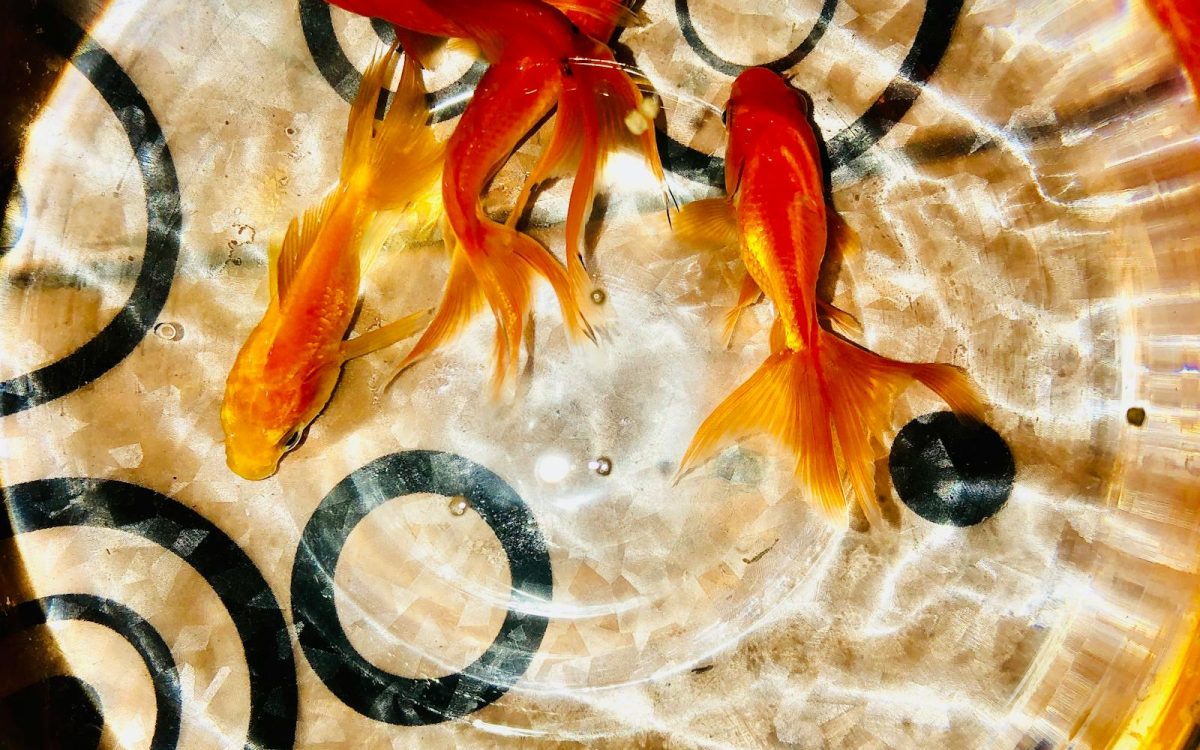
The claim is that goldfish have a memory span of approximately three seconds. By this logic, a goldfish swimming around its tank is perpetually experiencing a fresh world, cycling through the same few inches of water as though encountering it for the first time on every pass. The bowl, the ornament, the person peering in from outside: all of it forgotten, reset, encountered again, forgotten.
Anúncios
The image is bleak when you think about it for a moment, which is part of why it caught on. It suggests a consciousness permanently trapped in the present tense, unable to accumulate experience. It also makes the goldfish seem like a particularly undemanding pet to keep guilty about, since a creature that forgets everything every three seconds presumably has no complaints about living in a small glass bowl. Both implications are wrong, but the second one may have helped the myth survive as long as it has.
No scientific study established the three-second figure. No credible source traces it to a specific experiment, paper, or researcher. It appears to be one of those claims that entered circulation through repetition alone, repeated because it sounded like the sort of thing someone might have measured, even though no one had.
Anúncios
What Research Actually Shows About Goldfish Memory
The clearest demonstration that goldfish have functional long-term memory comes from training studies. Goldfish can be conditioned to associate specific signals with food through standard operant and classical conditioning procedures, and the associations persist. A 2003 study frequently cited in this context found that goldfish trained to push a lever to receive food retained that behavior through repeated testing sessions over multiple weeks. Other researchers have trained goldfish to navigate simple mazes and to respond to specific color or shape cues associated with a food reward.
The retention periods documented in these studies are not measured in seconds. They are measured in weeks and months. A goldfish that returns to a lever or a specific area of a tank because it has learned that a reward appears there is demonstrating memory across at minimum several days between sessions. Some experiments have produced retention periods of three months or longer before testing ceased, not because the fish had forgotten but because the study concluded.
An often-cited case study involves a fifteen-year-old goldfish named Comet, whose owner in Australia reportedly trained the fish to push a miniature rugby ball through a goal, ring bells, and navigate obstacle courses. Whether Comet’s specific feats were as described is harder to verify, but the documented laboratory literature firmly supports the conclusion that goldfish memory extends well beyond any single-digit second count. The three-second figure has no scientific basis.
How Fish Memory Actually Works
Fish, including goldfish, possess brain structures that support both short-term and long-term memory formation, though the architecture differs from the mammalian brain. The telencephalon of fish, the front portion of the brain, performs some of the functions associated with the hippocampus in mammals, a structure strongly linked to spatial and episodic memory in birds and mammals.
Fish form memories through the same basic cellular mechanisms found across vertebrates: changes in synaptic strength, the release of specific neurotransmitters, and protein synthesis required for long-term potentiation. The fact that fish brains look different from mammalian brains does not mean the processes are absent. It means the housing looks different while performing related jobs.
Goldfish also show something called spatial memory: the ability to learn and remember where things are in their environment. A goldfish placed repeatedly in a tank with a feeding station in a specific location will spend more time near that location on subsequent visits, even after the cue that marked it is removed. This behavior requires remembering spatial relationships across time, which is precisely what a three-second memory would make impossible.
Why the Myth Fits a Pattern
The goldfish memory myth belongs to a broader pattern of underestimating animal cognition in species that look simple or are kept as commodities. Fish, insects, and invertebrates have historically received less sympathetic treatment in popular accounts of intelligence than birds or mammals, partly because of physical appearance and partly because the economic and social cost of taking their inner lives seriously would be inconvenient.
If a goldfish genuinely has no memory, keeping hundreds of thousands of them in plastic bags at fairs or in bare bowls at home is easy to dismiss as harmless. If a goldfish has memory, learning, and something resembling preference, the ethics of its care become more complicated. The myth, whatever its actual origin, was convenient for a culture that kept a lot of goldfish in suboptimal conditions.
Research over the past two decades has pushed back significantly on dismissive accounts of fish cognition. Studies have found that fish show social learning, individual recognition, tool use in some species, and physiological stress responses that parallel what we see in mammals under similar conditions. The scientific position has shifted from treating fish as reflexive automatons to treating them as animals with genuine, if differently expressed, cognitive and emotional lives. You can explore how animals perceive and navigate their environments in our article on how animals adapt to survive.
The Environmental Consequences of the Myth
The three-second memory claim has real-world effects on how goldfish are kept and treated. If a fish cannot remember anything for more than a heartbeat, enriching its environment seems pointless. A bare bowl seems perfectly adequate for a creature that will not notice the difference. The myth has functioned as a quiet permission slip for inadequate care.
Goldfish are, biologically, pond fish. Wild ancestors and related carp species live in slow-moving water bodies with vegetation, varied terrain, and room to explore. The common goldfish can grow to twelve inches or more in appropriate conditions. Their compressed, stunted appearance in small bowls is a response to poor water quality and limited space, not their natural form. They can live for more than twenty years in proper conditions. The average lifespan in a small bowl is a fraction of that.
Environmental enrichment, meaning varied terrain, hiding spots, and appropriate space, produces measurably different behavioral outcomes in fish. Goldfish in enriched tanks explore more, show less stereotyped repetitive behavior, and demonstrate better learning task performance than those in bare environments. This mirrors findings across vertebrate species: a stimulating environment supports cognitive function. The fish that supposedly forgets everything every three seconds apparently remembers enough to notice whether its home is interesting or not.
Checking Your Own Assumptions About Animal Minds
The goldfish myth is a useful reminder to apply some skepticism to supposed animal facts that exist primarily as convenient metaphors. If a claim about an animal’s cognitive limitation has been repeated for decades without anyone pointing to the original experiment, there is a reasonable chance the experiment does not exist.
Cognitive research on non-human animals is active, often surprising, and consistently humbling to anyone who assumed the matter was settled. Bees navigate using cognitive maps. Octopuses solve novel problems. Cleaner fish pass certain versions of mirror self-recognition tests. Animals keep turning out to be more capable than prior assumptions allowed, not because they have changed, but because researchers started asking better questions. Fish are no exception. The goldfish in the bowl is not reset every three seconds. It is paying attention. It remembers you. You can read about more surprising animal behaviors in our piece on common animal misconceptions most people still believe.
There is something quietly reassuring in that, if you think about it. The small creature circling the glass has a continuous life, an accumulation of experience, preferences built from memory. It is not a biological reset button. It is just a fish, which turns out to be quite a bit more than the joke version suggested.