Anúncios
Spend a summer evening outside and you may catch a flicker of movement at the edge of the porch light. It dips, banks, vanishes. That small silhouette has been feeding human fears for so long that barely a fact survives intact. Bat myths are some of the most persistent in all of natural history, and pulling them apart one by one reveals an animal that is stranger, smarter, and far more useful than folklore suggests.
Myth 1: Bats Are Blind
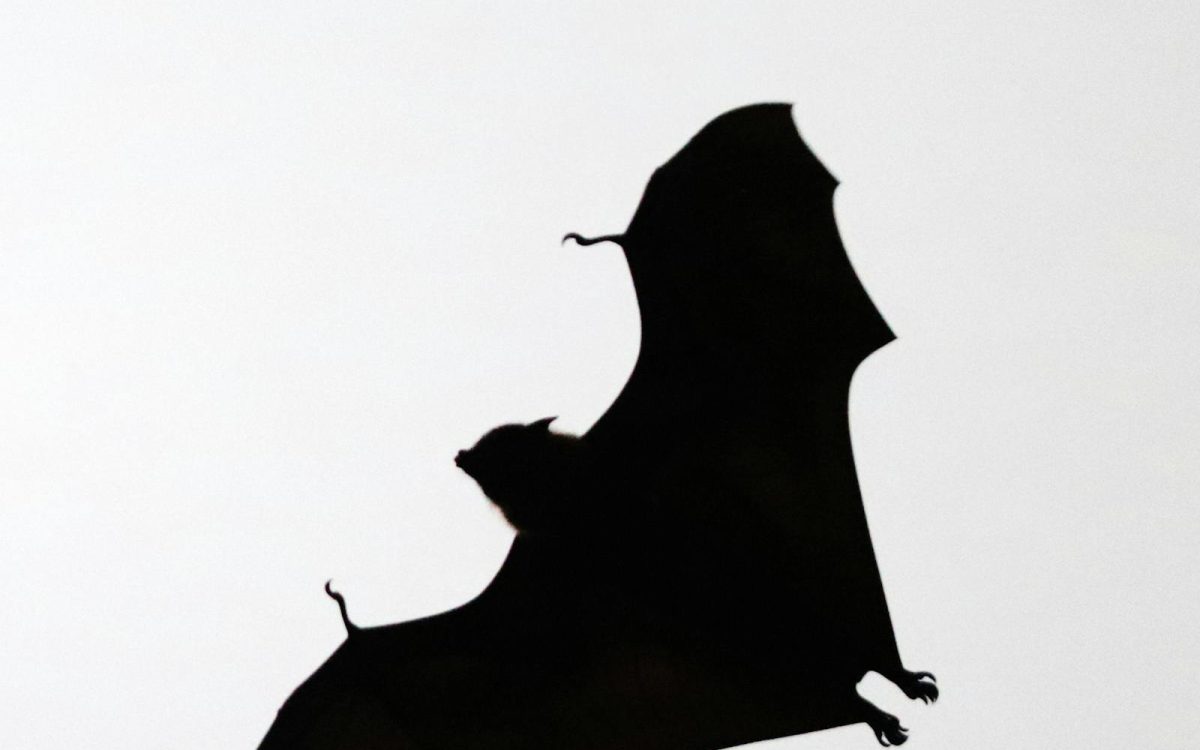
The phrase “blind as a bat” has been repeated so often it feels like settled science. It is not. Every bat species has functional eyes, and many see quite well. The confusion comes from the fact that echolocating bats hunt in the dark using sound, not sight, and do it so effectively that their vision seems beside the point. Large fruit bats, sometimes called flying foxes, have prominent eyes adapted for finding ripe fruit by color and shape. Even small insect-hunting bats use vision to navigate during twilight hours. Echolocation is a supplement to sight, not a replacement for eyes that do not exist.
Anúncios
Myth 2: Bats Will Fly Into Your Hair
This one appears to trace back to old European folklore associating bats with witches and mischief, and it has stuck through centuries of campfire storytelling. In practice, a bat’s echolocation is precise enough to detect and avoid an obstacle the diameter of a human hair in complete darkness. If a bat has ever seemed to buzz uncomfortably close to your head on a warm evening, it was almost certainly chasing the insects hovering around the warmth you were giving off. The bat was hunting dinner, not your ponytail.
Myth 3: Most Bats Carry Rabies
Rabies and bats are connected in public health messaging so often that many people assume the two are nearly inseparable. The actual numbers tell a different story. Studies of wild bat populations in North America consistently find that fewer than one percent of free-flying bats test positive for rabies. Sick bats that are grounded or acting disoriented carry higher rates, which is exactly why you should never handle a bat found on the ground with bare hands. The sensible precaution is straightforward: admire bats from a distance, never touch one you find on the ground, and call a wildlife rehabilitator if you find one in your living space. The risk is real but far smaller than the reputation suggests.
Anúncios
Myth 4: Bats Are Rodents
Bats look superficially like flying mice, which is probably why so many languages have bat words that translate roughly to “flying mouse” or “leather mouse.” But bats belong to their own mammal order, Chiroptera, which means “hand-wing.” Their closest relatives are actually shrews and moles. The hands of a bat are elongated to an extraordinary degree, forming the frame of the wing membrane, a structure with no equivalent in the rodent family. Bats and rodents share warm blood and fur, but so do humans and hedgehogs. The resemblance stops there.
Myth 5: Vampire Bats Are Everywhere and Attack Humans
Three species of vampire bat exist, all confined to Latin America, mostly from Mexico south through Argentina. They are not large. They feed mostly on livestock, making tiny cuts and lapping blood while the animal sleeps. Human attacks are rare, though they do occasionally happen in rural areas. If you live in North America, Europe, Australia, or Asia, there are no vampire bats anywhere near you. The connection between all bats and blood-drinking comes partly from Bram Stoker’s Dracula, published in 1897, and partly from the discovery of vampire bats by European explorers who conflated the Latin American species with the bats they already knew at home.
Myth 6: Bats Are Dirty and Disease-Ridden
Bats are actually meticulous groomers that spend significant time cleaning their fur, much like cats. The disease concern is more nuanced than a blanket “bats are filthy” claim. Bats do host a variety of viruses, some of which can cross to humans under the right conditions. But this is true of many wild animals, including birds, deer, and rodents. Bats’ long evolutionary relationship with coronaviruses and other pathogens has given them immune systems that manage these viruses without becoming sick themselves. The issue is not that bats are unusually dirty, it is that their physiology allows them to coexist with viruses that cause illness in other species. The solution is simple: respect their space.
Myth 7: Bats Serve No Useful Purpose
This may be the most costly myth of all. Insect-eating bats provide pest control services worth an estimated four to fifty billion dollars annually to United States agriculture alone, depending on how researchers calculate crop losses prevented. A single little brown bat can catch more than a thousand mosquito-sized insects per hour. Across a colony of tens of thousands, that is an enormous reduction in pest pressure on farms and gardens. In tropical regions, fruit bats and nectar bats pollinate plants and disperse seeds that regenerate forests. The loss of bat populations through disease or habitat destruction would leave a gap no other group of animals fills in quite the same way. You can read more about why this kind of ecological contribution matters in the article on keystone species.
Myth 8: White-Nose Syndrome Is Not a Real Threat
White-nose syndrome is very real and very serious. Caused by a fungus called Pseudogymnoascus destructans, it has killed millions of bats across North America since it arrived from Europe around 2006. The fungus disrupts hibernation by irritating bat skin, causing them to wake and burn through fat reserves before winter ends. Some caves that once held hundreds of thousands of bats now have a few dozen. The collapse of bat populations in affected areas has measurable effects on insect populations and on the farms those bats were protecting. Conservation efforts are underway, including research into probiotic treatments and cave management, but the situation remains urgent. If you are curious about the broader picture of wildlife disease and population loss, the article on why species become endangered gives useful context.
Bats have been flying over human settlements since the first fires drew insects, and people have been misreading them ever since. The real animal is a precision flier, a hard-working pest controller, a pollinator, and a seed disperser that helps rebuild forests. Changing how we talk about bats, even just correcting the blindness joke at the dinner table, moves us toward a relationship with these animals built on something closer to the truth.