Anúncios
My youngest nephew kept a jam jar on his windowsill for the better part of a year. It held a single hazel nut with a neat round hole chewed through its side, three sizes of empty snail shell arranged small to large, a fragment of dried oak gall, and a blackbird feather he had found on the school path. He could tell you exactly where each thing came from and why it was interesting. That jar cost nothing and taught him more about looking carefully than any activity I could have planned for him.
Why Nature Collecting Matters for Families
Nature collecting is one of the most instinctive things children do when given time outdoors. Before they have any vocabulary for ecology or taxonomy, children reach for interesting objects and want to bring them home. This impulse is worth honouring and channelling rather than discouraging or ignoring. The act of selecting, carrying, and placing an object turns passive observation into active engagement with the natural world.
Anúncios
For families, collecting gives shared outdoor walks a common purpose that suits different ages at once. A toddler can find pebbles while an older sibling focuses on leaf shapes and a parent photographs what they find. Everyone is participating in the same general activity without needing the same level of skill or knowledge. The conversation that happens around what gets collected, and especially around what gets left behind, is where a lot of the real learning takes place.
Collecting also creates a tangible, lasting record of time spent outside. A nature collecting tin from a particular summer becomes a memory object with the sensory richness that photographs alone cannot match. Ten years from now, holding the pine cone from a specific afternoon in a specific wood means something different from viewing a photo of that same afternoon.
Anúncios
The Core Principle: Take What Is Already Let Go
The clearest and most memorable rule for responsible nature collecting is this: take only what the living system has already released. Fallen leaves, shed feathers, empty shells, dropped seeds, cast-off bark, driftwood, and smooth pebbles from riverbeds and beaches fall into this category. These objects are no longer part of any living organism’s needs. Removing them causes no direct harm to any individual plant or animal.
Living things are a different matter entirely. Plants rooted in the ground, fungi still attached to their substrate, occupied shells, eggs, feathers from an active nest, living insects or creatures of any kind: these should be observed, photographed, and left exactly as they are. A child who learns to pick up a ladybird on their finger, look carefully for ten seconds, and then place it back precisely where it was found is practising something important. The natural world is not a resource to be extracted but a community to be part of.
Check local rules before collecting anything in a managed natural area. National parks, nature reserves, and some beaches restrict the removal of all natural material, including fallen objects. The signs at entry points usually state this, or a quick search for the site’s visiting guidelines will tell you. In most ordinary public parks and countryside paths, common fallen material can be collected freely, but when in doubt, leave it and take a photograph instead.
What Makes a Great Collection
Not everything needs to come home. Part of good nature collecting is developing selectivity, which is itself a form of observation. Encourage children to choose objects that have something specific to recommend them: an unusual colour, a distinctive texture, a clear sign of use by wildlife, an interesting shape. A leaf with the trails of a leafminer moth visible through the surface tells a more interesting story than an ordinary fallen leaf. A pine cone chewed to the core by a squirrel or crossbill is more interesting than an intact one.
The best collections have variety without excess. A dozen well-chosen objects arranged on a windowsill or kept in a labelled tray teach far more than a box overflowing with undifferentiated finds. Regular editing, choosing to release items that no longer seem interesting and perhaps returning them to outdoors where they can continue decomposing, is a healthy habit that keeps the collection alive and manageable.
Labelling adds enormous value. Even a small piece of paper with a location, date, and one-line note transforms a random object into a data point. These habits are the beginning of real scientific practice, and they feel like play when introduced gently alongside the collecting itself. Nature journaling makes a natural companion to collecting: the journal records what the collection cannot keep.
What to Do With What You Find
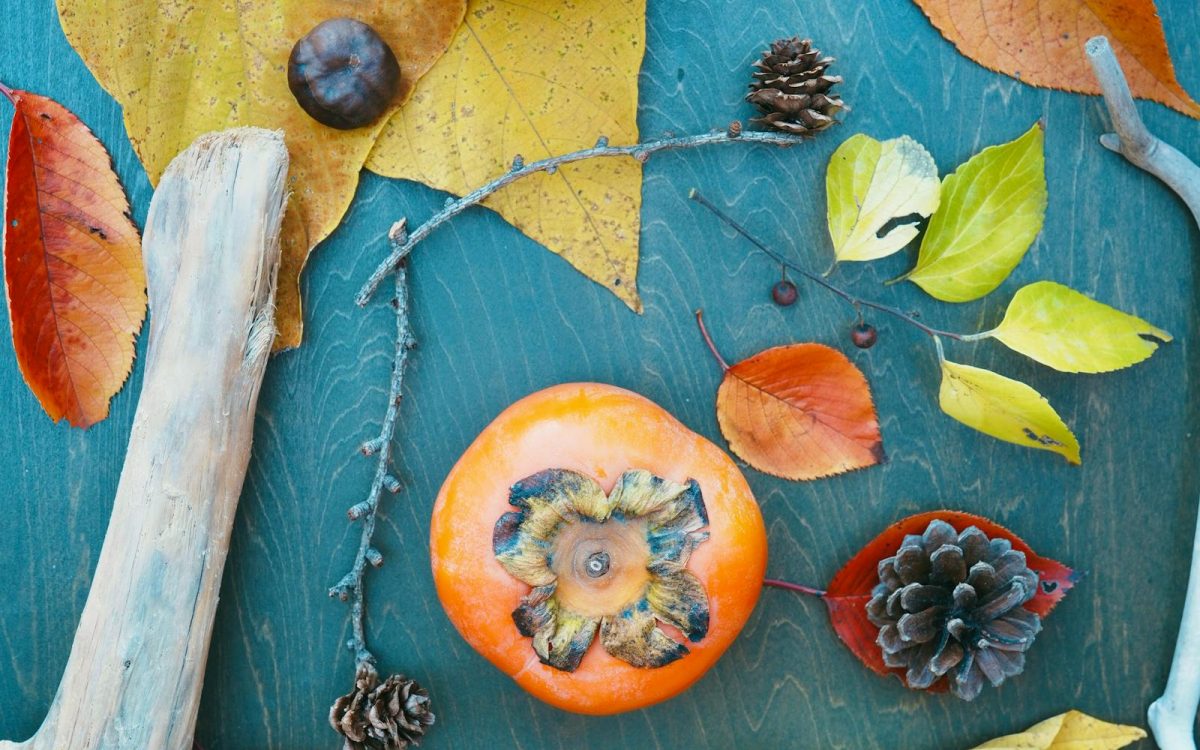
Collected natural materials are some of the most versatile creative materials that exist, and free. A collection of autumn leaves in different colours and sizes can be pressed between sheets of paper inside heavy books, emerging after two weeks as perfectly preserved, flat specimens that children can use for identification practice or artwork. Pine cones and acorns glued to a piece of bark or arranged in a tray create a tactile, low-cost display that connects the room to the season outside.
For older children and teenagers, more structured approaches carry the activity forward. A pressed-plant collection made with care, correctly labelled with species name, location, and date, is genuinely similar to the herbarium specimens found in museum natural history collections. A shell collection sorted by species and noted with collection location is the kind of project that can grow across years of beach visits. These are not crafts; they are the beginnings of natural history practice in the tradition of every great naturalist who came before us.
Seasonal nature tables work beautifully for younger children and families. A corner of a table or a shallow tray receives new objects as the year turns: spring’s first catkins and a fragment of mossy bark, summer’s dried grass seed heads and a shed lizard skin, autumn’s acorns and a perfect oak gall, winter’s lichen-covered twig and a smooth grey pebble from a frosted stream edge. Revisiting and refreshing this seasonal display gives children a physical, tactile sense of the year turning that is far more grounded than any explanation.
Collecting Responsibly on Beaches and Water Edges
Beaches and stream banks are among the most popular collecting environments for families, and they need a little extra care. The guiding principle on beaches is to take only what is clearly already a dead, empty, or inorganic object, and to leave the beach generally as you found it. Occupied shells, whether hermit crabs are visible or not, stay where they are. Live starfish, sea urchins, and anemones left by a retreating tide are still alive and should be gently returned to a rock pool if they have been picked up.
Pebble collecting from beaches is a beloved habit, but in some coastal areas it is technically restricted because removing large volumes of pebbles affects coastal protection. One or two smooth stones per person per visit is universally harmless. Bags full is a different matter, and some popular beaches in the UK and elsewhere have explicit bylaws restricting it. Checking before you collect takes a moment and avoids any issue.
Stream and river banks offer beautiful finds: worn glass, interesting stones, shed feathers, and the empty cases of caddisfly larvae. The latter, a small tube built from tiny pebbles or plant fragments by an aquatic insect larva, is one of the most astonishing objects you can find near fresh water. Empty ones, abandoned after the adult has emerged, are fine to take home and will spark conversations for years.
Turning Collecting Into Conversation
The most valuable thing about a nature collecting walk is not the objects; it is the questions. What made this hole? Why is this leaf this colour when the others are green? What ate through this pine cone and left only the stripped core? These questions, which arise naturally when children handle real objects, are the engine of curiosity that eventually becomes a genuine interest in the natural world.
You do not need to know the answers. In fact, not knowing and finding out together is far more powerful than already knowing. Sitting with your child and a field guide, or opening an identification app, or simply saying “I wonder, let’s look it up” after dinner normalises the pursuit of knowledge in a way that the appearance of omniscience cannot. Children who see adults cheerfully admitting ignorance and then pursuing an answer tend to become curious adults themselves.
For more ways to extend the time your family spends outside, taking nature walks with children shares practical approaches that keep kids engaged from the first step to the last. A walk with a collecting purpose is often the most successful kind.
The aim of all of this is not to fill a shelf with specimens. It is to give children a direct, tactile, repeated experience of the natural world that lodges in them as a sense of belonging. The child who spent a whole afternoon choosing the best acorns from under a particular oak tree has a relationship with that tree. That relationship, multiplied across years and dozens of places, becomes a love of the natural world that no amount of talking about nature can create. Go out, look carefully, take only what is freely given, and bring home the stories along with the things.