Anúncios
The rubbish bins are overturned again. The garden pond fish have gone. Something scratches in the attic most nights in late autumn. If any of these scenarios sounds familiar, a raccoon has decided your property is worth regular attention. That is a manageable situation, not a crisis, and most of what needs doing costs nothing but a little time and some minor adjustments to daily routine.
Why Urban Raccoons Are So Successful
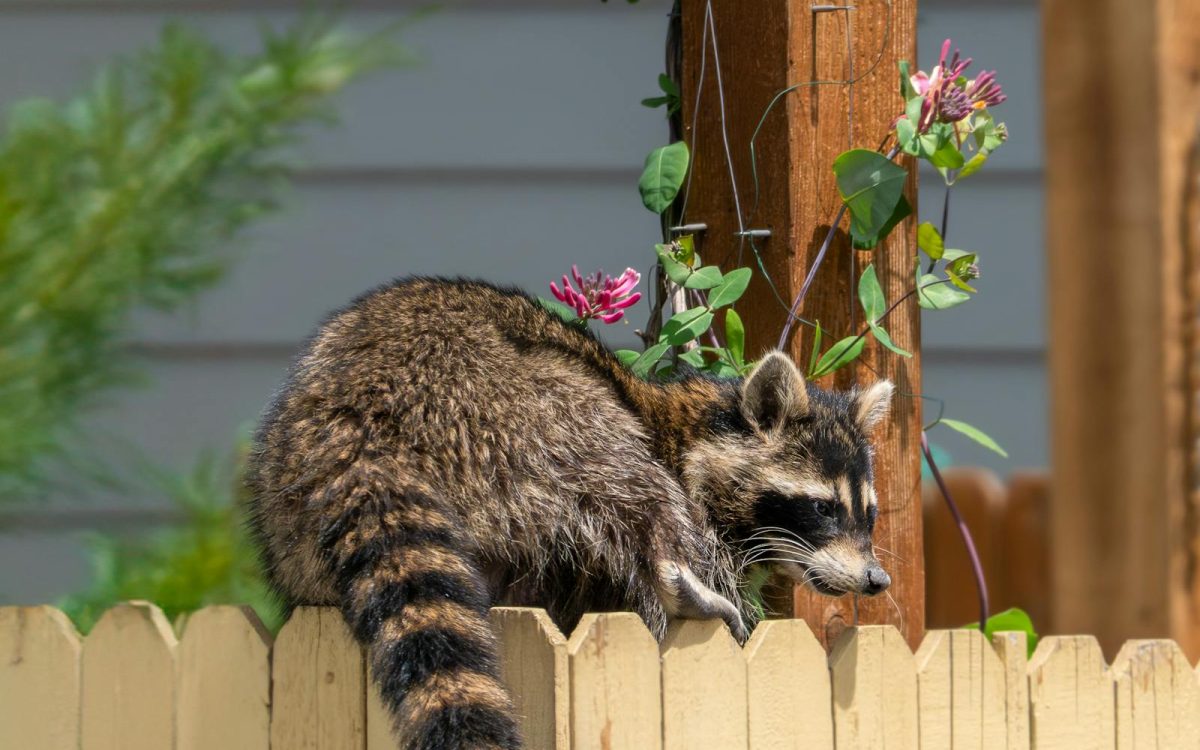
Raccoons possess a combination of traits that make city life almost tailor-made for them. Their front paws function like hands, capable of turning knobs, lifting latches, unthreading bungee cords, and pulling apart badly fitted roof sections. They eat virtually anything: insects, berries, eggs, small animals, kitchen scraps, and pet food. They are comfortable with noise, artificial light, and close proximity to people. They den readily in attic spaces, crawl gaps under decking, and disused chimneys. And they are fast learners, adapting their behavior to new situations in ways that surprise people who expect them to give up when a simple deterrent is installed.
Anúncios
All of this explains why raccoon populations in North American cities have grown substantially over the past few decades. It also explains why attempts to solve raccoon problems with a single quick fix, such as one trip-trap or one type of repellent, rarely work for long. Effective coexistence requires understanding what the animal is after and systematically removing the incentive.
Securing Food Sources: the Most Important Step
Every raccoon that visits your property regularly has found something worth coming back for. Identifying and securing that attractant is the single most productive thing you can do. Work through the following: Are your rubbish bins secured with a locking lid or bungee cord? Is pet food left outside overnight? Is there a bird feeder that drops seed onto the ground in quantity? Is compost accessible in an open heap? Is there fallen fruit from garden trees sitting on the ground? Does your garden pond have fish that can be caught from the edge?
Anúncios
Bins are the most common attractant. A raccoon that has learned to open your bin will return on the same nights each week, corresponding to your collection schedule. A locking bin lid, or the habit of putting bins out on the morning of collection rather than the evening before, breaks that cycle quickly. If your bin area is covered by a motion-activated light or a simple sprinkler system triggered by movement, raccoons will usually find a quieter option nearby. For a full range of bin and waste management strategies, the guide on keeping wildlife out of your trash humanely covers the subject in detail.
Protecting Your Property Structure
A raccoon that finds your attic warm, dry, and quiet is a raccoon that may choose to raise a litter there in spring. Entry points are usually where the roofline meets the soffit, around chimneys, or through damaged vents. Inspect these areas in early autumn, before raccoons begin searching for winter den sites. Any gap wider than about 10 centimetres is a potential entry point for an adult.
Repair damaged material promptly. Install a chimney cap rated for wildlife exclusion. Cover roof vents with heavy-gauge wire mesh rather than lightweight screening that can be pulled aside. Check the area under decking and any outbuildings for gaps that might serve as ground-level den sites. A raccoon that finds no accessible shelter on your property will move its search elsewhere without any need for trapping or harm.
One important caution: if you suspect a raccoon has already established a den in your attic or under a structure, do not seal the entry point until you are certain no young are inside. A mother raccoon separated from her litter will cause significant damage trying to get back in, and the kits will die if sealed in and unable to get out. If you have a confirmed in-home den, contact a licensed wildlife control professional or your local wildlife authority for guidance on humane exclusion timing.
Garden and Pond Protection
Raccoons are skilled fish catchers. An ornamental pond with no vertical sides, or with a shallow beach edge, is a regular stop on any urban raccoon’s nightly route. Simple solutions include placing a section of chicken wire just below the water surface around the pond edge (raccoons prefer to keep their feet dry when fishing), adding depth to the pond so fish can retreat beyond reach, or covering the pond at night with a lightweight net during the season when raccoons are most active. A motion-activated sprinkler near the pond is effective and harmless.
Vegetable gardens can be protected with hardware cloth fencing that extends at least 30 centimetres underground to prevent digging under the base. Electric fence systems designed for garden perimeters work well and are commercially available. Raccoons quickly learn which areas produce an unpleasant experience and route around them.
Deterrents That Work and Ones That Do Not
Motion-activated lights and sprinklers are consistently effective because they produce an unpredictable stimulus. Raccoons respond best to deterrents they cannot anticipate. Chemical repellents sold at garden centres have a poor track record with raccoons specifically; these animals rely heavily on smell and tend to investigate rather than avoid unfamiliar scents. Ultrasonic devices have not shown reliable effectiveness in independent testing.
Hazing works well for raccoons that are becoming bold in daylight hours. If a raccoon approaches you or refuses to move when you come out into the garden, make yourself appear large, shout firmly, and bang a pot or use a water hose. A healthy raccoon will retreat. Do not do this if there is any chance young kits are nearby, as a parent raccoon defending its family may respond more assertively. The principles behind this approach are the same as those described in the article on how to stay safe around wildlife generally.
Health Considerations
Raccoons are a primary carrier of rabies in North America and can carry raccoon roundworm (Baylisascaris), leptospirosis, and distemper. None of these risks require you to panic, but they do require sensible precautions. Never handle a raccoon barehanded. Wear gloves when gardening in areas where raccoons defecate regularly. Wash hands thoroughly after working in such areas. Keep your pets vaccinated against rabies and leptospirosis as your vet recommends.
A raccoon behaving erratically, appearing disoriented, vocalising in the daytime without cause, or approaching people without hesitation may be sick. Do not approach it. Contact your local animal control office. A healthy raccoon that simply appears bold or curious during the evening hours is not displaying signs of illness; it has simply grown comfortable in a neighbourhood that has not taught it otherwise.
When to Call for Help
Most raccoon situations are manageable through the habitat-modification steps described here. Call a licensed wildlife professional or your local animal control office if raccoons have gained access to your occupied attic space, if a raccoon has become consistently bold and unresponsive to hazing, if you suspect a young or injured raccoon is on your property, or if a raccoon has bitten or scratched a person. For more on finding the right help when an animal is hurt, what to do if you find an injured wild animal walks through the steps clearly.
A neighborhood approach is far more effective than individual action. If several households on your street each secure their bins, remove accessible pet food, and repair structural gaps, the local raccoon population quickly learns that your block offers poor returns. Shared habits produce shared results, and the raccoons redirect their considerable intelligence elsewhere without any need for conflict.
See also: Deer in the Neighborhood: How to Coexist.