Anúncios
Eight legs and a tendency to appear suddenly from behind the toaster have made spiders objects of deep, cross-cultural fear for as long as people have been keeping records. Arachnophobia is one of the most common specific phobias in clinical psychology. Yet when researchers actually examine the animals behind the fear, the picture that emerges is of a group of largely harmless, ecologically indispensable predators that have been doing people quiet favors since long before anyone noticed. Spider myths are worth examining carefully, because most of them cause unnecessary harm, both to people who are afraid without good reason, and to spiders themselves.
The Swallowing Myth
The claim that the average person swallows eight spiders in their sleep per year is almost certainly pure invention. Arachnologists have noted that this figure appears to have originated as an example of the kind of false “fact” people accept without question, and was never based on any actual study. The biology makes it implausible. Spiders detect vibration through sensory organs in their legs; a sleeping human on a mattress creates vibration through heartbeat and breathing. The warmth and unpredictable movement of a sleeping person would cause most spiders to move away rather than explore. A spider in or near someone’s mouth would be likely to bite defensively before any swallowing occurred, which would wake the sleeper. The myth has been repeated so often that correcting it feels almost futile, but the evidence for it is exactly zero.
Anúncios
Which Spider Bites Are Actually Dangerous?
In the United States, two spider species warrant genuine medical concern: the black widow and the brown recluse. Black widow venom contains a neurotoxin that can cause severe muscle pain, cramps, and systemic symptoms, and bites occasionally require antivenom, particularly in children and elderly people. The good news is that black widows are not aggressive; they bite defensively when pressed against skin, typically when someone reaches into wood piles, garden gloves, or outdoor furniture without looking first. Brown recluse bites can cause a necrotic wound in some cases, though the severity is often overstated in popular accounts. In the rest of the world, several funnel-web species in Australia and a few others in South America carry venom that can cause serious illness, but these are specific, identifiable species, not a property of spiders as a class. The overwhelming majority of the world’s 45,000 spider species cannot cause meaningful harm to an adult human, and most of those that can do not want to.
The Daddy Long Legs Venom Claim
Few myths have spread as effectively as the idea that daddy long legs are the most venomous animals on Earth, kept harmless only by fangs too short to pierce skin. The claim probably gained traction because it sounds authoritative and dramatic, and because the animal involved is both common and familiar. But it fails on multiple fronts. The term “daddy long legs” is used for three distinct groups of animals depending on where you live: harvestmen (not spiders, no venom glands at all), crane flies (insects, also no venom glands), and cellar spiders (actual spiders with venom that has been tested). Studies of cellar spider venom have found it to be relatively mild and fast-acting on small prey insects, which is what it evolved to kill. There is no peer-reviewed evidence that cellar spider venom would cause unusual harm to humans even if delivered by a full bite. The “world’s most venomous” claim has no scientific foundation.
Anúncios
Spiders and Pest Control in Your Home
There is a practical reason to rethink spider removal from your living space. House spiders, cellar spiders, and cobweb spiders routinely hunt flies, mosquitoes, moths, gnats, and even other spiders. They are operating a free, continuous pest management service in your home at no cost. A study published in the journal American Entomologist estimated that the world’s spider population consumes somewhere between 400 and 800 million tonnes of prey annually, the vast majority of it insects. Without spiders suppressing insect populations, agricultural and residential pest problems would be significantly worse. The spider sitting in the upper corner of your bathroom ceiling is an ally, not a threat. If its presence genuinely bothers you, releasing it outside is easy and harmless to both of you.
The Truth About Spider Aggression
Spiders bite defensively, almost without exception. They do not hunt humans, they do not recognize humans as prey, and they have no evolutionary reason to attack something many thousands of times their body mass. The vast majority of spider bites on humans happen when someone rolls onto a spider in their sleep, reaches into a space a spider is sheltering in, or puts on clothing or shoes that a spider entered while they were stored. Provoked bites from spiders that feel trapped or crushed account for nearly all spider bite incidents. The image of a spider stalking a person and biting them without reason has no basis in spider behavior research. Spiders spend most of their energy trying not to be eaten, not looking for things to bite.
The Brown Recluse Range Myth
The brown recluse has become the spider that every mysterious skin wound gets blamed on, regardless of whether a brown recluse was present. Studies conducted in states well outside the brown recluse’s actual range, which runs through the south-central United States, have found that “brown recluse bites” are routinely diagnosed in places where the spider essentially does not live. Physicians in California, Florida, and the Pacific Northwest have reported patients convinced they had brown recluse bites in areas where the species is absent or extremely rare. The wounds attributed to brown recluses more often turn out to be staph infections, other insect bites, or dermatological conditions. This matters because misdiagnosis delays proper treatment. Knowing the actual range of genuinely dangerous spiders is useful medical information. For context on how misidentification affects other wildlife too, the article on common animal misconceptions covers some related ground.
What Spiders Actually Look Like Up Close
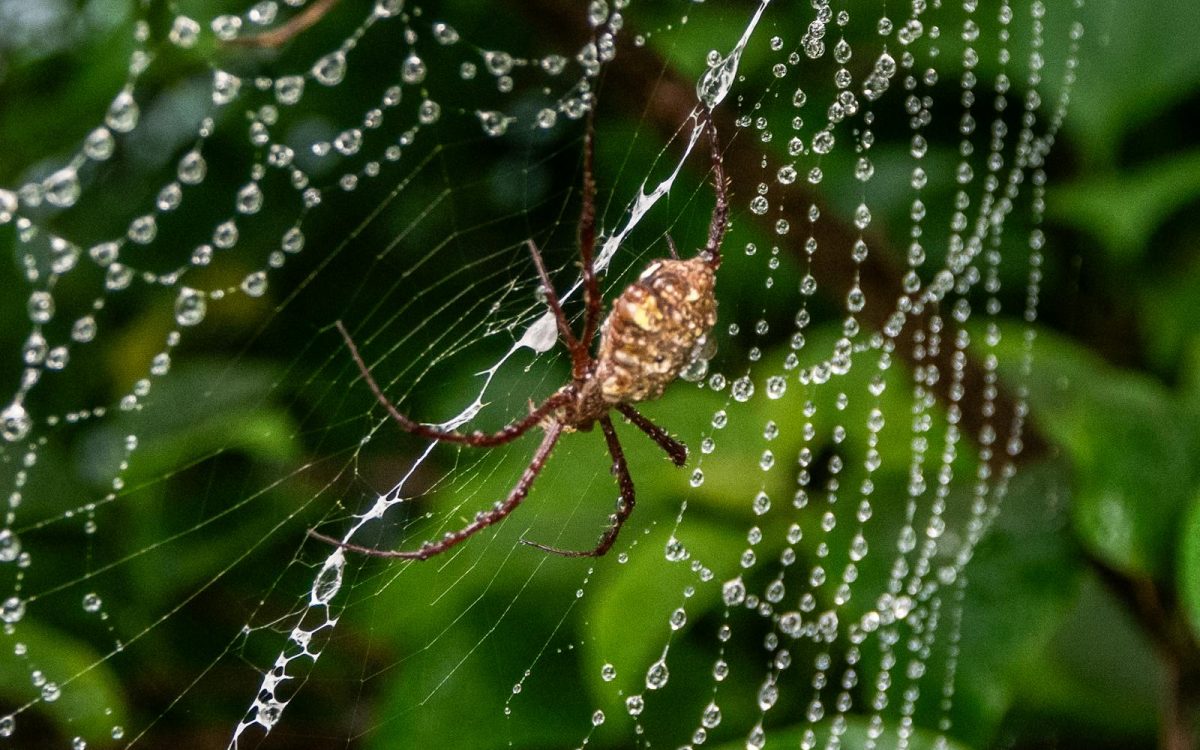
Part of what drives spider fear is the brief, startling glimpse most people get before fleeing. Spending a moment with a garden spider on a dew-covered web in morning light is a genuinely different experience. The engineering of an orb web, constructed in less than an hour without a blueprint, is extraordinary by any measure. The jumping spider, with its large forward-facing eyes, looks back at you with an attentiveness that feels almost mammalian. Wolf spiders carry their egg sacs and then their newly hatched young on their backs. These are not the behavior patterns of a mindless horror-movie creature. They are the behavior patterns of animals with complex, specialized lives that intersect with ours in mostly beneficial ways. If you are interested in the broader ecological roles that often-feared invertebrates play, the article on backyard pollinators beyond bees explores some related territory with a different group of arthropods.
Spiders have been doing the unglamorous work of keeping insect populations in check for over 350 million years. They have survived every mass extinction event and colonized almost every terrestrial habitat on Earth. The least they deserve is an accurate reputation.
See also: Why Raccoons Wash Their Food, and It Is Not What You Think.