Anúncios
Scroll through any nature photography feed and you will see images that look almost impossible: a fox peering straight into the lens, an owl perched at arm’s length, a bear feeding just meters away. Some of those shots are the product of patient skill, good optics, and genuine understanding of animal behavior. Others were taken by pushing animals well past their comfort zone. Learning the difference is the foundation of ethical wildlife photography, and it shapes every decision you make before you press the shutter.
Why Wildlife Photography Ethics Matter More Than the Shot
Photography can be a powerful tool for conservation. A single image shared widely has introduced millions of people to species they will never see in person, building the kind of public care that funds protection efforts. That potential is real, and it is worth protecting. But when the process of getting a photograph harms the very animal being photographed, the purpose collapses.
Anúncios
Animals experience stress responses much as we do. A deer whose heart rate doubles because a photographer crept too close, a nesting owl flushed repeatedly from its eggs, a bear conditioned to approach cars in exchange for a food reward — all of these animals pay a physiological and behavioral cost that the photographer walks away from. The ethics of wildlife photography are in the end about taking responsibility for that cost.
Distance Is Your Most Important Setting
No composition tip, lighting trick, or editing technique matters as much as shooting from a distance that leaves the animal undisturbed. If the animal looks at you, pauses feeding, changes direction, or shows any sign of awareness, you have already come too close. The goal is behavior that continues as if you are not there.
Anúncios
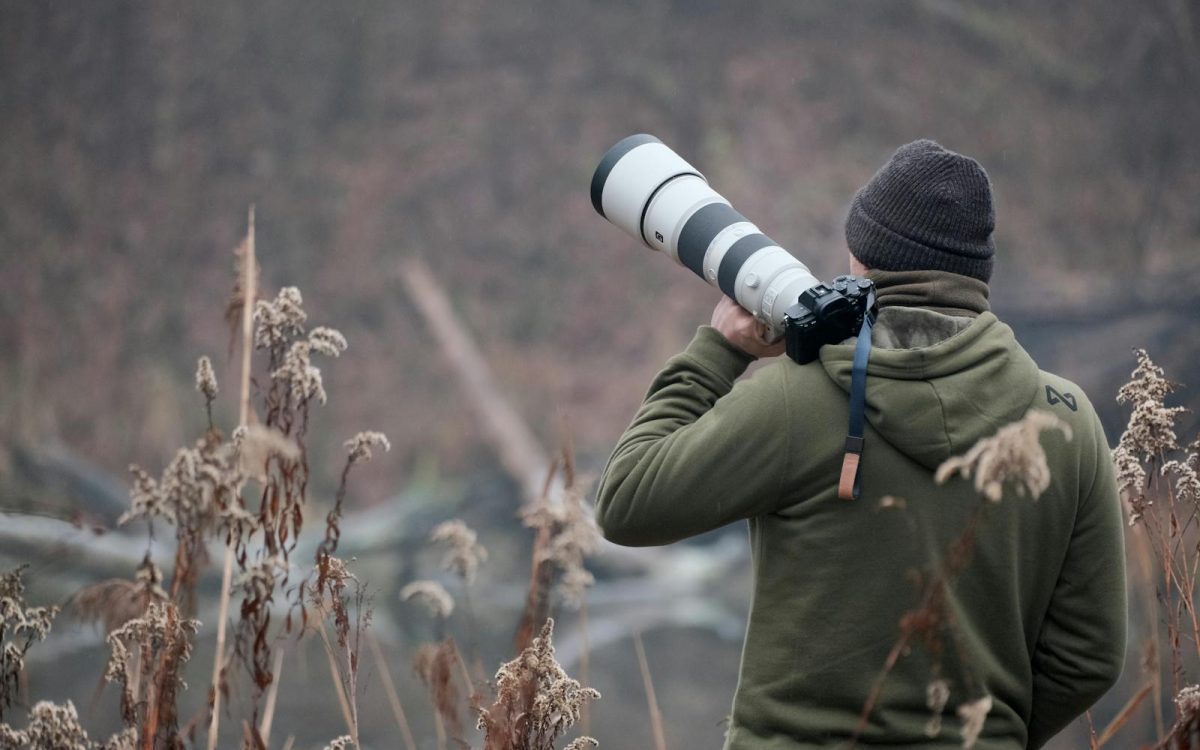
This is where lens choice becomes an ethical tool, not just a creative one. A 400mm or 500mm telephoto lens lets you fill the frame from 30 or 40 meters away. Even a 200mm zoom, used from a safe distance, produces more natural images than a wide-angle shot taken close enough to see the stress in an animal’s posture. Smartphone photographers can use the zoom function or simply accept a smaller subject in the frame — a wide shot showing an animal at ease in its habitat tells a richer story than a tight crop of a stressed one.
Reading Animal Body Language
Before you can respect an animal’s space, you need to recognize when you are encroaching on it. Each species has different tolerance thresholds, but some signals are consistent across mammals and birds. A bird that stops singing and stands rigidly upright is alert to a perceived threat. A deer that raises its head, stares in your direction, and begins stamping a foreleg is deciding whether to flee. A coyote that sits down and watches you directly is not posing — it is assessing the situation.
Learn the baseline behavior of the species you hope to photograph before you go out. Spending time observing without the camera first is one of the most useful things a beginner can do. You start to recognize feeding posture versus alert posture, relaxed movement versus flight preparation. That knowledge directly improves your photography because you understand when an animal is genuinely comfortable.
Nesting Season Calls for Extra Care
Spring and early summer are high season for both bird photography and breeding activity, and the two need careful management. A nesting bird that is flushed repeatedly from its eggs exposes them to temperature change and predators. Repeated disturbance during incubation can cause nest abandonment.
If you find a nest, a den, or a burrow, photograph it from a distance that does not cause any flushing behavior at all. Do not share the precise location publicly. Resist the temptation to visit multiple times in a single week. In protected areas, nesting sites are sometimes roped off or listed as off-limits, and those restrictions deserve full respect — they exist because cumulative disturbance from well-meaning visitors causes real harm.
The Problem With Baiting and Call Playback
Two common techniques for getting close-up shots deserve scrutiny: baiting animals with food, and using recorded calls to pull birds into camera range.
Baiting works, in a narrow sense — it brings animals close. But it teaches them to associate humans with food, which breaks down the natural wariness that keeps them alive in landscapes shared with people. A fox that learns to approach photographers for a reward eventually approaches anyone, including people who will trap or shoot it as a nuisance. In many parks and refuges, baiting is illegal precisely because of this.
Audio playback of bird calls attracts territorial birds because they respond to what sounds like a rival. During breeding season, this wastes the bird’s energy and can disrupt pair bonding. Several serious birding and photography organizations have formally discouraged it, and many protected areas now prohibit it. Patience, knowledge of habitat, and arriving at optimal times — usually at or before dawn — will bring birds into view without any electronic assistance.
Sharing Your Photos Responsibly
The moment you post a wildlife photograph online, you take on a secondary responsibility. Images of rare species tagged with precise locations have led to destructive crowding, egg collectors targeting nests, and rare plants being dug up. The wildlife photography community has developed a straightforward norm: for sensitive species or active nesting sites, withhold exact location data. Describe the habitat type or general region if you want to share context. Your image can still inspire others without putting the subject at risk.
Be equally cautious about the narrative your image tells. A caption that says “got this close to a black bear in a parking lot” normalizes behavior that is genuinely dangerous for the bear. Many bears that lose their fear of humans end up being euthanized. The story behind your photograph can either promote good practice or erode it.
You might also find that staying safe around wildlife and getting compelling photographs often require the same skill: reading animal behavior accurately and keeping a calm, unhurried presence in the field. Similarly, nature photography for beginners covers the technical side of working with light and composition, which pairs well with the ethical foundation covered here.
A Concrete Scenario: The Cooperative Elk
Imagine you are at a roadside pullout in a national park. A bull elk is grazing in a meadow about 60 meters away. Several other photographers are slowly edging closer along the fence line, and the elk’s head has come up twice. You notice his ears are rotating and he has stopped chewing.
The right call is to hold your position or take a few steps back. Your 200mm lens will give you a workable frame from where you are. Wait for the elk to settle, resume feeding, and ignore the group. Over the next 20 minutes, if the other photographers move away and the elk relaxes, you will get images of natural foraging behavior in good light. That shot is worth more, ethically and artistically, than a tight frame taken while the animal is clearly agitated. The restraint is the skill.
How the Best Wildlife Photographers Think
Professional wildlife photographers often say their best images came from sessions where they prioritized the animal’s experience over their own. They scouted locations in advance, arrived early, moved slowly, and spent long hours doing nothing but watching. The patience is not passive — it is a form of respect that produces images with genuine authenticity.
As a beginner, you are building habits that will define your relationship with wild animals for years. Treating each encounter as a privilege rather than an opportunity changes your entire approach. The animals in front of your lens did not consent to being photographed. The least you can give them in return is the commitment to leave their lives no worse for having met you.
Start with your closest wild neighbors — the birds in your yard or a local park — and practice working from a distance until you can read their comfort clearly. Then take that discipline into wilder places. The resulting photographs will be better, and so will your standing in any wild landscape you enter.